
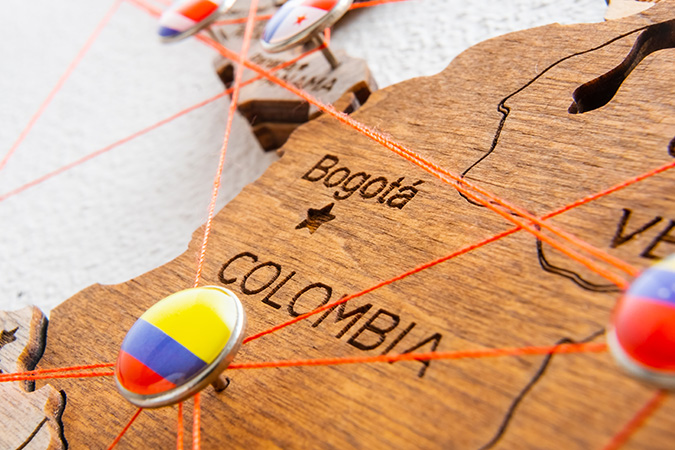
Colombia, officially the Republic of Colombia, is a sovereign nation located in the northwestern region of South America. With an area of 1,141,748 km², coasts on the Caribbean and the Pacific, and a geography as diverse as its culture, Colombia is a Latin American jewel that stands out for its millenary history, its natural wealth, and its human warmth.
History of Colombia
The Colombian territory has been inhabited by human beings for more than 14,500 years, according to archaeological findings in sites such as El Abra and Tibitó. Before the arrival of the Spanish, civilizations such as the Muisca, Tairona, Quimbaya, and Zenú flourished, developing complex social structures, advanced agricultural techniques, and an artistic legacy that endures to this day.
With the Spanish conquest initiated in 1499, Colombia was part of the Viceroyalty of Peru and later of the Viceroyalty of New Granada. After years of struggles for independence, led by figures such as Simón Bolívar and Francisco de Paula Santander, Colombia was constituted as a republic in 1819, integrating Gran Colombia, along with Venezuela, Ecuador and Panama.
After its separation and decades of internal conflicts, civil wars, and political transformation, in 1886 the country adopted its current name: Republic of Colombia.
Political organization and demography
This South American country is a unitary and democratic state with a presidential form of government. It is divided into 32 departments and a Capital District (Bogotá), which, in addition to being the political capital, is its most populated city and one of the main cultural and economic centers of Latin America. With more than 52 million inhabitants, Colombia is the second most populous Spanish-speaking nation in the world, after Mexico.
The Colombian population is ethnically diverse: descendants of indigenous people, Europeans, Africans, and migrants from the Middle East have formed a multicultural identity that is expressed in its music, gastronomy, religiosity, and traditions.
Here is a table with the main cities of Colombia organized by estimated population and department
| # | Ciudad | Departamento | Población estimada (2023) |
|---|---|---|---|
| 1 | Bogotá | Distrito Capital | 7,936,532 |
| 2 | Medellín | Antioquia | 2,611,104 |
| 3 | Cali | Valle del Cauca | 2,250,842 |
| 4 | Barranquilla | Atlántico | 1,326,588 |
| 5 | Cartagena de Indias | Bolívar | 943,502 |
| 6 | Soacha | Cundinamarca | 826,713 |
| 7 | Cúcuta | Norte de Santander | 767,000 |
| 8 | Soledad | Atlántico | 691,895 |
| 9 | Bucaramanga | Santander | 613,428 |
| 10 | Bello | Antioquia | 562,880 |
| 11 | Villavicencio | Meta | 513,589 |
| 12 | Ibagué | Tolima | 506,505 |
| 13 | Santa Marta | Magdalena | 498,880 |
| 14 | Valledupar | Cesar | 490,733 |
| 15 | Manizales | Caldas | 434,006 |
| 16 | Pereira | Risaralda | 414,043 |
| 17 | Montería | Córdoba | 402,069 |
| 18 | Neiva | Huila | 348,346 |
| 19 | Pasto | Nariño | 309,020 |
| 20 | Armenia | Quindío | 306,171 |
Tourism: between mountains, beaches, culture and jungle
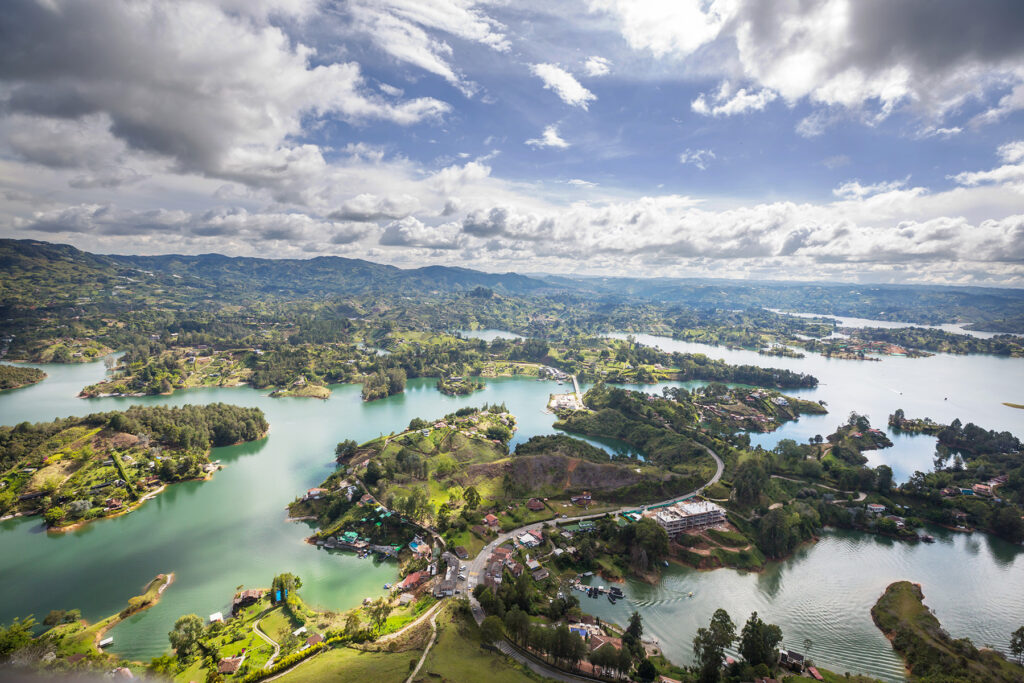
Colombia has been recognized as one of the most attractive emerging tourist destinations in the world. This is due to its variety of natural landscapes, colonial cities, protected ecosystems, and cultural offerings. Some of the most emblematic places include:
More Read


- Cartagena de Indias: walled colonial city, declared a World Heritage Site by UNESCO.
- Santa Marta and Tayrona Park: a mix of virgin beaches, jungle and indigenous culture.
- Bogotá: cultural capital with museums such as the Gold Museum, bohemian neighborhoods such as La Candelaria and panoramic views from Cerro de Monserrate.
- Medellín: symbol of urban innovation, with cable cars, interactive parks and festivals such as the Feria de las Flores.
- Cali: salsa capital and epicenter of Afro-Colombian culture.
- Coffee Region: recognized for its landscapes, picturesque towns like Salento and its flagship coffee with designation of origin.
- San Andrés and Providencia: island paradises with “sea of seven colors” beaches.
- Amazonas and Guaviare: ideal destinations for ecotourism, with virgin forests, cave paintings and unique biodiversity.
A Growing Economy with Challenges
Colombia has a diversified economy, with a GDP that ranks fourth in Latin America. Its growth has been sustained by sectors such as services, mining, agriculture (especially coffee, flowers, and bananas), and tourism. It is also one of the countries with the most foreign direct investment in the region.
However, challenges such as social inequality, unemployment, and lags in rural areas persist. The implementation of the peace agreements with the FARC-EP in 2016 has been complex, but it continues to mark a turning point towards stability.
Unparalleled Biodiversity
This is the second most biodiverse country in the world, with more than 67,000 registered species. It has the largest number of bird, butterfly, and orchid species, as well as thousands of endemic species. This natural wealth is distributed in five main regions:
- Andean: mountains, valleys, and cities.
- Caribbean: beaches, deserts, and savannas.
- Pacific: humid jungles and Afro culture.
- Orinoquia: infinite plains with mighty rivers.
- Amazon: tropical rainforest with indigenous presence and ecological treasures.
Colombia has more than 59 protected areas, including national parks such as Chingaza, Sierra Nevada de Santa Marta, Los Nevados and Amacayacu.
Culture, identity, and pride
Colombian culture is a mosaic of expressions. From the Barranquilla Carnival and the Vallenato Festival, to the typical cuisine (bandeja paisa, ajiaco, arepas, sancocho), Colombia reflects its history and identity in its festivals, its art, its literature (such as that of Gabriel García Márquez) and its people.
The national anthem, which mentions “the land of Columbus,” honors the name of Colombia, derived from the explorer Christopher Columbus, although he never set foot on Colombian territory.
More Read
Un país resiliente
Despite armed conflicts, security problems, and social inequalities, Colombia has demonstrated an impressive capacity for resilience and transformation. Today, with a new generation of leaders, artists, entrepreneurs, and activists, the country is advancing in its construction towards a more just, peaceful, and sustainable future.
Technical specifications of Colombia
- Official Name: Republic of Colombia
- Gentilic: Colombian
- Capital: Bogotá D.C.
- Form of government: Presidential republic
- Territorial organization: 32 departments and 1 capital district
- Territorial extension: 1,141,748 km² (continental)
- Maritime surface: 988,000 km² (Caribbean and Pacific)
- Estimated population (2024): 52 million inhabitants
- Official language: Spanish
- Currency: Colombian Peso (COP)
- HDI (2024): 0.767 (high human development)
- Life expectancy: 77.46 years
- Nominal GDP: Approximately USD 314,000 million
- GDP PPP: Fourth highest in Latin America
- Main cities: Bogotá, Medellín, Cali, Barranquilla, Cartagena
- Climate: Equatorial, with variation by altitude (warm, temperate, cold, páramo and snow)
- Featured geography: Andes, Amazon, Caribbean, Pacific, Orinoquía
- Political system: Three branches: executive, legislative (bicameral) and judicial
- Predominant religion: Christianity (majority Catholicism)
- Main exports: Oil, coal, coffee, flowers, banana, gold
- Biodiversity: Second most biodiverse nation in the world
- Protected areas: 59 natural areas, including parks and reserves
- International organizations: UN, OAS, OECD, CAN, Pacific Alliance, global partner of NATO
- Telephone code: +57
- Web domain: .co
- Time zone: UTC -5