DAEH participates in the Sports Medicine Congress of the XXV Central American and Caribbean Games Santo Domingo 2026

Ana Laura López
Periodista, amante de los deportes.
Santo Domingo.– The Emergency Extrahospitalary Care Services Directorate (DAEH) participated in the International Congress of Sports Medicine of the XXV Central American and Caribbean Games Santo Domingo 2026, where it addressed everything related to medical coverage and extrahospitalary care.
Dr. Ruddy de Gracia, in charge of Out-of-Hospital Management, representing the head of the entity, Juan Manuel Méndez García, presented the plan for the medical staff, as well as the ambulance units that will provide care to athletes, coaches, coaches and visitors during the 2026 Central American and Caribbean Games.
De Gracia highlighted that medical coverage at events consists of the enabling of health services and is designed to respond in a timely, professional, and comprehensive manner to any emergency that may arise during activities with a large concentration of people.
“One of the fundamental pillars is risk-based planning, taking into account factors such as the type of event, the number of attendees, and possible emergency scenarios, including trauma, heatstroke, or cardiovascular events,” highlighted the specialist.
Furthermore, he highlighted the importance of ensuring comprehensive coverage that caters to both athletes and spectators, therefore, care will be provided in first aid, musculoskeletal injuries, cardiopulmonary resuscitation, and emergency management.
“A timely response can make the difference between life and death. That’s why our teams are prepared to act immediately and schedule a medicalized transfer in an estimated time of 3 to 5 minutes in critical situations,” said Dr. De Gracia.
The coordinated care strategy by Méndez García in the DAEH includes a tiered system encompassing on-scene care, patient stabilization, transfer, and coordination with the hospital network, ensuring the continuity of service without interruptions.
In addition, an inter-institutional coordination model is implemented that integrates the National Emergency and Security Attention System 911, hospitals, civil protection organizations, the COE, and security entities.
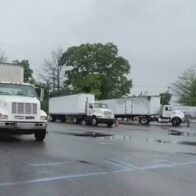
Regarding the operational structure, there is first response personnel, basic and advanced life support ambulances, strategically located medical posts, and previously defined evacuation routes, which allows for effective intervention in any eventuality.
The entity reiterated that these actions seek not only to protect the lives of participants and attendees, but also to ensure that the local health system continues to operate as usual, thereby strengthening the country’s response capacity to large-scale events.
Periodista, amante de los deportes.