

Brussels.- The European Union (EU) plans to sign its trade agreement with Mercosur on January 17, a decisive step to create the largest free trade zone on the planet after more than a quarter of a century of negotiations and blockades, and which will allow both parties to diversify alliances against the protectionist drift of the United States.
The Twenty-Seven achieved a qualified majority the day before to validate the agreement, an understanding that will allow the President of the European Commission, Ursula von der Leyen, and the President of the European Council, António Costa, to travel next week to Asunción (Paraguay holds the rotating presidency of the South American bloc) to proceed with the official signing along with the leaders of Argentina, Brazil, Uruguay and Paraguay. The agreement was reached despite the vote against France – the main opponent of the pact -, Poland, Austria, Ireland and Hungary, and with the abstention of Belgium and the support of Italy, which changed its mind after blocking the pact at the end of last month along with the other dissenting member states.You can also read: Price of the dollar in the Dominican Republic this Friday, January 9, 2026
To achieve this qualified majority, it was necessary to negotiate additional safeguards for European farmers, who have continued to demonstrate these days against the pact, which have served to convince Rome to lift its veto but have not been enough for Paris to join as well.
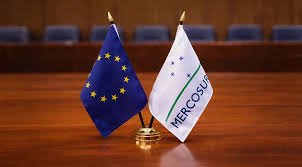
New Alliance Against Global Protectionism
The final push for the treaty, which had remained in a technical limbo since the political closure of negotiations in 2024, is largely explained by Brussels’ need to find alternative markets and trading partners, a goal that had been highlighted by various European leaders. All of this in the context of escalating trade tensions and the imposition of tariffs by the US Administration following the return to power of Donald Trump, to which is added the growing influence of China in regions such as the Latin American subcontinent and European dependence on Beijing for the supply of critical raw materials. The new commercial space will integrate nearly 800 million consumers and represent a combined gross domestic product (GDP) of approximately 22 trillion dollars, according to data from the European Commission.Elimination of Tariffs
The agreement will allow for the elimination of tariffs for 91% of EU exports to Mercosur and for 92% of South American sales to Europe, which translates into an estimated annual saving of 4 billion euros for European companies. For the European Union, the treaty opens the doors to a historically protected market for its most competitive industrial sectors, including the automotive and industrial machinery sectors, where the current tariffs of between 35% and 14% will gradually disappear. Other sectors that will especially benefit will be the chemical and pharmaceutical industries, which export for billions of euros each year, or agri-food products protected by designations of origin such as wines and cheeses.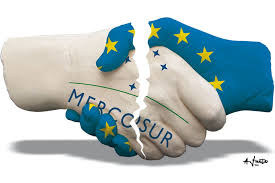
Final Obstacles to the Agreement
However, the approval of the European Union countries to sign the agreement with Mercosur does not yet represent the last step to close the historic pact, which could still face its last obstacles mainly in its ratification process in the European Parliament during 2026.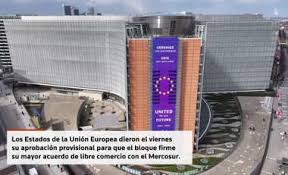
You may be interested in: Price of the Euro in the Dominican Republic this Friday, January 9, 2026
Ratification in the European Parliament is expected to be complex due to the great division in the community chamber in a vote in which the nationality of the MEPs will weigh as much or more than the ideological lines, with for example almost all French MEPs against regardless of their political family. In addition to this is the intention expressed by groups to vote against it, such as the far-right Patriots for Europe, which is even planning a motion of no confidence against Von der Leyen because of the agreement, but also the Greens or the Left due to environmental concerns and the unfair competition that, they argue, the pact will generate.