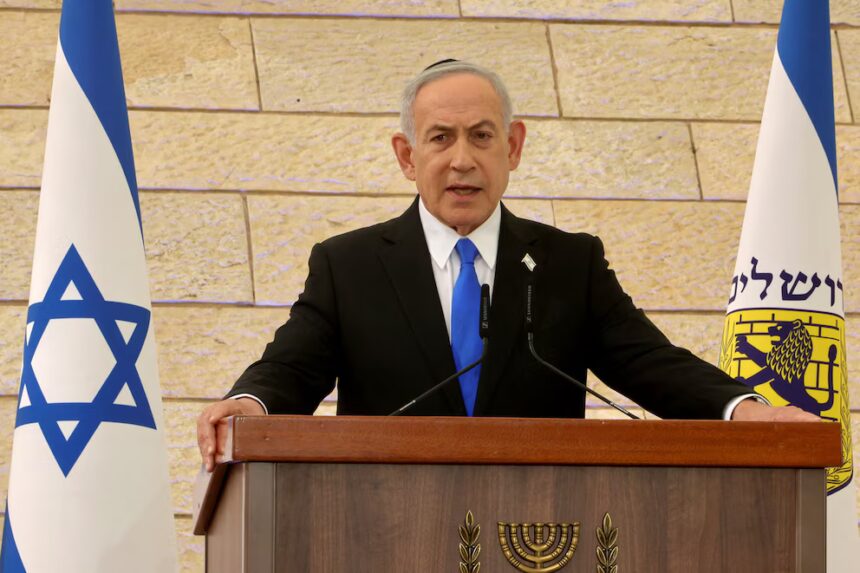
Benjamin Netanyahu published a video message addressed to Lebanese citizens, in English and broadcast on his social media, in which he urged them to reject Hezbollah and align themselves with Israel. “Israel is not at war with you. We are at war with Hezbollah, which has taken your country hostage, which follows Iran’s orders, and which uses your territory to launch terrorist attacks against Israel,” the prime minister asserted, according to his office. The appeal came at one of the most tense moments of the conflict: the Lebanese Ministry of Health raised the death toll to more than 3,600 since hostilities resumed on March 2, when the truce agreed upon in November 2024 expired.
Netanyahu framed his speech in terms of liberation, urging the Lebanese to “take the reins of their future” and build “security and prosperity” alongside Israel once Hezbollah is “dismantled.” On the same day, Israeli President Isaac Herzog reached out to Lebanese President Joseph Aoun, although he conditioned any progress on Beirut “reducing the influence of Iran and its allies.”
FILE – People gathered at the site where Hezbollah leader Hassan Nasrallah was killed in a southern suburb of Beirut, on September 29, 2024.
We recommend reading: Netanyahu says Israel will “soon” control 70% of Gaza after gaining territory
The rhetoric contrasts with the situation on the ground. Since March, Israel has carried out systematic bombings in southern Lebanon, the Bekaa Valley, and the southern suburbs of Beirut. Netanyahu himself confirmed having given instructions to the Army to “deepen and expand” the Israeli presence in Lebanese territory, and asserted that his forces have eliminated nearly 10,000 Hezbollah fighters since the beginning of the conflict.

The most recent escalation illustrates the risk of regional conflagration. On June 7, Israel bombed Dahiyeh, a Hezbollah stronghold in southern Beirut, ignoring requests from the White House. Iran responded with eleven missiles against northern Israel—the first attack since the April ceasefire—all of which were intercepted according to the Israeli military. Netanyahu then ordered strikes on targets in Iran, and announced a pause hours later upon confirming that Tehran had ceased the launches.

Hezbollah was born in 1982. Its secretary general, Naim Qasem, appointed after the death of Hassan Nasrallah in 2024, warned that the group will not accept a partial ceasefire nor will it withdraw north of the Litani River without Israel also withdrawing its troops, a condition that Tel Aviv rejects.
Iranian missiles are launched, following the announcement by Iran’s Revolutionary Guard that on Wednesday it had carried out attacks against a US base in Jordan and 21 other targets in the Gulf, in retaliation for US attacks in the Strait of Hormuz, from a location indicated as Tehran (Iran)
More Read

The negotiations are going through a critical phase. Israel and Lebanon agreed last week, in talks mediated by Washington, on a ceasefire conditioned on a “complete cessation” of Hezbollah attacks and the evacuation of its fighters from border areas. The agreement contemplates the creation of zones under the exclusive control of the Lebanese Army. However, Hezbollah rejected the terms and Netanyahu announced that he would not submit the pact to a cabinet vote as long as the group did not accept them.
The Iranian variable adds complexity to the picture. Tehran conditioned any agreement with the United States on the cessation of hostilities in Lebanon. The spokesperson for the Iranian Foreign Ministry, Esmail Baqai, formulated it unambiguously: “We insist that a ceasefire in Lebanon is an essential condition for any agreement aimed at ending the war,” according to AFP. The Iranian position clashes with the strategy of the Trump administration, which seeks to separate the Lebanese front from nuclear negotiations with Tehran, a divorce that Tehran refuses to accept.
Netanyahu’s speech to the Lebanese combines war propaganda —dividing the civilian population from its militia— and political signaling toward Washington. Israel insists that it does not seek to destroy Lebanon, but Hezbollah. Three months of intensive bombing demonstrate that the line between both objectives is, for a large part of the Lebanese civilian population, impossible to draw.