Asunción.- The Government of Paraguay proposed this Thursday the creation of a Ministry of Mines and Energy and a regulatory body for the electricity sector, initiatives that it will promote through separate bills that it has put up for public discussion before presenting them to Congress.
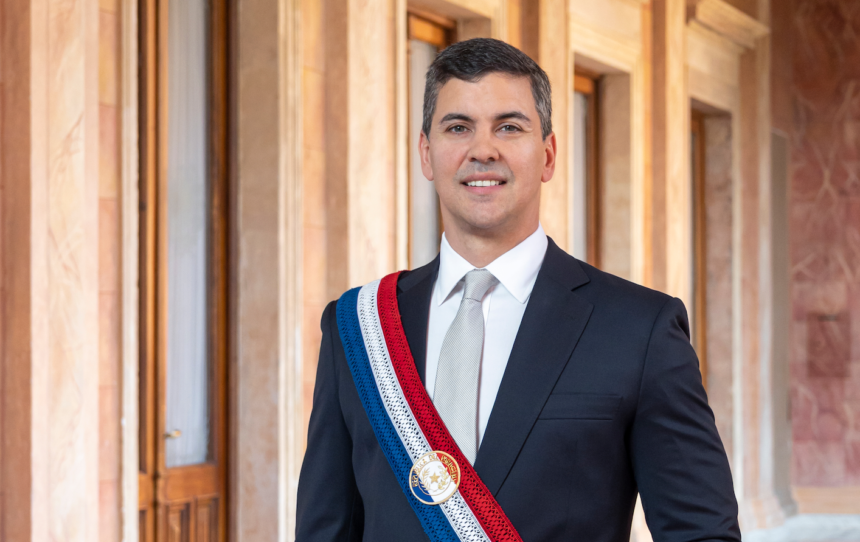
This was announced by the Paraguayan president, Santiago Peña, who led a meeting today with the so-called National Electricity Sector Board, which brought together representatives of unions, specialists, and academics.
“For the first time, we brought all sectors to the same table to build the country’s energy future together. We want clear rules and strong institutions to transform our energy into investment, industries, jobs, and development,” Peña posted on the social network X.
The management of this sector is currently in the hands of the Vice Ministry of Mines and Energy, which reports to the Ministry of Public Works and Communications (MOPC).
In a press conference following the meeting, the spokesperson for the Presidency of Paraguay, Guillermo Grance, said that the Government’s two bills will be published on a web platform “so that it is available to specialists“, unions, and the general public, who will be able to make contributions and suggestions to the proposals.

You can also read: Paraguay records 17 femicides, leaving 33 orphans, so far in 2026
The president of the Paraguayan Industrial Union (UIP), Enrique Duarte, indicated in the same press conference that “a long-held desire” of the private electricity sector has been to have “an organic structure” within the State, as well as to have “urgently” a regulatory body that does not exist in the country.

The Paraguayan energy matrix is based on hydroelectric generation, with an installed capacity of 8,760 megawatts coming from the binational plants of Itaipú and Yacyretá, shared with Brazil and Argentina, respectively, and from the Acaray dam, in the department of Alto Paraná (east).
The Peña administration is promoting a policy to diversify the energy matrix toward alternative sources such as solar, the use of hydrogen fuel, or biofuels, given that by 2030 the available installed capacity “would be compromised” during peak electricity consumption hours, Deputy Minister of Energy and Mines Mauricio Bejarano told EFE last May.
Paraguay and the United States signed a memorandum of understanding on strategic cooperation in civil nuclear matters on August 4th in Washington, which will allow the South American country to conduct a survey of uranium and rare earths, while paving the way for the possible use of small reactors to complement its electrical system.