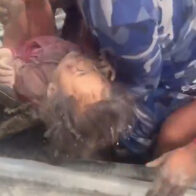
Nepal has been shaken by a wave of violent mass demonstrations led by young people from Generation Z, who took to the streets to protest against corruption and the blocking of a series of social networks. Last week, the country’s government blocked several social networks in its territory that did not register with the Ministry of Communication and Information Technology in accordance with the law. These include Facebook, Instagram, X, YouTube, Reddit, LinkedIn, as well as Snapchat, Pinterest, and Rumble. The decision sparked massive protests, which were called ‘Generation Z demonstrations,’ and which spread from the capital, Kathmandu, to other cities in the Himalayan country. In the capital, the protest began peacefully, but turned violent when the protesters knocked down the barricades that prevented them from marching towards the Parliament building, which some managed to access. In response, the Police fired water cannons, tear gas and even resorted to live fire, which only fueled the anger of the protesters. However, this Tuesday the authorities lifted the ban on social media, Reuters reported. “We have removed the social media block. They are already working,” said the cabinet spokesman and Minister of Communications and Information Technology, Prithvi Subba Gurung. Despite the cancellation of the measure, the riots have not ceased: protesters stormed the Parliament, located in Kathmandu, and set fire to the building, while they set fire to the house of the nation’s prime minister, while government ministers were evacuated by the Army in the face of the excesses. Social tension finally led to the fall of the Executive: the country’s prime minister, Khadga Prasad Sharma Oli, has resigned from his post. In a letter addressed to President Ram Chandra Poudel, Oli stressed that his resignation is “effective as of today” so that the country can “take new steps towards a political solution and the resolution of problems”. According to Reuters, the riots are the worst in decades in this Himalayan country located between India and China. Since the monarchy was abolished in 2008, Nepal has been going through political instability and economic uncertainty. Shashi Asthana, former head of Infantry of the Indian Army and global strategic analyst, told RT that the same situation that is happening in Nepal, when a crowd suddenly turns violent, was observed in nearby countries, such as Sri Lanka and Bangladesh. “It is too premature to say if there is a foreign hand involved and to what extent it is involved. But the fact is that such a large protest is difficult to believe is only autochthonous and that the problems are only local,” he said. In this context, he admitted that the trigger for the demonstrations centers on the prohibition of social media, but the main reasons were corruption, bad governance, inflation, economic problems and other difficulties. In addition, commenting on the resignation of Prime Minister Khadga Prasad Sharma Oli, he said that “apparently, a change of regime has taken place”.
Protests in Nepal erupt after ban on the use of Facebook, Instagram, YouTube and other social media