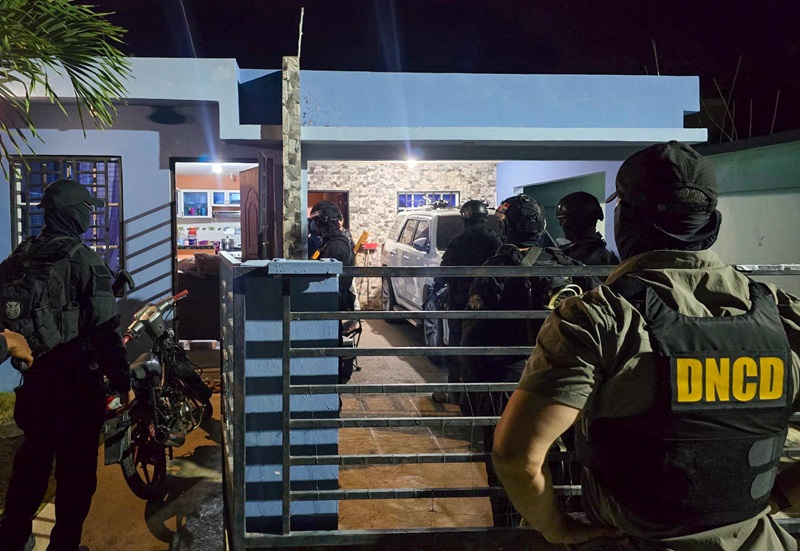
Santo Domingo.- The Public Ministry, with the participation of 18 prosecutors and more than 300 agents from the National Drug Control Directorate (DNCD) and other state intelligence agencies, launched Operation LGTCA early this Thursday, through which it dismantled a complex criminal structure dedicated to the receipt, storage, and redistribution of shipments of controlled substances from South America.
The criminal organization’s operational base was located on the country’s East coast, specifically in the tourist areas between the mouth of the Chavón River and Bayahíbe.
Operational intelligence investigations determined that the organization had developed the capacity to mobilize multiple transnational shipments of narcotics per year and that, furthermore, it served as a bridge for other international networks for the subsequent shipment of the substances to Puerto Rico via speedboats.
The operation was coordinated by the General Directorate of Prosecution and the Specialized Prosecutor’s Office against Illicit Traffic in Narcotic Drugs, with the participation of prosecutors and agents from various security and intelligence institutions.
During the deployment, the Public Ministry executed 14 simultaneous raids that impacted multiple properties linked to the network, located in the provinces of La Romana, La Altagracia, and Puerto Plata.

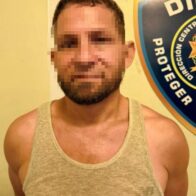
As a result of the operation, about 11 people were arrested and 10 vehicles of various models, several vessels, geolocation devices (GPS), electronic communication equipment, money, and documents were seized, among other evidence linked to the investigation.
The authorities have identified 10 members of the organization, several of whom have prior convictions for drug trafficking-related crimes in Puerto Rico.
According to investigations, the structure used the eastern coast of the Dominican territory as a strategic point to receive and store drug shipments, before coordinating their distribution and subsequent transfer to Puerto Rico.

The arrested individuals will be presented by the Public Prosecutor’s Office before the courts, where the corresponding coercive measures will be determined.