Santo Domingo.— The creation of a Family Ministry that integrates the Police, the Public Prosecutor’s Office, psychologists, health personnel, and judges was proposed as an alternative to strengthen the prevention of femicides in the Dominican Republic.
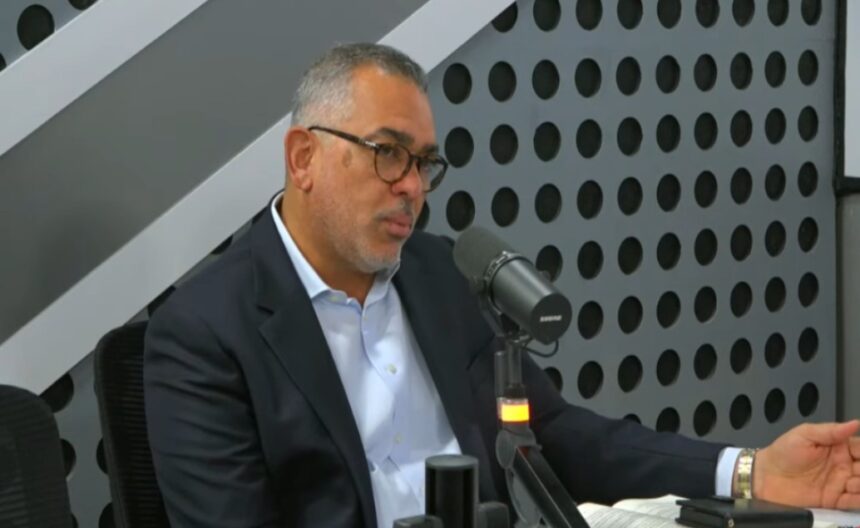
The proposal was formulated by lawyer Edward Moya, in a debate on femicides, the new Penal Code, and the necessary measures to address violence within families.
Moya considered that toughening penalties is not enough to address the problem and advocated for a public policy that allows for coordinated intervention from the first signs of violence.
“The only way or one of the ways that could be feasible is the creation of even a family ministry,” the lawyer expressed during the radio program “Esto No Tiene Nombre”.
He explained that this agency could function as a comprehensive response center, similar to the Casa del Conductor model, where different institutions intervene in the same conflict.
In this case, he proposed that an emergency call due to a family dispute could immediately activate police officers, prosecutors, psychologists, nurses, and judges.
More Read

“In that institution you will find a National Police, a team that receives emergency calls, a team of psychologists, a nursing team, a permanent judge and a prosecutor’s office,” maintained Moya.
The lawyer pointed out that the intervention must take place before a situation of violence reaches irreparable consequences.

In his/her view, the State must have mechanisms that allow for identifying what is causing the conflict and offering assistance to both the victims and the affected children.
We recommend reading:
More Read

The proposal also contemplates psychological, educational, and social assistance for children who are left in a vulnerable situation following a femicide or the separation of their parents due to acts of violence.
During the debate, psychologist Amaury Ramírez maintained that prevention must address the various factors related to violence and not be limited to punishment.
He mentioned among these pathological jealousy, alcohol and drug consumption, emotional dependency, lack of self-control, and difficulties in managing frustration.
Ramírez also questioned that the phenomenon is analyzed from a single perspective and stated that “we want to solve a complex problem with ideas from 100 years ago,” referring to the need to broaden the analysis of the causes of violence.
Both experts agreed that laws and sanctions are part of the response, but argued that reducing femicides requires a prevention strategy that involves public institutions, communities, schools, and families.