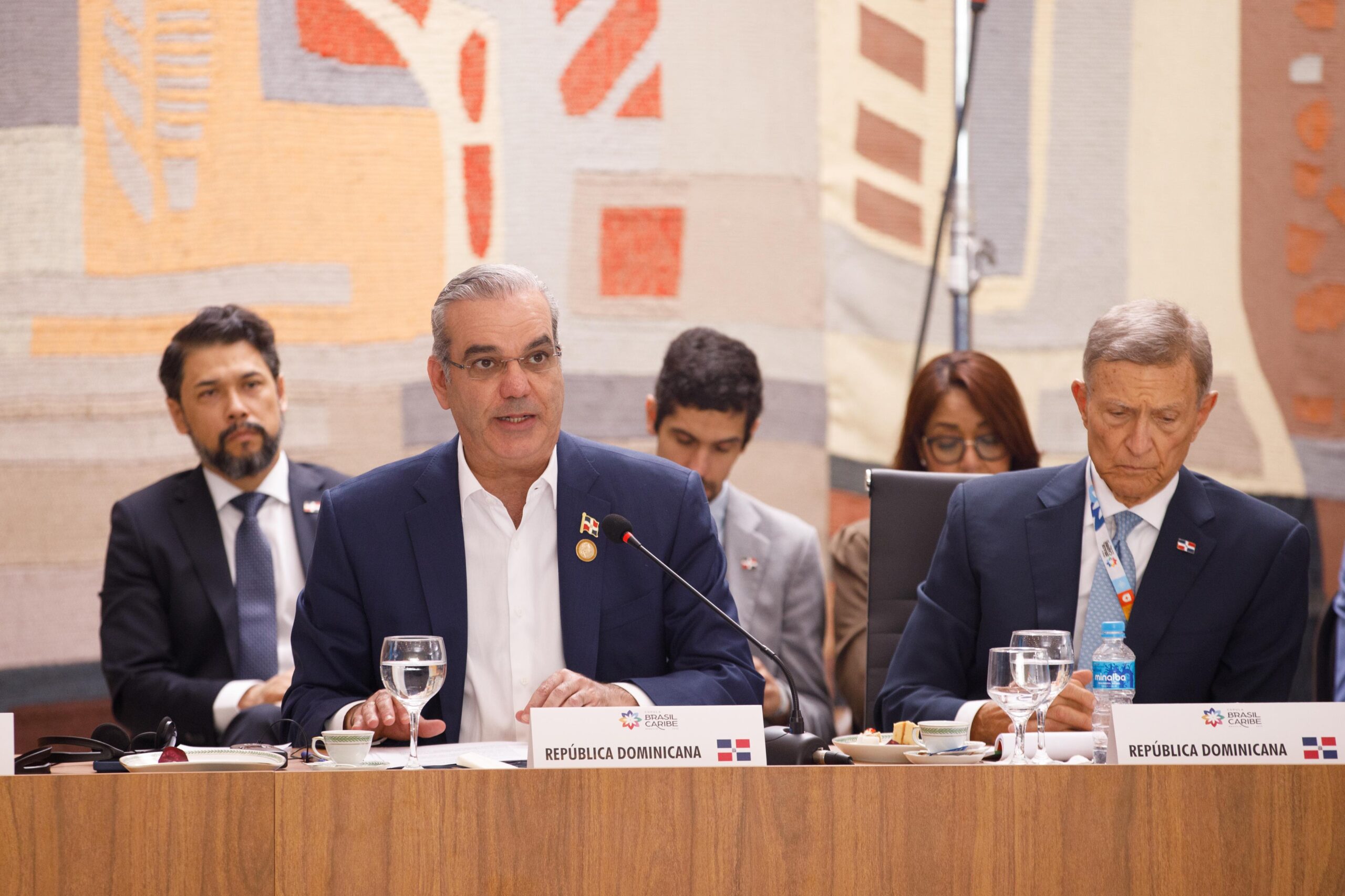
Brasilia, Brazil.– President Luis Abinader called for the construction of a great hemispheric climate pact to decisively confront the effects of climate change, warning that this is the most urgent threat facing the region.
In his speech, during the
Brazil-Caribbean Summit held this Friday, the president highlighted the urgency of joint action against phenomena such as extreme hurricanes, the loss of biodiversity, and the proliferation of sargassum, which are seriously affecting the countries of the Greater Caribbean.
You may be interested in: Abinader leads follow-up meeting on the Citizen Security Plan Santo Domingo.- President Luis Abinader
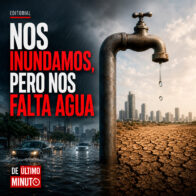
“The most urgent threat we face is climate change; its devastating effects are already strongly felt in the Greater Caribbean: extreme hurricanes, droughts, floods, loss of biodiversity,” warned Abinader, who stressed that nations with greater historical responsibility must assume a leading role in the financing of sustainable solutions.
Likewise, the Dominican head of state said that it is time for a great hemispheric climate pact that combines international support, innovation, and political will in a balanced way.
In that sense, the president proposed an unavoidable energy transition, taking advantage of the abundant natural resources of Latin America and the Caribbean, such as the sun, wind, and water.
Strengthening food security
In addition, President Abinader proposed in his speech to strengthen food security through greater regional cooperation, citing the recent National Food Sovereignty Plan promoted by the government he leads, as well as the need to boost intra-Caribbean trade in agro-industrial products.
Sargassum Threat
Abinader again referred to the ecological threat of sargassum, whose uncontrolled expansion has severely affected marine ecosystems and coastal communities.
Regarding this, the Dominican ruler proposed establishing a regional system for monitoring and coordinated response, highlighting the role that Brazil could play with its scientific and technological capacity.
More Tourism Connectivity and Cooperation
In his speech, Abinader referred to the challenges of intraregional connectivity, calling for the urgent development of maritime and air corridors to reduce physical barriers between Caribbean countries. “The Caribbean remains a fragmented region, with short distances and long journeys.”
President Abinader highlighted the advances of the Dominican Republic in the expansion of its civil aviation and his government’s interest in promoting multi-destination tourism, which strengthens cultural and economic ties between the Caribbean countries.
Strong support for international mission in Haiti
The Dominican Republic’s ruler reiterated that the current situation in Haiti represents a direct threat to regional security and firmly supported the proposal of the UN Secretary-General, António Guterres, to transform the Multinational Security Support Mission in Haiti (MSS) into a hybrid operation under the control of the United Nations.
“The Dominican Republic fully supports this proposal. As a demonstration of the national consensus that exists in my country on this issue, a few days ago, I and the three former Dominican presidents sent a letter to the presidents of the 15 member countries of the Security Council, advocating for this proposal. This agreement has been an unprecedented event in national politics,” said the president, advocating for this solution.
He invited all the countries present to support this proposal, for the good of Haiti and the entire region. “The pacification of Haiti is a strategic necessity for our entire region. If we fail today, tomorrow it will be more difficult and costly,” he stated.
Next stop: Punta Cana
Finally, Abinader invited the leaders present to attend the tenth Summit of the Americas, which will be held in December in Punta Cana, Dominican Republic.
He pointed out that the event will seek to project a dynamic hemispheric agenda and will give a prominent role to the private sector as the engine of regional development.