SANTO DOMINGO – Each year, thousands of Catholic faithful in Dominican Republic and the world celebrate Corpus Christi, one of the most important festivities of the liturgical calendar. This solemnity, whose full name is Solemnity of the Body and Blood of Christ, honors the real presence of Jesus Christ in the Eucharist.
The feast takes place
the Thursday after Trinity Sunday, which means its date varies each year, but it is always celebrated 60 days after Easter Sunday.
Origin and History of Corpus Christi
The Corpus Christi was officially instituted in the year 1264 by Pope Urban IV, after a series of mystical visions of a Belgian religious, Saint Juliana of Cornillon, and the so-called “Miracle of Bolsena”, where the transformation of bread and wine into the Body and Blood of Christ would have been evidenced during a mass.
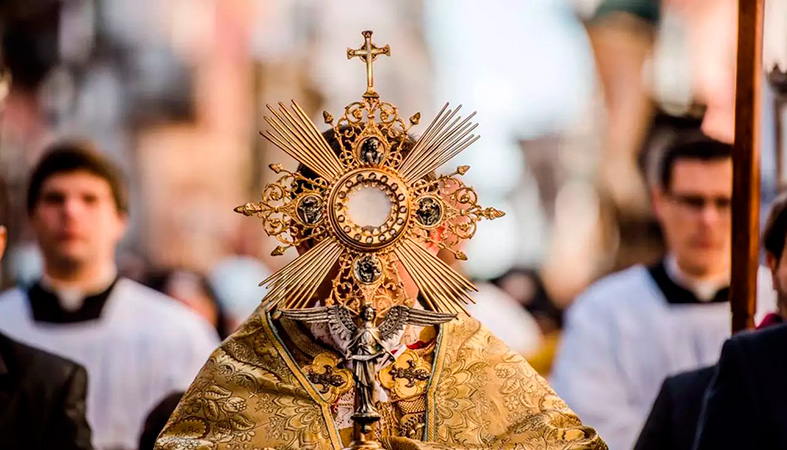
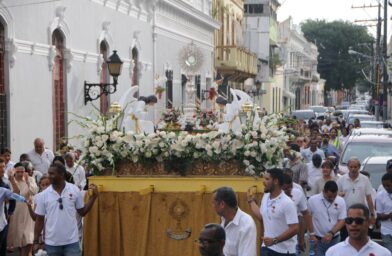
Since then, the Catholic Church has celebrated this date as a public manifestation of faith in the Eucharist. The feast includes
processions, solemn masses and liturgical acts where the Blessed Sacrament is carried through the streets, accompanied by songs, flowers, and decorated altars.
What is Corpus Christi?
In the country, Corpus Christi is a
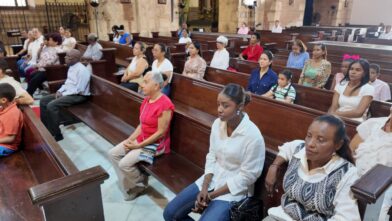
national holiday, allowing the faithful to participate in religious activities organized by parishes throughout the territory. In many cities, especially in
Santo Domingo and Santiago,
massive processions, open-air masses, and symbolic representations of the Last Supper are held.
In addition to the spiritual aspect, for many Dominicans it is also a day of reflection, family rest, and cultural tradition.
Theological Meaning
Corpus Christi highlights one of the central dogmas of Catholicism:
transubstantiation, that is, the belief that during Mass, the bread and wine become the Body and Blood of Christ, although they retain their external appearance.
This solemnity seeks to reinforce devotion to the sacrament of the Eucharist and remember Christ’s sacrifice for humanity.