“n
Since the beginning of 2026, Chinese exports of some intermediate forms of tungsten to Japan fell to zero and have not recovered. Those of dysprosium and terbium—metals essential for manufacturing high-performance magnets used in electric vehicles—also stopped in October 2025 and have not flowed again. Shipments of yttrium, used in LED screens and semiconductor equipment, were reduced to 1.13% of the previous year’s total volume. This is not a sudden suspension: it is a calibrated restriction, designed to inflict concrete economic damage without triggering a diplomatic chain reaction involving Washington.
n” “nThe origin of the crisis dates back to November 2025, when Japanese Prime Minister Sanae Takaichi declared before Parliament that a Chinese invasion of Taiwan would constitute “a situation that threatens Japan’s survival,” with the potential to trigger the right to collective self-defense and a Japanese military response. Beijing reacted with fury. In the following days, China denounced the statements before the United Nations, canceled flights to Japan, reimposed the ban on importing Japanese seafood, and warned its citizens against traveling or studying in the country. In January 2026, the Chinese Ministry of Commerce issued a directive that prohibited with immediate effect the export of dual-use goods —with civil and military applications— to users or for purposes that could “enhance Japan’s military capabilities.” In February, Beijing published two lists with 40 Japanese companies subject to additional restrictions.
n” “nThe strategy bears an evident parallel to the 2010 crisis, when China imposed a de facto embargo on rare earth exports to Japan after a maritime incident in the Senkaku/Diaoyu islands. That crisis and the restrictions of that time reminded Tokyo of its structural exposure, although dependence on China for rare earths has been reduced from 90% back then to around 65% today. This time, the blockade is more selective but potentially more lasting, because it is anchored to a political demand —Takaichi’s retraction— that the prime minister rejects.
n” “nYou may be interested in:Marco Rubio warned that Iran cannot impose tariffs in Hormuz and called for stopping attacks by groups allied with TehranFile photo showing a group of workers from the Japanese automaker Toyota assembling a car on an assembly line at the factory in Miyawaka, Fukuoka (Japan).
More Read


The industrial consequences are already palpable. Tungsten is an indispensable material for the precision tools used by automotive plants, a sector that accounts for about 10% of Japan’s GDP. Masayoshi Matsumoto, president and CEO of Sumitomo Electric Industries, one of the main buyers of tungsten, warned at an industrial exhibition in Beijing that if the situation continues, “it will definitely cause problems for Japanese manufacturing,” according to statements reported by Bloomberg. To mitigate the shortage, both Sumitomo Electric and Mitsubishi Materials have increased the use of recycled material as raw material. Mitsubishi Materials currently operates with 70% recycled inputs and aims to reach 100% before 2030.
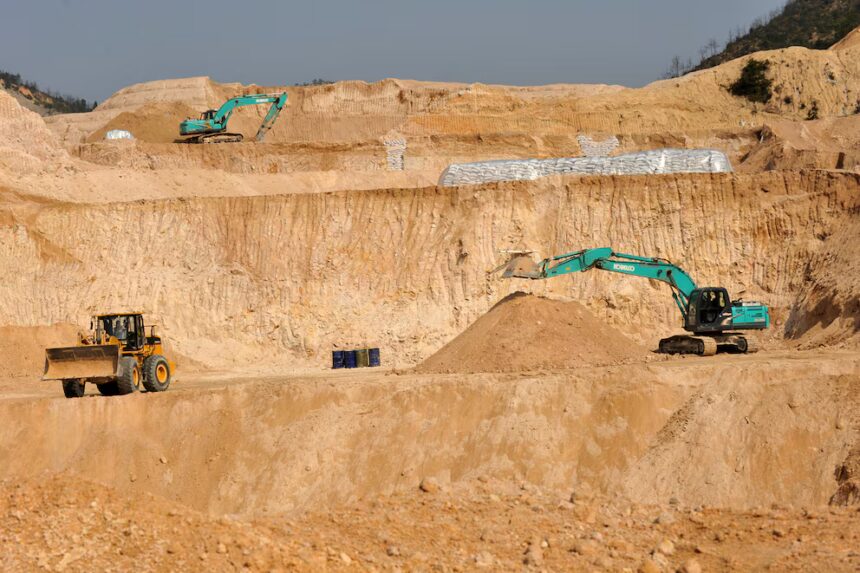
n” “nJapan’s structural dependence on China is the vector of vulnerability that Beijing exploits: according to data from the Japan Organization for Metals and Energy Security, the country depended on China for approximately 70% of its rare earth imports as of 2024. For specific minerals such as dysprosium and terbium, that dependence was practically total. China controls about 70% of the world’s mined rare earth production and more than 90% of the refining process and permanent magnet manufacturing. Tokyo has reduced its exposure through agreements with suppliers in Australia and Canada and the development of substitution technologies, but bottlenecks in the intermediate links of the chain remain.
n” “nTokyo’s diplomatic response has been deliberately measured. Japan joined the Group of Seven’s commitment to reduce dependence on any single country for rare earths to less than 60% by 2030, and the government is studying recycling measures, reserve pricing, and trade adjustments. But the bilateral channel is practically closed: the Japanese ambassador in Beijing has repeatedly requested meetings with officials from the Chinese Ministry of Foreign Affairs without receiving a response, according to sources cited by Bloomberg on condition of anonymity.
More Read

The blockade is not total. Some refined minerals and light rare earths continue to flow in smaller quantities, and that gradation seems deliberate: the strategic ambiguity of the Chinese measures appears calculated to pressure Takaichi toward a more conciliatory stance without reaching the breaking point that would force Washington to intervene. For the Japanese industry, the question is not whether the damage is real—it is—but whether Tokyo can sustain the supply gap long enough for diversification, accelerated by the crisis itself, to offset the losses. For now, the two countries are communicating more through export statistics than through their diplomats.
n” “nn”