
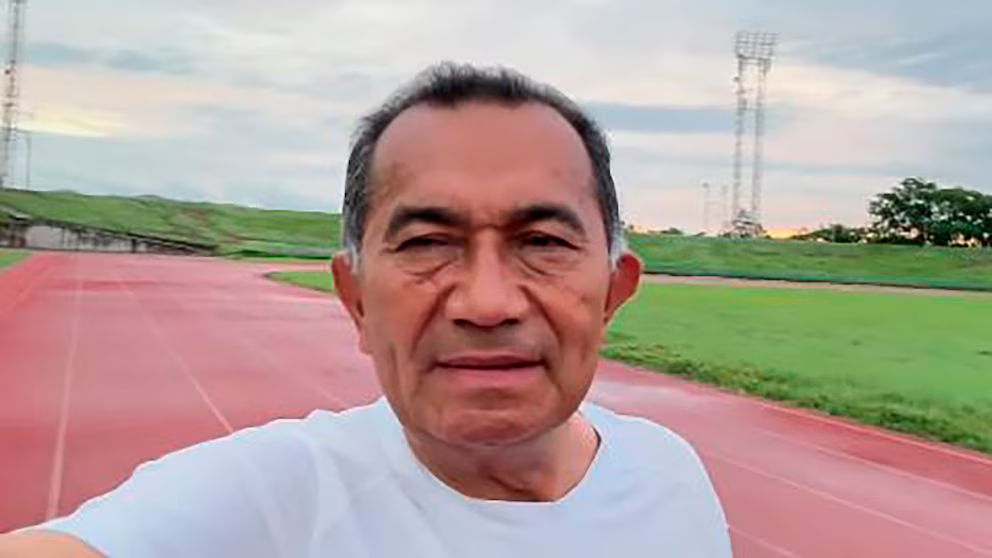
While chavismo claimed 23 of the 24 governorships in dispute and almost total control of the new parliament, only one position was left out of the red distribution: the state of Cojedes. There, Alberto Galíndez, outgoing and re-elected governor with 70,091 votes, became the only non-officialist leader to win in the regional and legislative elections called by the regime of Nicolás Maduro, which were widely questioned for their lack of legitimacy and for an abstention rate exceeding 85%, according to the Plataforma Unitaria Democrática.
But Galíndez is far from being a traditional opponent. His political career and recent positions place him in the sector that from the opposition is pointed out as functional to Chavismo.
Galíndez, 69, is a politician of the old guard, with more than three decades of public activity. A historical militant of Acción Democrática, he was elected governor of Cojedes for the first time in 1995 and re-elected in 1998, at the dawn of the rise of Hugo Chávez. Later, he served as mayor of the municipality of Tinaco, also in Cojedes. In recent years, he joined Primero Justicia, one of the main parties of the Venezuelan opposition. From there he once again won the governorship in 2021. However, his decision to run for re-election in the elections of May 25, contravening the official line of the party, left him out of its ranks. On April 7, Primero Justicia announced his expulsion for “acting against unity” and allowing his candidacy “by another political movement”.Galíndez’s exclusion was framed within the internal conflict of the opposition, divided between those who supported the call for abstention —led by María Corina Machado— and those who chose to participate in the process despite the allegations of manipulation.
During the campaign and after his re-election, Galíndez has shown gestures of alignment with the regime. His call to vote in the presidential elections of July 28th of last year was lukewarm at best, and he was not seen as an active member of the movement that led the anti-Chavismo in favor of its standard-bearer Edmundo González Urrutia.
“On July 28th, the men and women of Cojedes have a great commitment to democracy”, he said prior to the call that resulted in the biggest electoral fraud in the history of Venezuela. “It is valid to recognize the importance of maintaining a relationship of respect, institutionality and cooperation between the regional and national government currently presided over by Nicolás Maduro.”
More Read
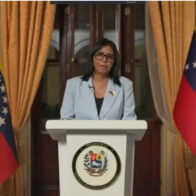
After the results were known, the governor not only acknowledged the “victory” of Maduro, but also held a meeting with Vice President Delcy Rodríguez, one of the most powerful figures in the regime. From the ruling party, Galíndez’s re-election was celebrated: Maduro even anticipated that he would communicate with him to “work together”.

In a video that circulated on social media, recorded during a rural gathering, a woman shouts: “The governor is Chavista, the governor is Chavista”, while Galíndez smiles, neither denying nor confirming the statement.
Opponent or Scorpion?
In Venezuelan political jargon, Galíndez represents the archetype of the “scorpion”: a term used to describe nominally opposition politicians who act in tune with Chavismo, validating its structure and benefiting from the margins of power granted to them by the regime.

His figure serves the official narrative of a plural and functional opposition, which participates in elections without conditions, without an independent referee, and with already predictable results. In this case, moreover, his role as the only elected “opponent” reinforces the narrative of a democratic competition that, in practice, was a staged performance.
Galíndez has defended himself against these accusations by speaking of “governing by listening to the people” and appealing to a logic of institutional cooperation. On Monday, May 26, from a sports center in San Carlos, he thanked the citizens for their trust and called for a caravan through the main cities of the state to celebrate his triumph. He promised that this new period of government will be “of achievements, with greater wisdom and greater success.”
An Exception That Confirms the Rule
On a map completely dyed red, Galíndez’s re-election in Cojedes is presented as a controlled anomaly. His history of closeness to Chavismo, his recent support for Maduro, and his marginalization by the majority opposition place him closer to cohabitation than to resistance.
Thus, while the dictatorship clings to its territorial and parliamentary domain, and abstention consolidates as the main tool of citizen protest, the Galíndez case offers a clear illustration of the opposition’s dilemma in Venezuela: to participate and survive on the margins of power, or to resist from absolute exclusion.