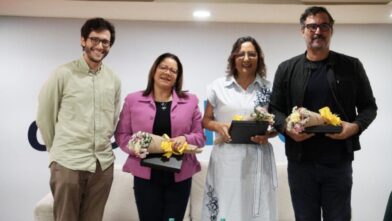
Santo Domingo.– The Global Foundation for Democracy and Development (Funglode), through its Center for Environmental, Energy and Sustainable Development Studies, held the conference “El Niño and its impact on meteorology and the hurricane season”, a space in which experts analyzed the possible effects of this climatic phenomenon in the Dominican Republic and the region.
The activity brought together students from the Iberoamerican University (UNIBE), professionals, researchers, and individuals interested in learning about the challenges posed by extreme weather events and the importance of strengthening prevention.
The welcoming remarks were delivered by Ernesto Reyna, director of the Center for Environmental, Energy and Sustainable Development Studies at Funglode, who highlighted the need to promote spaces for analysis that contribute to strengthening a culture of prevention and the understanding of the effects of climate change.
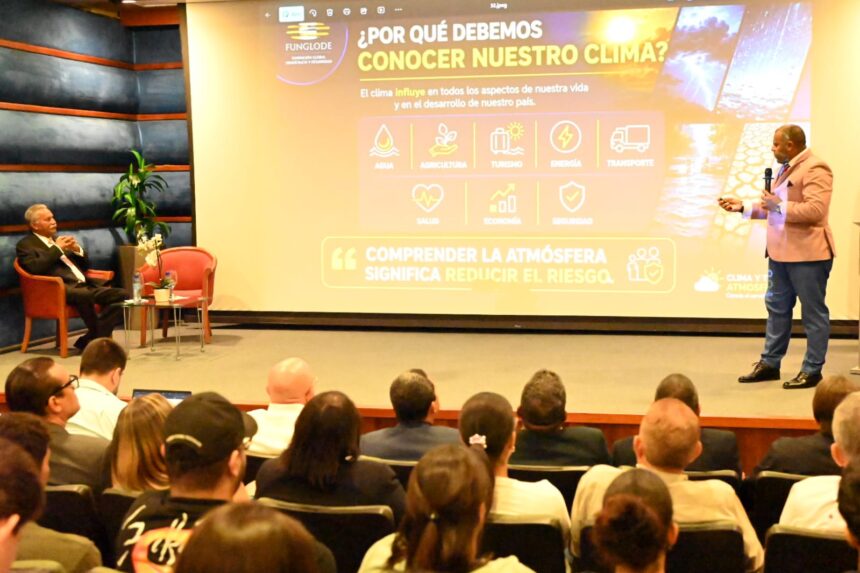
The conference was given by engineer Francisco Holguín, a specialist in risk management, meteorology, and the environment, who explained that meteorological information has become a key tool for protecting lives, reducing vulnerabilities, and supporting decision-making in areas such as agriculture, tourism, energy, transport, and health.
During his presentation, Holguín pointed out that the Dominican Republic maintains a high vulnerability to hydrometeorological phenomena due to its geographical location, the characteristics of its territory, the concentration of the population in risk areas, and the increasingly visible effects of climate change.
More Read

We recommend reading: Funglode and GFDD strengthen their presence at artificial intelligence summits
The expert explained that the El Niño phenomenon, related to the anomalous warming of Pacific Ocean waters, could strengthen towards the end of 2026 and the beginning of 2027, causing extreme temperatures, reduced rainfall, and prolonged periods of drought.

He indicated that these conditions could have consequences in sectors such as agricultural production, reservoirs, drinking water supply, hydroelectric generation, and the increased risk of forest fires.
Although forecasts point to a hurricane season near or slightly below average, Holguín warned that a lower number of storms does not necessarily represent a reduction in danger, because a single high-intensity event can cause significant human and economic losses.
More Read

The specialist highlighted that risk management must focus on impact-based forecasts, which allow for anticipating not only the arrival of an atmospheric phenomenon, but also its potential effects on the population, infrastructure, and essential services.
Likewise, he called for strengthening the monitoring of the ENSO (El Niño-Southern Oscillation) phenomenon, improving water resource management, promoting community education campaigns on water conservation and fire prevention, as well as guiding the agricultural sector to adjust its activities to climate projections.
The conference concluded with a question and answer session between the attendees and the speaker, where the importance of science, planning, and prevention to face the challenges associated with climate change was highlighted.
With these types of initiatives, Funglode reaffirms its commitment to the dissemination of scientific knowledge, civic education, and the promotion of actions aimed at strengthening climate resilience and sustainable development in the Dominican Republic.