Santo Domingo.– The Dominican Institute of Telecommunications (Indotel) announced the launch of the procurement and contracting process to implement the Cybersecurity Assistance Center, a service designed to guide, accompany, and assist Dominican citizens in the event of digital incidents.
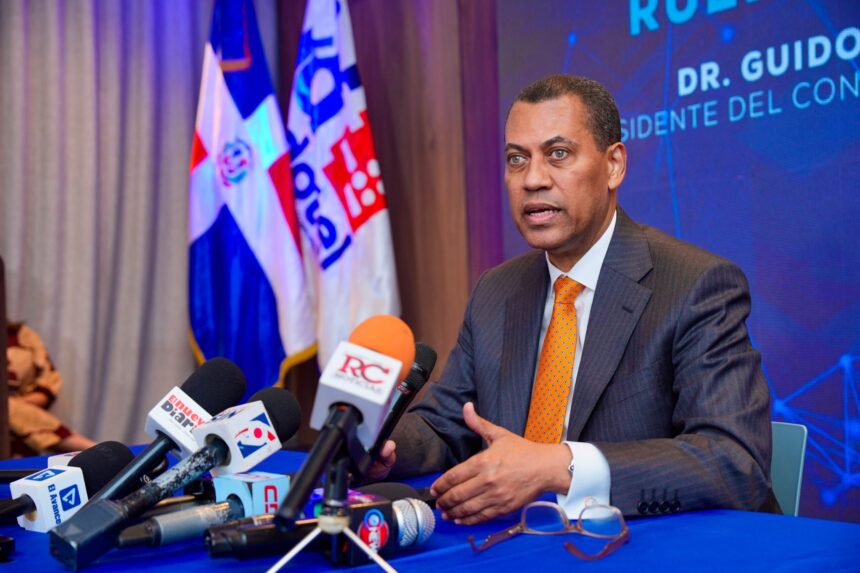
The president of the Indotel Board of Directors, Guido Gómez Mazara, explained that the center seeks to become a clear and reliable gateway for people facing risk situations in the digital environment, at a time when daily life, banking transactions, e-commerce, social networks, and public services increasingly depend on digital platforms.
The information was provided during a press conference held in the institution’s Orlando Mera hall, where Gómez Mazara stated that cybersecurity is no longer a matter reserved for technicians, specialists, or large corporations, but has become a citizen issue, linked to the tranquility, economy, privacy, and dignity of individuals.
“Today, cybersecurity is a citizen issue. It is a matter of social protection. It is a subject that touches upon the peace of mind, the economy, the privacy, and the dignity of people,” he/she expressed.
The head of Indotel explained that the Cybersecurity Assistance Center will offer initial guidance regarding cases such as WhatsApp scams, fraudulent calls, bank account theft, identity theft, social media hijacking, online shopping fraud, cyberstalking, cyberbullying, sextortion, fake links, and digital manipulation.
He indicated that, in the face of a digital crisis, the first few minutes are fundamental to knowing how to protect an account, preserve evidence, report a case, prevent the damage from growing, or reduce the risk of further harm.
More Read

“With this step, Indotel moves from vision to action. We are moving from recognizing an urgent need to building a concrete, close, and accessible response for the people,” stated Gómez Mazara.
The official clarified that this center will not replace the work of the competent authorities or specialized agencies, but will complement those efforts through immediate guidance, initial accompaniment, prevention, and proper channeling of cases.

“We want citizens to have a reference point. To know that they are not alone. That in the face of a digital incident, there is an institutional, reliable, and accessible point of support,” he stated.
Gómez Mazara highlighted that the project will have a direct impact on vulnerable sectors, such as children and adolescents exposed to cyberbullying, digital harassment, and improper exposure of images; older adults who may be victims of deceptive calls or impersonation fraud; young people who need to protect their digital identity and reputation; as well as MSMEs, businesses, independent professionals, and entrepreneurs affected by fraud, malicious emails, account hijacking, ransomware, and other incidents.
You can also read: Indotel cedes spaces to accommodate cancer patients
The president of the Indotel Board of Directors pointed out that the center will also have a strong preventive component, through awareness campaigns, practical guides, early warnings, and simple recommendations so that the population can identify risk signals such as suspicious links, cloned pages, fake offers, urgent messages, fraudulent calls, improper requests for codes, and fake profiles.
More Read

“An informed citizen is a less vulnerable citizen,” stated Gómez Mazara, highlighting that protecting citizens digitally also means protecting the family economy, entrepreneurship, productivity, and trust in the country’s digital ecosystem.
Gómez Mazara asserted that with this initiative, the Dominican Republic has the opportunity to position itself as a regional leader by bringing cybersecurity to the average citizen, the student, the parent, the senior citizen, the corner store, the entrepreneur, the independent professional, and the small business.
The initiation of the procurement and contracting process will be carried out in accordance with the principles of transparency, efficiency, competition, and institutional responsibility, with the purpose of implementing a service that responds to best practices, the real needs of the citizenry, and the urgency of the moment.