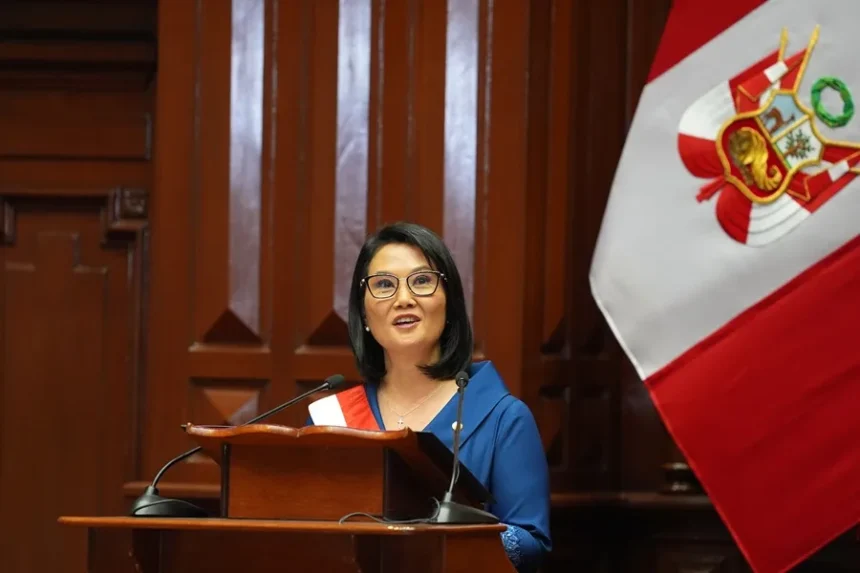
Lima.- The new president of Peru, Keiko Fujimori, announced this Tuesday that the Armed Forces will temporarily assume security operations and internal order control in areas of the country declared in a state of emergency to combat organized crime and delinquency.
“During states of emergency, the Armed Forces will temporarily assume leadership of security operations and internal order control, in close coordination with the National Police,” Fujimori stated during his first message to Congress after assuming the Presidency of Peru.
The ruler added that the military must work with the National Police “until security is fully restored” in the country.
Fujimori maintained that his Government is going “to recover every neighborhood, every road and every public space for Peruvian families.”
“Wherever organized crime, drug trafficking, and illegal mining have seized control from the State, we will make use of all the tools that the Constitution makes available to the Government,” he remarked.
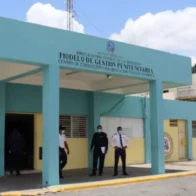
The ruler pointed out that her priority “will be to comprehensively strengthen” the National Police and restore “the respect, equipment, and political backing it deserves to firmly fulfill its mission of defending good Peruvians.”
Modernization of the fight against crime
He also said that “an ambitious technological modernization process will be promoted, including interconnected national video surveillance systems, artificial intelligence platforms to anticipate and map crime, modern communication tools, and command centers that allow for a rapid and coordinated response to criminality.”
We recommend reading: Keiko Fujimori strengthens cooperation with regional allies in the framework of her inauguration as president of Peru
Fujimori announced that “the fight will not only be against the common criminal,” but will also go “after the national and international mafias that finance extortion, contract killing, drug trafficking, and illegal mining.”

In that sense, intelligence systems will be strengthened to combat criminal organizations, and he assured that he will be “relentless with those who betray the uniform” and that no police officer who “puts themselves at the service of crime will find protection” in his Government.
The president announced that, to meet those challenges, her government will issue emergency decrees and request delegated powers from Congress, in addition to coordinating with the Judiciary and the Public Prosecutor’s Office “to approve the first operational, procedural, and penitentiary reforms.”
Left-wing parliamentarians left Congress before the speech
Meanwhile, a group of left-wing parliamentarians left the Congress of Peru seconds before Fujimori began her address to the nation just after having assumed the presidency, while she remained silent until they left the chamber.
“Justice for the victims,” shouted parliamentarians from left-wing parties such as Juntos por el Perú and Ahora Nación, who were dressed in black in memory of the victims of the repression of anti-government protests in recent years and during the administration of the new president’s father, former leader Alberto Fujimori (1990-2000).
This group of congresspeople also wore a black ribbon on their parliamentary sash, and some carried images of victims who died in protests and in massacres committed during the government of Alberto Fujimori, who was sentenced to 25 years in prison for crimes against humanity and corruption.
More Read

Just after Fujimori and her vice presidents were sworn into office and before the new president began her first speech as president, the parliamentarians left the Lower House of the Legislature.
“Faced with a Government that does not represent a new beginning, but rather the continuity of a model that has deteriorated our democracy and has served to shield those responsible for the suffering of our people, our bench is withdrawing from the chamber today,” stated deputy Ernesto Zunini, secretary general of the leftist party Juntos por el Perú.
He added that in his party, whose leader, Roberto Sánchez, lost the presidential runoff election to Fujimori, they will not be “silent witnesses” to that message.