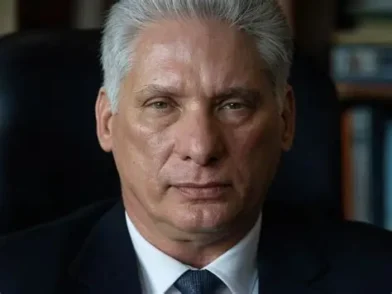
The President of the United States, Donald Trump, threatened Venezuela again this Tuesday, amid the ongoing aggression, “If we can save lives, if we can do it the easy way, that’s fine. And if it has to be the hard way, then too,” he declared from Air Force One, answering questions from the press about why he wants to talk to the Venezuelan leader, Nicolás Maduro.
Previously, the State Department formalized the inclusion of the so-called ‘Cartel of the Suns’ on the list of foreign terrorist organizations. This categorization was rejected by Caracas, which labeled it a “ridiculous hoax,” while reiterating the non-existence of that organization and warning that it is “an infamous and vile lie to justify an illegitimate and illegal intervention against Venezuela, under the classic US format of regime change.”
The US aggression in summary
Military deployment: Since last August, the U.S. has maintained a significant military force deployed off the coast of Venezuela, justifying it as part of the fight against drugs. Washington subsequently announced Operation Southern Spear, with the official purpose of “eliminating narco-terrorists” from the Western Hemisphere and “protecting” the U.S. “from the drugs that are killing” its citizens.
You can also read: Juan Carlos I: “sometimes” felt like “a ping pong ball” between his father and Franco
More Read


Lethal operations: as part of these operations, bombings have been carried out against alleged drug trafficking vessels, resulting in the deaths of more than 70 people and without evidence that they were actually trafficking drugs.
Accusations and reward: Washington has accused Maduro without evidence of leading a drug trafficking cartel and has doubled the reward for his capture.
Venezuelan stance: Maduro denounces that the real objective of the U.S. is a “regime change” to seize Venezuela’s immense oil and gas riches.
More Read
Lack of support: organizations such as the UN and the US Drug Enforcement Administration (DEA) itself point out that Venezuela is not a main route for drug trafficking to the US, as more than 80% of drugs use the Pacific route.
International condemnation: Russia, the UN High Commissioner for Human Rights, and the governments of Colombia, Mexico, and Brazil have condemned the US actions. Experts call the attacks on vessels “summary executions” that violate international law.