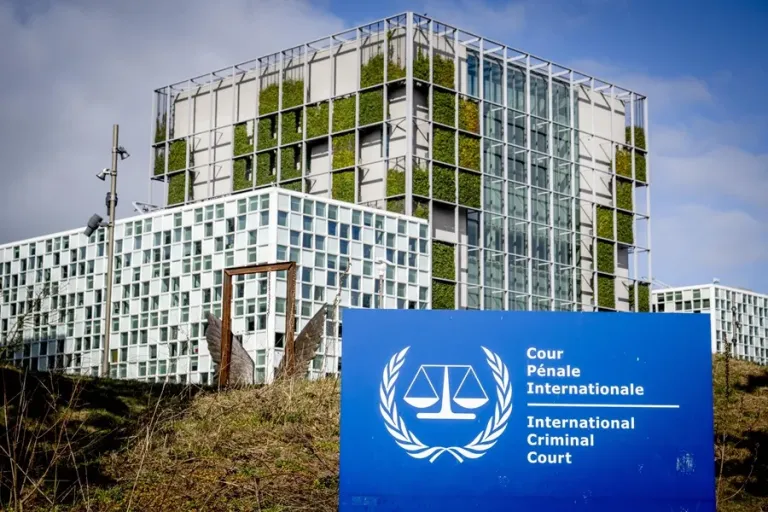
Caracas.- The Government of Venezuela announced this Friday its “firm and irrevocable” decision to denounce the Rome Statute and initiate its definitive withdrawal from the International Criminal Court (ICC), considering that the body responds to a “bias” that has concentrated its work in a “disproportionate” manner on African and Latin American countries.
“This pattern reveals an international justice that, far from being applied with equity, has been instrumentalized to deepen inequalities between peoples and ignore their right to self-determination and sovereignty,” pointed out the Venezuelan Foreign Minister, Félix Plasencia, in a statement published on X.
Furthermore, he said that by orders of the acting president of Venezuela, Delcy Rodríguez, this decision was communicated to the Secretary-General of the United Nations, António Guterres.
Plasencia maintained that the ICC’s “bias” is not a simple procedural coincidence, “but the reflection of an institution that has placed its mechanisms at the service of interests foreign to justice and the peoples it claims to protect.”
“That is why we reject this dimension of lawfare, which perpetuates the persecution against the Venezuelan people and aggravates the inequalities that international justice should correct,” he added.
More Read

Likewise, the foreign minister reiterated Venezuela’s commitment to a genuinely equitable justice, respectful of the sovereignty and self-determination of peoples».

The history of tension between Venezuela and the ICC
Last December, the Venezuelan Parliament, controlled by Chavismo, unanimously approved a law repealing the country’s accession to the Rome Statute with the aim, according to the president of the legislature, Jorge Rodríguez, of “denouncing to the world the uselessness and vassalage” of the ICC.
We recommend reading: Venezuelan Red Cross projects response operation of up to 24 months following the double earthquake
The regulation was sanctioned by Parliament after the ICC Prosecutor’s Office announced, on December 1st, the closure of its technical office in Caracas, noting a lack of “real progress” with Venezuela regarding “complementarity,” a principle that requires the country to seriously investigate the crimes of which it is accused before this court intervenes.
More Read

Rodríguez then stated that this institution “should serve to protect the peoples and only serves the designs of North American imperialism.”
In announcing the closure of its office in Caracas, the ICC Prosecutor’s Office made it clear that the investigation into alleged crimes against humanity committed in the country “remains active” and is being led by a team of prosecutors who will continue to work from The Hague.
The ICC opened the investigation into Venezuela in 2018 following a referral from several countries.
The then-government of Nicolás Maduro, now imprisoned in the U.S., repeatedly attempted to halt the case, claiming that its judicial system is conducting internal investigations, but the Court rejected that position in 2023 and authorized the resumption of inquiries into alleged crimes against humanity committed since 2017.