

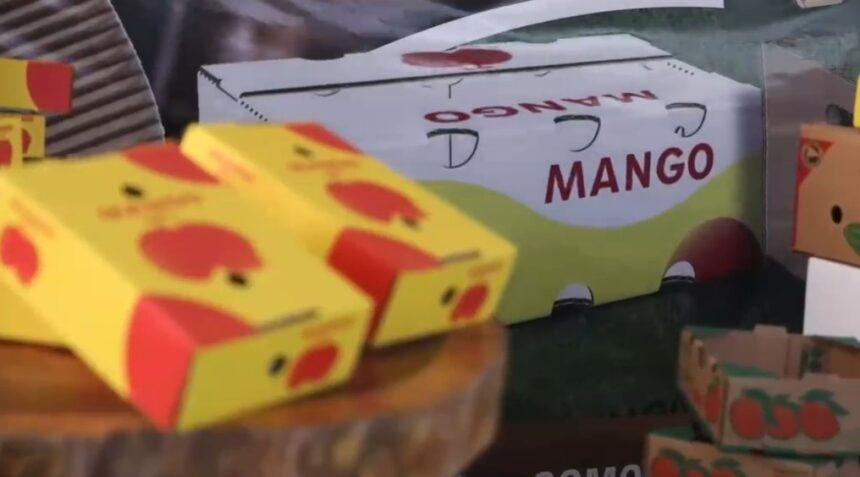
Santo Domingo, DR.– The Ministry of Agriculture, through the Directorate of Plant Health and Food Safety, implemented a series of phytosanitary measures aimed at strengthening and expanding the export of Dominican mangoes to the European and United States markets, with the goal of guaranteeing the continuity of this important agricultural sector, which generates foreign currency for national producers.
Among the actions taken is the appointment of engineer Jeurys Arias as the new coordinator of the fruit fly monitoring program, as well as the creation of a commission in charge of reviewing 100% of the traps used for the capture of the Anastrepha obliqua insect.
Read more: Agriculture and IICA expand alliance to modernize the Dominican countryside
Of the traps under supervision, some 2,089 are located in the Peravia province, the country’s main production area for exportable mangoes, with approximately 80% of production destined for international markets. In addition, the plan contemplates the strengthening of monitoring, the restructuring of the program, and the automation of information systems.
The Director of Health and Safety of the Ministry of Agriculture, engineer Emidio Gómez, explained that the measures were adopted under instructions from Minister Francisco Oliverio Espaillat Bencosme, as part of a comprehensive plan to improve pre-inspection protocols and comply with the requirements of international markets.
More Read


Gómez indicated that since 2023, the United States Animal and Plant Health Inspection Service (APHIS) had pointed out the need to correct some weaknesses in phytosanitary procedures, which is why the current administration decided to reactivate the established protocols to guarantee the sustainability of exports to North American territory.
The action plan includes a comprehensive review of the traps, the correction of georeferencing and identification processes, as well as the development and implementation of corrective measures to optimize the surveillance system.
The official highlighted that, at the time these new provisions were applied, between 85% and 90% of the yellow-peel mango variety had already been exported to the United States, because the harvest season began in the first week of February, with approximately 10% remaining.

Regarding the European market, it reported that exports of the green and red skin varieties, which began in early May, continue to develop satisfactorily according to the established schedule, with no presence of the Ceratitis capitata fly to date.
The Ministry of Agriculture urged producers to continue strengthening good agricultural practices and reiterated that it will continue to provide technical assistance and support to consolidate the Dominican mango as one of the most recognized agricultural products in international markets.