Traditional parties, business owners, and representatives from other sectors have taken a stance on the candidacy of Santiago Matías “Alofoke”
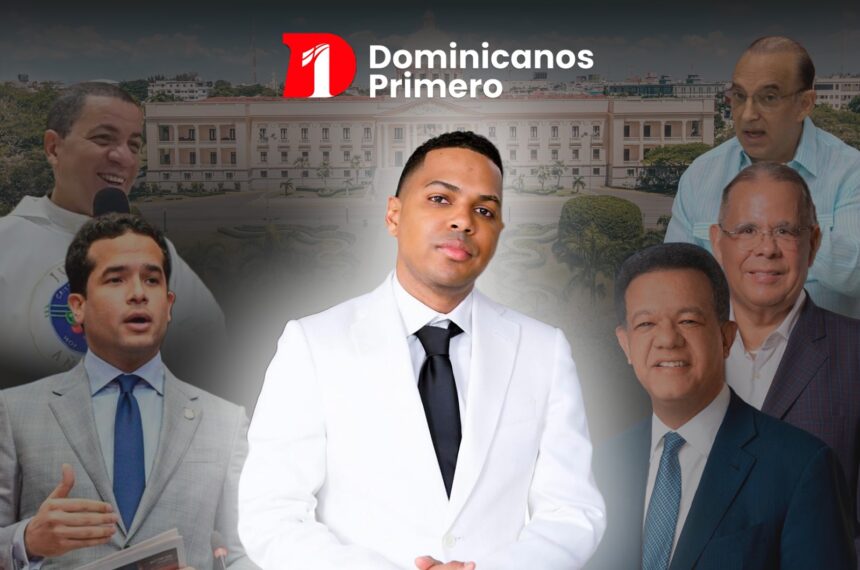
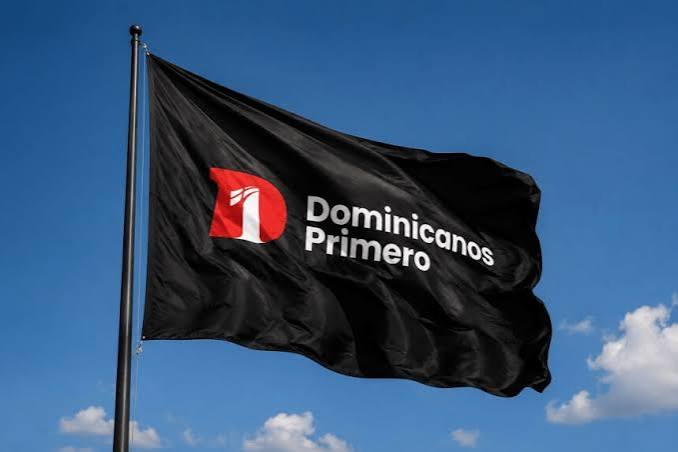
Santo Domingo.– The decision by Santiago Matías, known as Alofoke, to formally enter politics and promote the creation of Dominicanos Primero has generated reactions in different power sectors of the country, even before the organization completes its electoral recognition process.
The project, which has the 2028 elections as its horizon, has been the subject of statements by leaders of the Social Christian Reformist Party (PRSC), Dominican Liberation Party (PLD), and People’s Force (Fuerza del Pueblo), in addition to receiving public support from a media industry businessman.
The positions are not coincident, but they allow us to identify how different actors are evaluating the emergence of a figure whose main base of influence is found outside of traditional political structures.
From the PRSC’s approach to the creation of Dominicanos Primero
One of the first signs came from the Social Christian Reformist Party (PRSC).
Its president, Federico “Quique” Antún, left open the possibility that Santiago Matías could be a presidential candidate for that organization. The proposal was made when Matías had not yet announced the creation of his own party.
More Read
We recommend reading: JCE accepted the deposit of party symbols for Dominicanos Primero
In July, however, the businessman announced that he would not accept a candidacy from an existing organization and that he would opt to build his own political structure.
With that decision, Dominicanos Primero emerged, a project that is currently advancing in the process required to become an organization recognized by the Central Electoral Board (JCE).
The JCE recently accepted the filing of the organization’s symbols, a step within the process, but which does not yet equate to definitive recognition as a political party.
More Read

Responses from PLD and Fuerza del Pueblo
Matías’s entry has also been commented on by leaders of the main opposition forces.
Jhonny Pujols, secretary general of the PLD, acknowledged Matías’ right to participate in politics, although he pointed out that this step must be accompanied by a vocation for service and a commitment to the citizenry.
From the People’s Force, former President Leonel Fernández described Matías as a “communicational phenomenon,” but distinguished his media capability from the requirements necessary to build a political organization.
We recommend reading: Quique Antún supports Santiago Matías after approval of Dominicanos Primero symbols
Fernández pointed out organization, territorial structure, and the construction of a political vision as challenges.
His position contrasts with that of Omar Fernández, also a leader of the Fuerza del Pueblo, who has suggested that the influence achieved by Matías should not be underestimated.
The statements show two approaches within the evaluation of the phenomenon: recognizing its communication capacity and, at the same time, questioning how viable it is to transfer that influence to the electoral field.
More Read

Support from the business sector
In the business environment, there is also a public position.
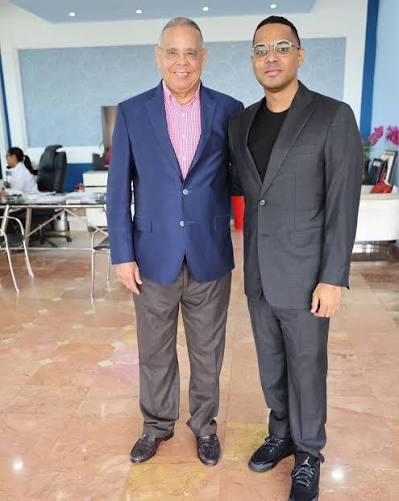
Juan Ramón Gómez Díaz, president of Grupo Telemicro, expressed his support for a potential presidential candidacy of Santiago Matías for 2028.
The pronouncement is relevant due to Gómez Díaz’s weight within the Dominican media industry and the relationship he maintains with Matías.
Both businessmen previously had public disagreements related to figures from their respective media groups, but later made their reconciliation public.
Gómez Díaz’s support constitutes, until now, one of the most visible business manifestations in favor of Matías’s political aspirations.
The reaction from the religious sphere
The phenomenon has also been commented on by religious sectors.
Priest Norberto Rosario has called not to underestimate the social influence achieved by Santiago Matías and has warned about the weight he holds among certain sectors of the population.
We recommend reading: Father Norberto Rosario calls not to underestimate the influence of Santiago Matías
The priest’s position does not represent an institutional stance of the Catholic Church in favor of Matías, but it adds to the various reactions that his entry into politics has provoked.
The question that remains open
Statements from political leaders and business figures allow us to identify a characteristic of the process: Santiago Matías is being evaluated by sectors that, until recently, did not have to consider his presence within an electoral race.
However, there is a difference between communicational influence and electoral strength.
Matías has built a massive audience around his communication platforms for years. Dominicanos Primero must now demonstrate whether that audience can be converted into a political structure with territorial presence, leaders, militancy, and the capacity to compete at the polls.
That process will be particularly relevant heading into 2028.
For the moment, the evolution of Dominicanos Primero and the reactions of the traditional parties allow us to continue asking a central question: how far can the capital of influence that Santiago Matías built in the media and digital platforms be transferred to the electoral field?
The answer will not lie solely in the statements of its adversaries or the size of its audience, but in the project’s ability to overcome the different stages of the Dominican political and electoral process.