Santo Domingo.– The
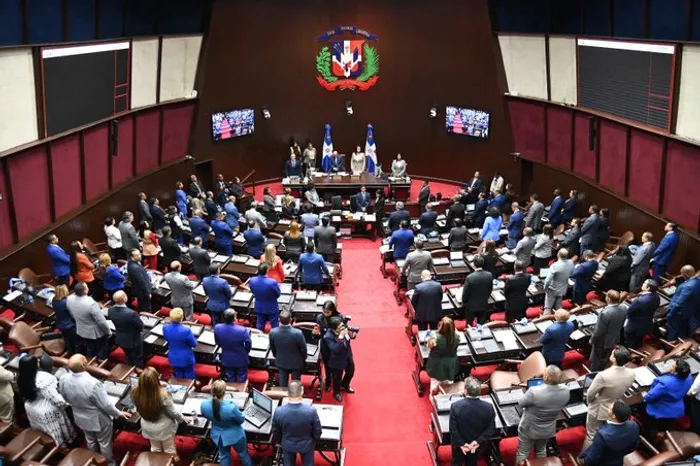
Chamber of Deputies completed this Wednesday, after a session of almost four hours, the approval in second reading of the project that modifies the
Criminal Procedure Code (CPP), an initiative that now exceeds 500 articles and that had to be known with urgency before December 11, as determined by the Constitutional Court.
The president of the chamber, Alfredo Pacheco, described the process as
“a titanic task,” highlighting that the piece was studied and voted on in record time since it arrived in Congress almost a month ago. With the approval, the project goes to the Senate, which must also consider it in two readings. If it does not undergo changes, it will subsequently be sent to the
Executive Branch for its enactment.
You may be interested in: http://Diputados aprueban en primera lectura Ley de Compras y Contrataciones
The most controversial discussion occurred around article 211, regarding the appointment of experts. In the first reading, the Chamber had removed the Public Prosecutor’s Office’s power to appoint experts in the preparatory phase, which generated opposing positions.
Representative Julio César Beltré defended that the Public Ministry maintain the faculty, pointing out that this is the case in reference codes such as that of Colombia. In contrast, Eugenio Cedeño insisted that giving that power back would be “granting too much authority” to the Prosecutor’s Office.
Upon intervening, Pacheco defended the need for the Public Ministry to be able to appoint experts in urgent investigations, such as medico-legal evaluations in cases of sexual assault, recalling that the current CPP establishes a balanced model: experts appointed by the Prosecutor’s Office in the preparatory phase and by judges in the jurisdictional phase.
His position prevailed, and Article 211 was returned to its original wording from the 2015 CPP.
Other included settings
The deputies also restored the original text of Article 215 and one of its numerals related to functions of the Public Ministry.
Regarding the statute of limitations for crimes, a relevant modification was introduced: from now on, it will not be enough for the Public Prosecutor’s Office to request a coercive measure to interrupt the statute of limitations; it will be necessary for a judge to effectively impose the measure, seeking to avoid unfounded requests.
The president of the Justice Commission, Wandy Batista, explained that the current scheme for urgent expert opinions was also preserved, arguing that the model applied since 2002 has worked without generating major conflicts.
The piece will now go to the Senate, which has just over a week to complete its study and approval before the constitutional deadline.