Participación Ciudadana, Dominican chapter of Transparency International, expressed its concern about the persistent crisis in the national electricity sector.
They reported that from August to date, the country has suffered blackouts of up to 12 hours a day, turning this summer into hell for families and the popular economy, generating significant damage and widespread protests.
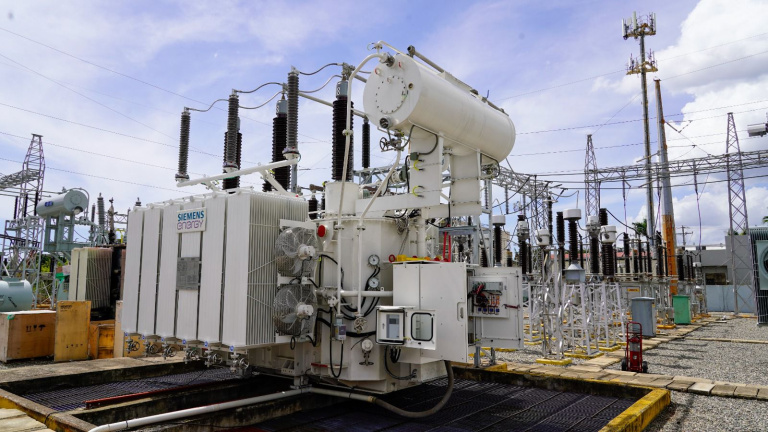
“Despite investments exceeding RD$2,000 million in substations and official promises to resolve the problem before the end of 2025, the reality reflects a persistent structural deterioration,” explained the organization in a statement.
He also indicated that according to official data from the Ministry of Energy and Mines, between January and August 2025, the Dominican government allocated more than RD$62,000 million to the electricity subsidy, a figure that represents around 60% of the state subsidies executed in this period. This proportion exceeds investments in strategic sectors such as health and social programs.
However, despite this massive fiscal effort, energy losses increased from 36.9% in 2024 to 37.6% in 2025. This means that for every RD$100 invested, about RD$38 is lost due to fraud, illegal connections, and technical deficiencies.
More Read
A structural crisis that no government has solved
They considered that the electricity sector faces a structural crisis that transcends the technical and financial.
They cited that as of September 2024, the Ministry of Energy and Mines reported more than 800,000 illegal connections to the National Interconnected Electrical System (SENI), equivalent to 25% of formal clients. Although by August 2025 this figure decreased to 650,000, the number is still alarming and represents one of the main sources of system losses.
More Read

“The public opinion is shocked by the detailed knowledge of how mafias of public officials, relatives of politicians, and companies created for such purposes have been installed, who have stolen billions of pesos and dollars and have subjected this country to the constant suffering of long blackouts and the Dominican economy to substantial losses for this concept,” they added.
They concluded that the cyclical persistence of the electricity crisis is also due to the immensity of fraud in consumption, both from a part of the population and also from powerful sectors; the inability to bill for services provided and serious failures in the internal control systems, governance and transparency of the distribution companies (EDES).

The impact of these irregularities is starkly reflected in the official figures: between January and May 2025, the EDES recorded losses of 41.7% of the electricity supply. In this regard, we warn that the recent Decree 517-25, which declares key aspects of the electricity sector in a state of emergency, must be applied with strict institutional controls. National experience shows that states of exception and emergency purchases, if not accompanied by transparency and independent oversight, have historically been fertile ground for waste and corruption. Consequently, we urge the Government and control bodies to ensure that this provision does not become a new channel for undue privileges and overvaluations to the detriment of the citizenry.
Faced with this situation, Citizen Participation demands that the Government urgently adopt the following measures:
Make EDES transparent: Publish monthly execution reports, operational indicators, and financial statements.
Depoliticizing the electricity sector: Due to the magnitude of its operations and the lack of transparency with which it has been managed, this sector has been a refuge and free field for corruption, the overemployment of political activists, and influence peddling.
Independent audits: Conduct external reviews of energy purchase contracts, loss management, investments in EDES, and detected fraud, such as the EDEESTE case.
Subsidy Review: Redefine subsidy policy, prioritizing targeted schemes such as the Bono Luz through the SIUBEN, so that resources reach vulnerable households and not unsustainable operating deficits.
Loss Reduction Plan: Establish annual goals with multi-sector monitoring, ensuring that investments in generation and distribution have verifiable results.
Fight against fraud: Intensify regularization campaigns, incorporate advanced metering technology, apply effective sanctions, and bring those responsible for electricity fraud to justice.
Participación Ciudadana reaffirms its commitment to civic vigilance, the defense of the ethical use of public resources, and the promotion of policies that strengthen transparency and equity.