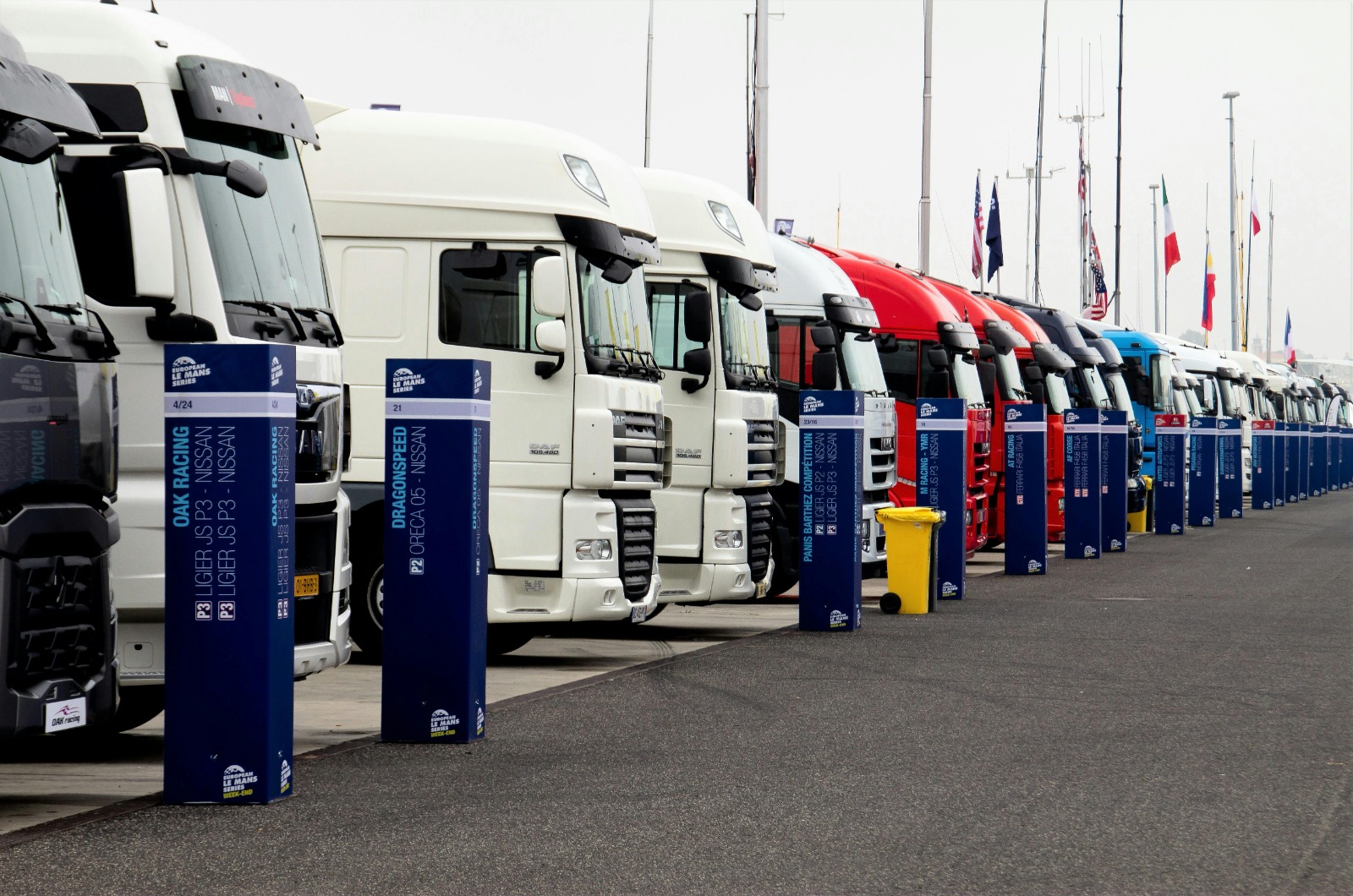
The land border crossing between Russia and Kazakhstan is congested with queues of more than 7,000 trucks, most of them from China, due to exhaustive Kazakh controls and the Chinese border closure for holidays.
Some Chinese border crossings are closed due to the National Day of the People’s Republic of China and the Mid-Autumn Festival between October 1st and 8th, so many trucks bound for Russia had to divert through Kazakhstan.
According to Kazakh media, some 7,000 trucks are stopped near the border, occupying all nearby parking spaces and parking on the hard shoulders, in addition to kilometer-long queues on the road itself.
It was previously reported that the Kazakh side tightened customs inspections due to fear of Western secondary sanctions, which since the beginning of the war in Ukraine in 2022 were imposed with the aim of limiting Russian imports of products that may have a military purpose.
Thus, Kazakhstan categorically refuses to allow certain shipments to pass through to Russia, which mainly affects technological products.
More Read

These logistical restraints have already caused a price increase in Russia, so experts believe that new restraints will lead to further increases.
According to Kazakh political scientist Eduard Poletayev, the trucks have been stuck for several days, and he pointed out that Russia and Kazakhstan are currently working to expand customs and that this issue will be discussed by Kazakh President Kasim-Yomart Tokayev and his Russian counterpart, Vladimir Putin, during his upcoming visit to Moscow in November.
On the other hand, Russia has suffered various supply problems since the imposition of sanctions in 2022, which it has eventually resolved over time without major difficulties, managing to adapt to constant changes and the new sanctions introduced by the West.

Although the sanctions did not manage to stop the war, they have hindered the Russian military machine and represent a significant wear and tear in a situation in which the Russian economy is overheated, suffering from significant inflation, as well as a stagnation of investment.