New York.- A federal judge temporarily suspended the enforcement of provisions passed in New York that prevented ICE agents from wearing masks during their operations and required them to display identification information, in a new judicial confrontation between the state and President Donald Trump’s administration over immigration policy.
The decision was adopted by federal judge Mae D’Agostino, of the Northern District of New York, who granted a preliminary injunction requested by the federal government while litigation continues regarding the constitutionality of the state measures.
The conflict originated after New York approved rules aimed at increasing the identification and transparency of agents participating in immigration operations. Among the provisions were restrictions on the use of face coverings and requirements for certain officials to display information that would allow them to be recognized during their actions.
The federal administration then went to court with the argument that a state does not have the authority to determine how agents charged with enforcing federal immigration laws should dress, identify themselves, or execute their duties.
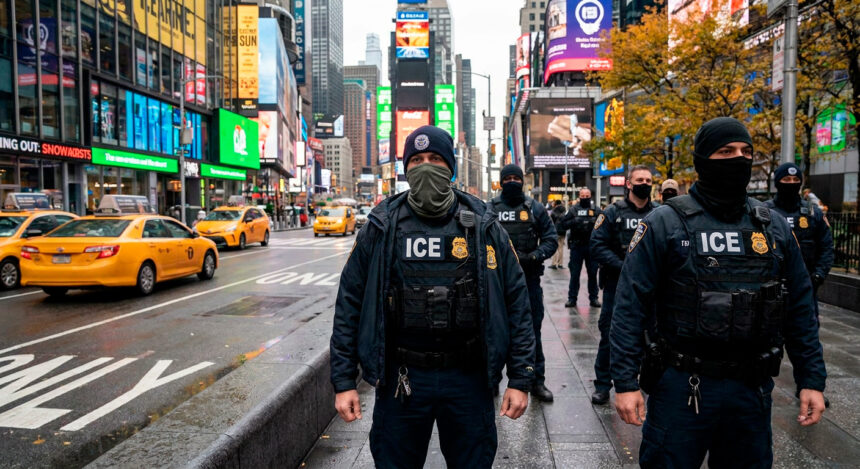
ICE Agents
In her preliminary decision, D’Agostino considered that the U.S. government is likely to prevail on that argument and noted that the mask and identification provisions directly regulate federal officials, which could conflict with the Supremacy Clause of the U.S. Constitution.
More Read
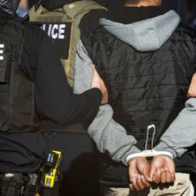
The ruling means that, while the judicial process continues, New York will not be able to enforce those restrictions against ICE agents. In practice, officials will be able to continue using face coverings during certain operations without being subject to the penalties contemplated by state legislation.
The controversy over masks has gained momentum due to the increasing presence of federal agents with covered faces during immigration operations. Those who support the restrictions argue that clearly identifying officials promotes accountability and reduces the possibility of residents confusing legitimate agents with individuals posing as authorities.

The federal government, on the other hand, has argued that U.S. agencies must retain the ability to establish their own operational and security protocols, without states imposing additional conditions on their officials.

ICE Agents and 287(g)
The judicial decision, however, did not represent a complete victory for Washington. The magistrate allowed another New York initiative to remain in effect, aimed at preventing certain agreements known as 287(g), through which state or local law enforcement agencies can collaborate with ICE in immigration law enforcement tasks.
That ban will take effect on August 25 and affects jurisdictions that maintain these types of agreements. The judge considered that, unlike rules directed directly at federal officials, New York does possess the authority to decide how to employ its own agencies, personnel, and public resources.
Governor Kathy Hochul and State Attorney General Letitia James expressed their disagreement with the suspension of mask restrictions. Both maintain that agents with covered faces do not contribute to improving safety and stated that their offices are studying the available legal alternatives to respond to the ruling.
The resolution is preliminary, so it does not end the litigation nor does it definitively determine the constitutionality of the measures. The process will continue as the courts establish how far a state can go in regulating the actions of federal officials within its territory.
The case thus transcends the discussion about the use of masks and raises a constitutional dispute over the limits of state power versus federal authority to enforce United States immigration policies, a conflict that has also sparked legal battles in other states.