
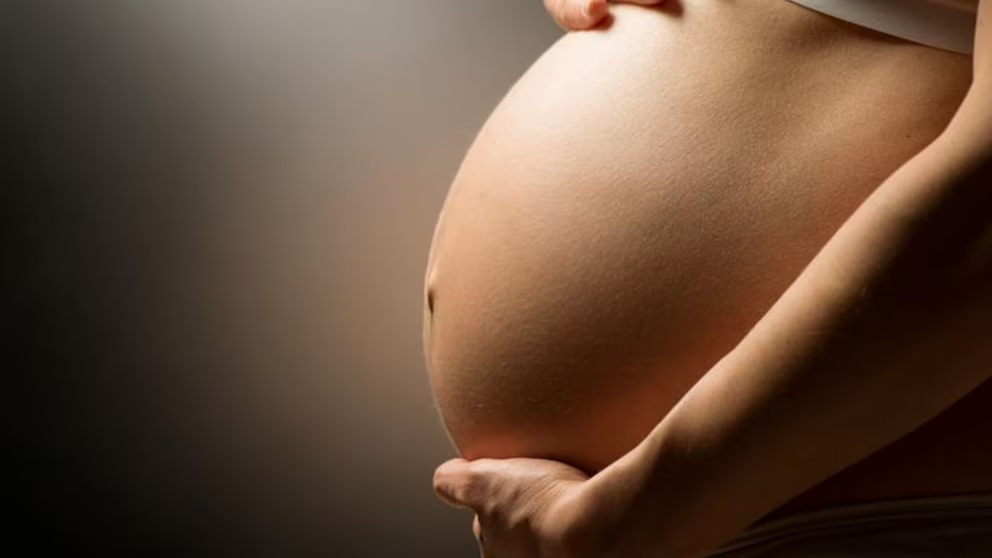
The Ministry of Health (MINSAL) of El Salvador has detected 67 new cases of HIV infection in pregnant women between June 2025 and May 2026, according to the institution’s most recent annual report.
This result comes from a screening program that reached 46,775 pregnant women, who accessed HIV and syphilis testing during the last year.
You might be interested in: California Supreme Court rules in favor of a pharmaceutical company in lawsuit by 24,000 people with HIV
The effort to expand diagnostic coverage in maternal and child care had a state investment of $4 million and the international support of PEPFAR, which allocated $183,092 for the purchase of reagents.
These funds have allowed not only the identification of pregnant women carrying the virus, but also the follow-up of an equal number of exposed children, as detailed in the official report.
In parallel, the epidemiological surveillance implemented by the Ministry has allowed for the identification of weeks with peaks in HIV diagnoses.
So far in 2026, El Salvador has recorded 489 new HIV cases, of which 16% correspond to women. The 25 to 29 age group accounts for the highest number of diagnoses. At the departmental level, San Salvador leads the records with 89 cases, followed by Sonsonate with 32 and La Libertad with 28.
HIV transmission is mainly related to unprotected sexual intercourse, sharing needles, and medical procedures without sterile equipment.

In pregnant women, vertical transmission, from mother to child during pregnancy, childbirth, or breastfeeding, can be prevented with timely detection and treatment.
Access to antiretroviral therapy has changed the prognosis for people with the virus, allowing many HIV-positive mothers to have children without the virus.

In an interview with Infobae, Dr. Danilo Arévalo Sandoval, a specialist in Gynecology and Oncology, explained that one of the main advances in the early detection of HIV in pregnant women has been the routine application of the test at the beginning of pregnancy.
“One of the fundamental pillars in early detection is the routine taking of the test and this, mainly in relation to pregnancy, should be done at the beginning,” he/she pointed out.
The specialist highlighted that the test is performed in the first weeks of pregnancy, along with other exams for syphilis, hepatitis, and toxoplasma, in accordance with national standards.
Arévalo Sandoval also mentioned that there is a pilot plan to implement saliva-based HIV tests , an alternative in hard-to-reach areas or among patients who prefer to avoid the conventional test. “This is still under evaluation, but it could be quite important,” he pointed out.
More Read

Treatment for pregnant women with HIV includes a variety of antiretrovirals. Early initiation of treatment depends on the stage of pregnancy and the viral load. “If there is early detection, then there will also be an early start to treatment,” the specialist specified. The goal is to reduce the risk of vertical transmission so that the baby is born without the virus.
Access to tests and medication is free, in accordance with the regulations of the Ministry of Health. Arévalo Sandoval insisted that women should demand the test during the first trimester and stressed that an HIV diagnosis in the mother does not necessarily mean that the baby will be infected. “Today, women who are HIV positive can have children who are seronegative,” the specialist stated.
Myths persist surrounding HIV and pregnancy, such as believing that only those who show symptoms can carry the virus or that antiretroviral medications harm the baby. “There are people who may look fine, healthy, but be HIV positive, because the window period exists,” the specialist warned. He also clarified that the diagnosis does not imply that the child will be born with HIV if proper check-ups and treatments are received.
Social stigma remains a barrier, as many women avoid the test for fear of being judged. The gynecology specialist highlighted the importance of a comprehensive and humanized approach by health personnel so that patients feel supported during pregnancy.
Internationally, countries like Brazil have managed to reduce vertical transmission with comprehensive policies. The Salvadoran case shows progress in detection and monitoring, and new diagnoses in pregnant women underscore the importance of maintaining and strengthening actions for the protection of maternal and child health.