
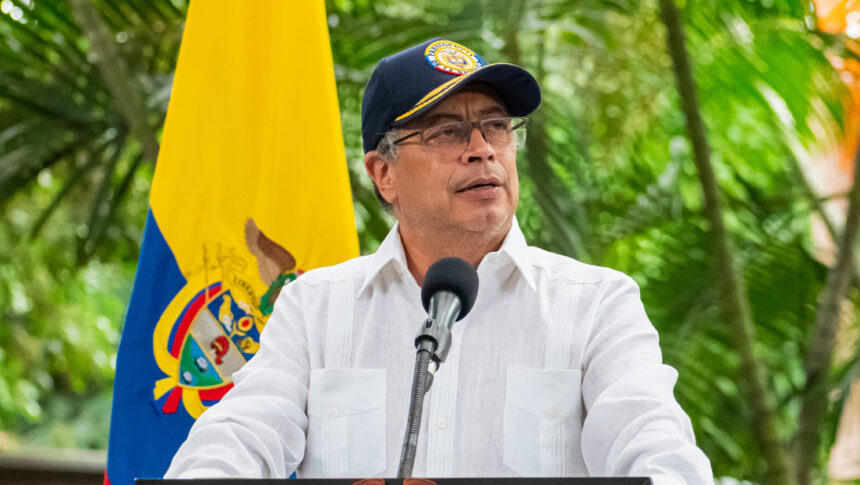
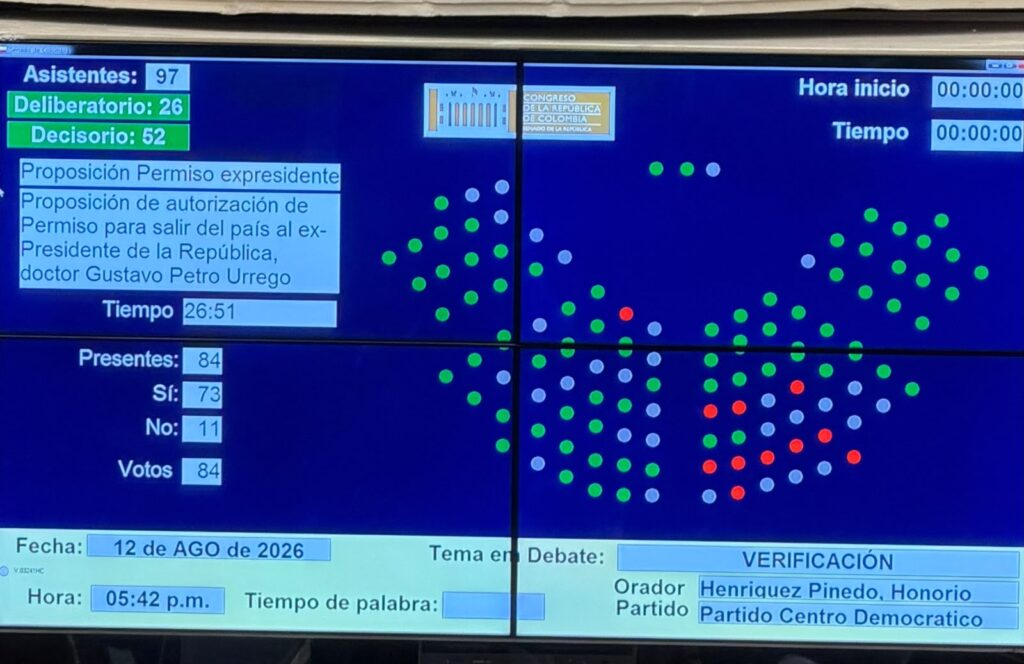
With 73 votes in favor and 11 against, the Senate of Colombia approved the request of former President Gustavo Petro to be able to leave the country for a year.
The approved proposal stipulates that the former president must inform the Senate “with specific dates and locations of the places to which he will travel“. This is a proposal presented by members of the Democratic Center as an alternative to that of the Historic Pact.
In the petition filed last Monday, Petro explained that he requires permission to attend to “commitments outside the country of a personal, social, political, and academic nature” during the period following the exercise of his duties as president.
Through his X account, the former president reacted to the authorization, pointing out that “a human being is free and should go wherever they are invited and wish to accept the invitation”. “I am not a prisoner nor have I committed any crime; the fact that there are people who do not like me is not a reason to prevent me from deciding whether to travel or not,” he asserted.
In accordance with article 196 of the Colombian Constitution, anyone who has held the Presidency may not leave the country during the year following the end of their term without prior authorization from the Senate.
More Read

Senators question
The decision, however, was preceded by a heated debate among congressmen. Part of the discussion focused on the investigations Petro faces in the House Accusation Committee and the possibility that leaving the country could affect the former president’s response to those proceedings.

One of the senators who questioned the authorization was Enrique Gómez, of National Salvation, who warned that Petro could use the permission to avoid answering to justice. “Allowing President Petro to leave the country is allowing him to commit yet another crime, which is the crime of flight, which is what we are being asked for permission for (…) Congress cannot enable one more crime for him, which is that of fleeing, because Petro is leaving the country with the permission of this chamber never to return,” he maintained.
The position was questioned by other members of the Senate, who pointed out that Congress cannot assume functions proper to judges or prosecutors regarding the investigations of a former president.

Senator Antonio Correa defended that position and stated: “Let’s drop the drama, we are not prosecutors, nor judges, we do not represent the judiciary, and I remind you that it is the Accusation Commission, the Senate Investigation Chamber, and the Senate plenary that lift the political immunity so that the Supreme Court can open the criminal investigation; let us not overstep our functions”.
Amidst the opposing positions, a discussion also arose regarding the way in which trips should be authorized. Senator Alfredo Deluque stated that each departure from the country should have an independent permit. “Each departure needs an authorization, that is what the Constitution says, and every time the president leaves he needs to be authorized; it is not that he is given permission for a year and just informs when he is leaving,” he maintained.
The discussion surrounding the former president’s international travel did not begin with this Wednesday’s vote. Before the presidential term ended, Andrés Pastrana requested that the Senate deny Petro permission to leave the country while he answered for questions related to the financing of his campaign and the actions of his administration.
Likewise, Petro said that he contemplated traveling to the United States after his visit to Cuba, with the intention of visiting the place in Princeton where Albert Einstein’s ashes were scattered. However, he did not yet have the necessary visa, a procedure that prevented moving forward with the overflight and refueling permits for the official plane.