
Havana.– This Thursday, August 13, marks 100 years since the birth of Fidel Castro, leader of the Cuban Revolution, a date that the island commemorates amidst official tributes, evocations from his followers, and criticism from those who hold his political model responsible for decades of authoritarianism and economic hardship.
Castro was born on August 13, 1926, in Birán, in the then-province of Oriente. He passed away in Havana on November 25, 2016, at the age of 90. Between both dates occurred one of the most influential and controversial political trajectories in Latin America during the 20th century.
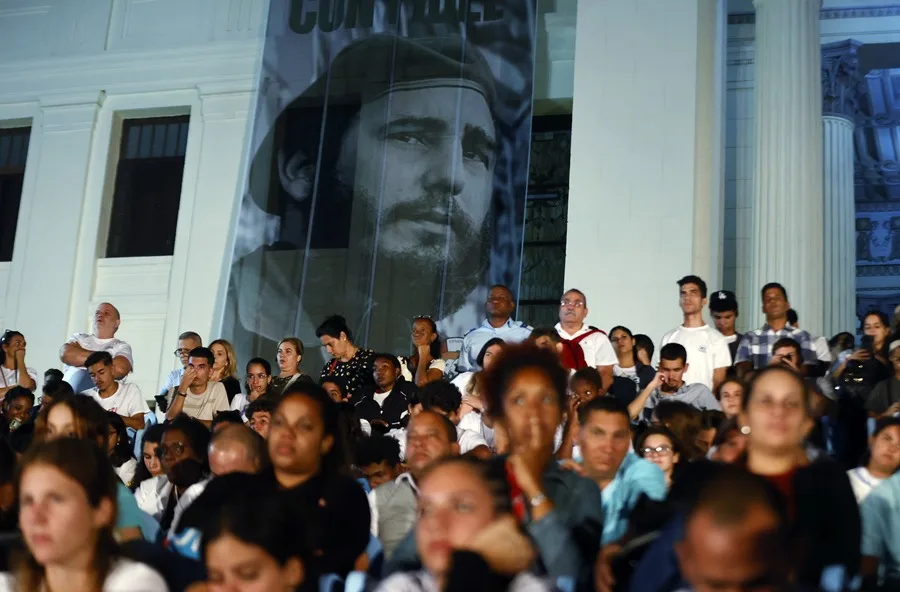
His image continues to appear on posters, in public centers, and at political events, while some of his phrases are part of the Cuban landscape. The persistence of that symbology contrasts with one of his final wishes: that after his death, no statues be erected in his honor, nor his name or image be used to name streets, parks, and institutions.
In December 2016, the Cuban National Assembly turned that request into law, prohibiting commemorative monuments and the use of his name to designate public spaces. The regulation, however, did not prevent the use of his image for artistic, cultural, or educational purposes.
From Birán to the Revolution
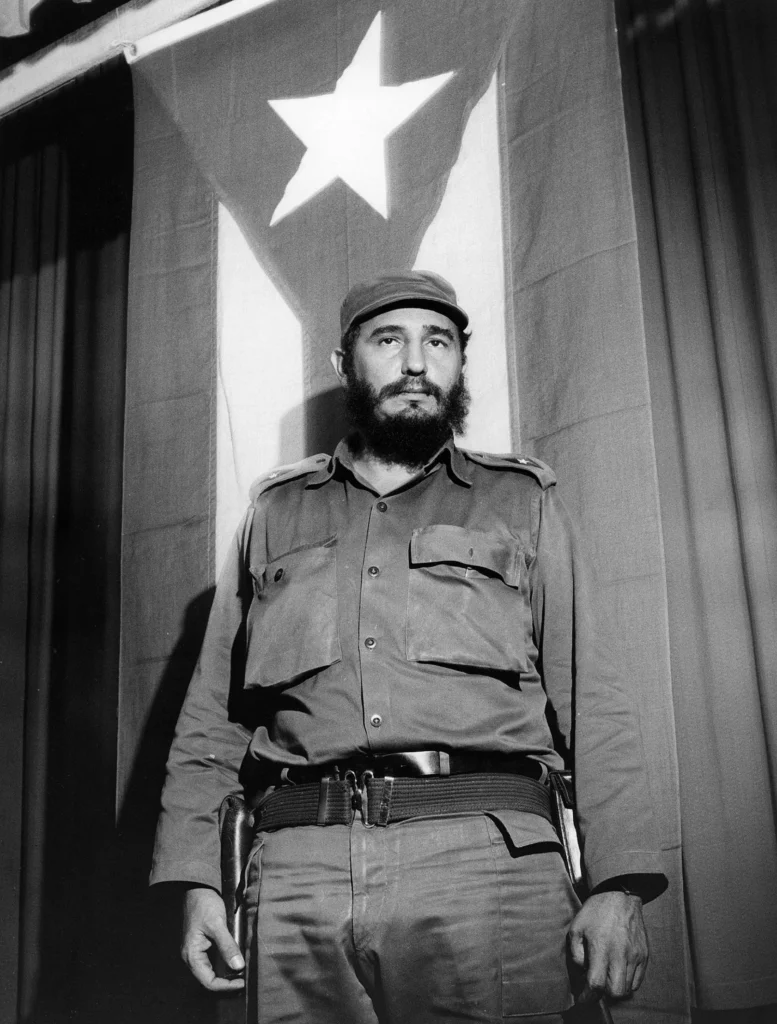
Son of a Spanish immigrant turned prosperous farmer, Fidel Alejandro Castro Ruz studied Law at the University of Havana and became involved in political activity from a young age.
More Read
His name gained national notoriety on July 26, 1953, when he led, along with a group of young people, the assault on the Moncada Barracks in Santiago de Cuba, in an attempt to start an insurrection against the government of Fulgencio Batista.
The operation failed. Castro was arrested and during the judicial process he delivered the plea subsequently known as “History will absolve me”.
After being amnestied in 1955, he left for Mexico, where he reorganized the revolutionary movement and met the Argentine Ernesto “Che” Guevara. In December 1956, he returned to Cuba aboard the yacht Granma along with dozens of expeditionaries.
After more than two years of guerrilla warfare from the Sierra Maestra, the revolutionary forces achieved the fall of Batista, who left Cuba on January 1, 1959. Castro entered Havana triumphantly a few days later and began a political phase that would radically transform the island.
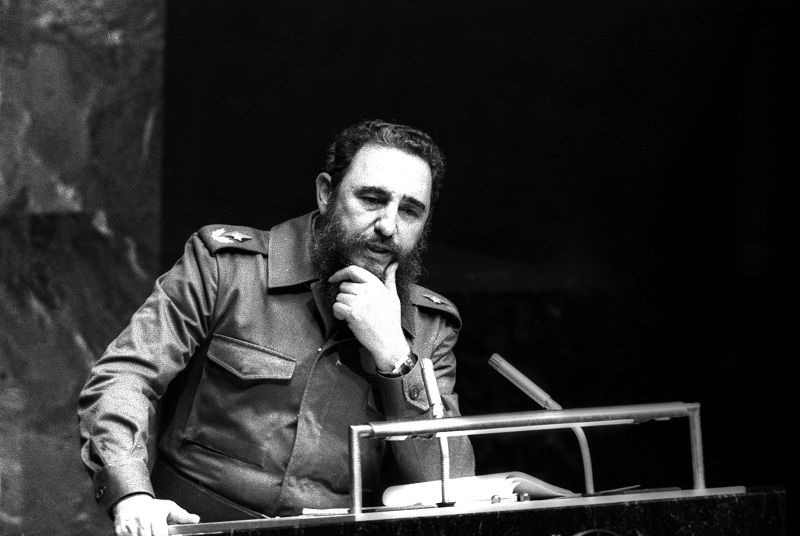
Cuba at the center of the Cold War
The Revolution spurred nationalizations, an agrarian reform, and profound social transformations, while relations with the United States deteriorated rapidly.
Cuba ended up aligning itself politically with the Soviet Union and Castro became one of the main protagonists of the Cold War in Latin America.
In April 1961, U.S.-backed Cuban exile forces landed at the Bay of Pigs, an operation that ended in defeat. A year later, in October 1962, the installation of Soviet nuclear missiles in Cuba triggered the Cuban Missile Crisis, considered one of the moments when the United States and the Soviet Union were closest to a nuclear confrontation.
Since then, the confrontation with Washington became one of the central elements of Castro’s political discourse.
For decades, it survived U.S. administrations openly hostile to its government and turned resistance against the United States into an essential part of the political identity built by the Revolution.
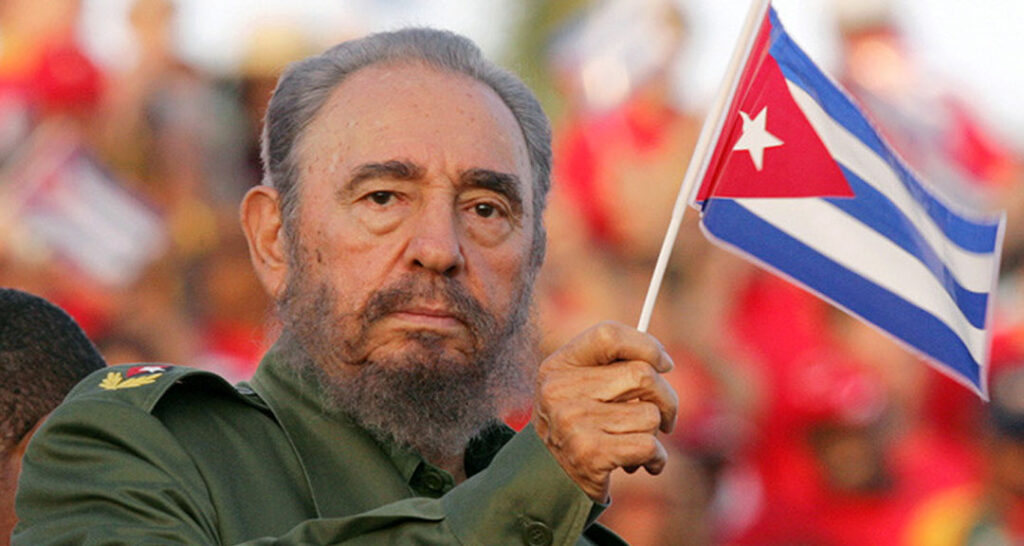
Education and health, pillars of his legacy
For its supporters, one of the main legacies of the Fidel Castro period is found in the expansion of education and the public health system.
The revolutionary government developed a national literacy campaign in 1961 and expanded state access to schools and universities. Cuba also built a universal healthcare system and turned the training and sending of doctors abroad into one of the main tools of its international policy.
More Read

Cuban writer and essayist Miguel Barnet summarized this week that favorable vision of the former president.
“I believe Fidel Castro leaves Cuba a legacy of dignity, morality, constant work, and concern for the poor,” he declared to The Associated Press, also highlighting the cultural, educational, and health policies developed after the Revolution.
Its influence also transcended Cuban borders. For decades, Havana backed revolutionary movements and allied governments in Latin America and Africa, while Castro transformed into a reference point for broad sectors of the international left.
From absolute power to retirement
Fidel Castro led Cuba for nearly half a century. In 2006, a serious intestinal illness forced him to provisionally delegate his responsibilities to his younger brother, Raúl Castro.
Two years later, Raúl formally assumed the presidency.
Fidel then remained away from day-to-day administration, although he continued to publish articles and receive international leaders until the final years of his life.
He died on November 25, 2016. Cuba decreed nine days of mourning and his ashes traveled across the country to Santiago de Cuba, following in reverse part of the route taken by the revolutionaries after the victory of 1959. Finally, they were deposited in the Santa Ifigenia cemetery.
A centenary in a Cuba in crisis
The commemorations for the one hundred years began before this August 13th. In 2025, a photographic exhibition by Alex Castro, son of the Cuban leader, opened a year of activities dedicated to the centenary. The exhibition presented dozens of images from the last years of the former ruler’s life.
The 2026 edition of the Havana International Book Fair was also dedicated to the centenary of his birth, along with Russia as the guest of honor country.
This Thursday, activities reach their climax as Cuba experiences a reality very different from the one Fidel Castro governed.
The island is facing a deep economic crisis characterized by shortages, energy difficulties, blackouts, and a deterioration of productive activity. The Cuban government attributes a substantial part of these problems to the sanctions and restrictions imposed by the United States; critics and economists also point to structural deficiencies and the low productivity of the Cuban economic model.
Fidel, one hundred years later
Fidel Castro requested that Cuba not build statues in his honor and that his name not be placed on streets, parks, or institutions. The State formally respected that request through a law passed shortly after his death.
But his symbolic presence never disappeared. It is in photographs, slogans, speeches, books, and official acts. It also remains in the discussions of those who defend and question the political system he helped build.
A hundred years after his birth, Fidel Castro continues to occupy an exceptional place in Latin American history: he led a revolution that challenged the United States just 150 kilometers from its shores, politically survived the Cold War, and governed Cuba for nearly five decades.
For his followers, he remains the Commander in Chief, a symbol of sovereignty and social justice. For his detractors, he represents decades of authoritarianism, exile, and a lack of freedoms.