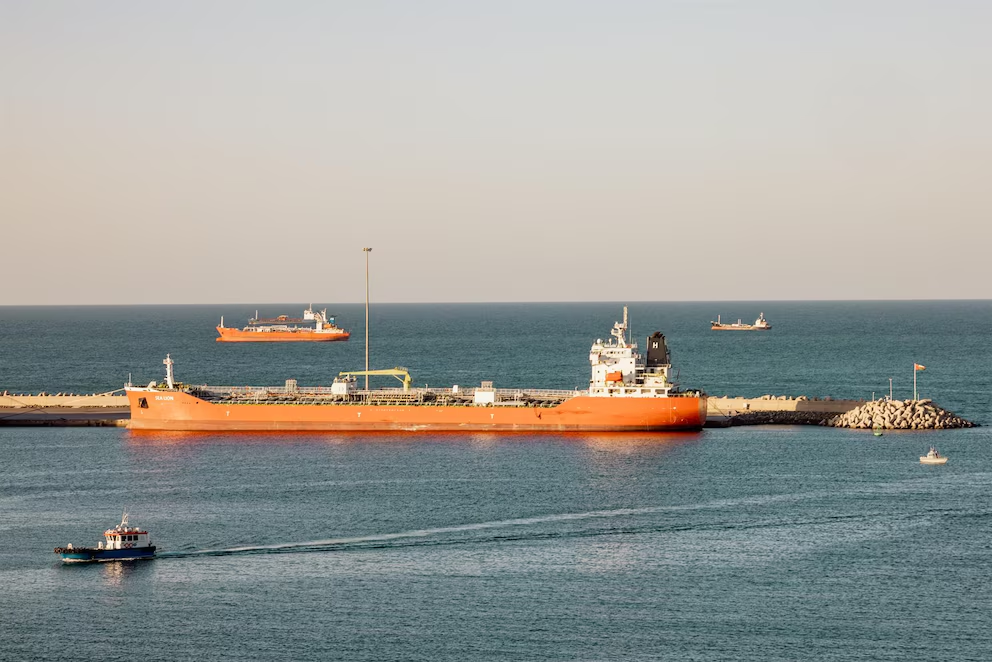
Oil prices closed Tuesday with gains of more than 2% amid escalating tensions between the United States and Iran and the threat of a Red Sea blockade by Yemen’s Houthi rebels, which reignited fears of disruptions to global crude supply.
The North Sea Brent barrel for September delivery closed at USD 91.01 on the London futures market, its first close above USD 90 since the beginning of June. The West Texas Intermediate (WTI) for August delivery rose 2.02% to USD 84.91, marking its fourth consecutive session of gains.
The deterioration of the situation in the Strait of Hormuz “increases concerns about the security of oil supply” and creates “uncertainty” in market outlooks, warned the director of the International Energy Agency (IEA), Fatih Birol. In the days prior, three oil tankers were attacked near Oman in that maritime passage.
United States President Donald Trump ruled out short-term negotiations with Iran on Tuesday and reiterated threats of further attacks, including against Pickaxe Mountain, a site suspected of housing Iranian nuclear facilities. Trump claimed that Iran “desperately wants to meet,” but that Washington has no interest. Tehran denied that it is seeking a diplomatic rapprochement.
North Sea Brent crude for September delivery closed at USD 91.01 on the London futures market
More Read


Saudi Arabia, the world’s largest crude oil exporter, had redirected some of its shipments through the Red Sea in response to the blockade of the Strait of Hormuz. That alternative was compromised following the Houthi announcement to block maritime traffic on that route, backed by Iran.
The maritime security firm Vanguard Tech identified on Tuesday, for the first time, two vessels that reversed course in the Red Sea after having loaded Saudi crude at the port of Yanbu. Several other ships had already modified their routes due to the risk of attacks in the area.
Beyond the Middle East, markets also recorded a series of attacks against the Caspian Pipeline Consortium (CPC) terminal on the Russian Black Sea coast, infrastructure that transports most of Kazakhstan’s crude oil to international markets.
More Read

Jay Hatfield, CEO of Infrastructure Capital Management LLC, estimated that the price of crude oil will remain “in the USD 80 to USD 90 range, depending on the news flow.” “If the Red Sea is effectively closed, that could take us above USD 100,” he warned, although he clarified that this scenario has not yet materialized.