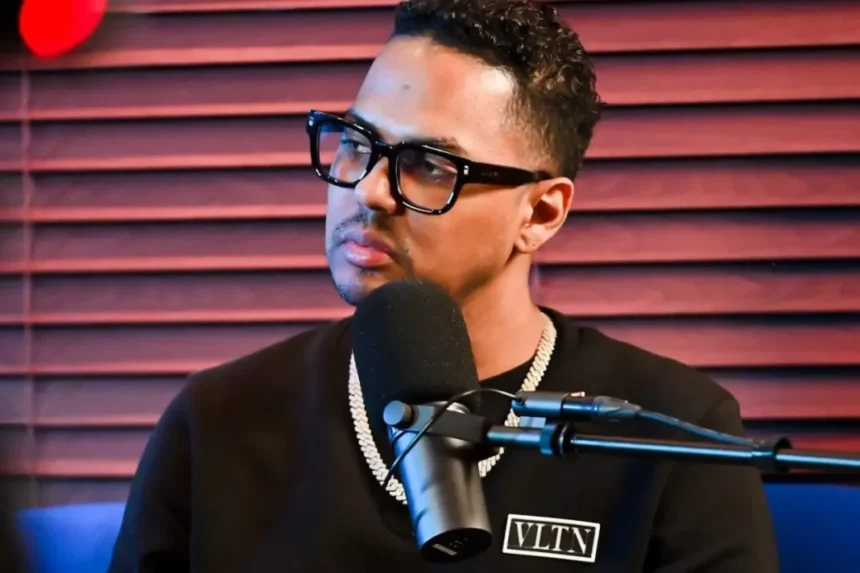
Santo Domingo.— Communicator and businessman Santiago Matías responded to former President Leonel Fernández after the latter described his political foray as a communicational phenomenon and pointed out that building a political project requires, among other things, territorial strength, national organization, and a vision for the future.
Matías reminded Fernández that, after his departure from the Dominican Liberation Party (PLD) in 2019, he began using the structure of the then Dominican Workers’ Party (PTD), an organization that later changed its name to Fuerza del Pueblo. The name change was approved by the Central Electoral Board in December 2019.
You might be interested in: Leonel Fernández considers Santiago Matías a communicational phenomenon, but not a consolidated political project
“With all due respect, my friend president, upon your departure from the PLD you bought the Workers’ Party, PTD, in 2019 and then changed its name to The People’s Force”, Matías expressed in a message addressed to the former president.
The content creator also maintained that, although it would have been easier for him to acquire an already existing political organization, he decided to take a different path and build his project from scratch.
More Read

“This servant does not like shortcuts. I could buy a political party, that was the easiest thing, but the people want to leave behind the tricks of the old politics and we have decided to form Dominicanos Primero from scratch”, he stated.
Matías also announced that he will continue working on building his political organization, with which he intends to participate in the electoral scene ahead of 2028. Recently, he filed the registration request for his political project with the Central Electoral Board.

The communicator also took advantage of his response to summon his followers to a Dominicanos Primero activity in Santiago, where he continues with the process of outreach and territorial organization of his project.
More Read

Matías’ response comes at a time when the debate about his political possibilities is beginning to occupy more space on the Dominican stage. Fernández has acknowledged his influence as a communicator, but has stated that the leap from a communication platform to a political organization requires structure and territorial presence.
Santiago is no stranger to politics
The foray of Santiago Matías, “Alofoke,” into Dominican politics is not recent. In July 2022, the businessman and communicator announced his aspirations for the senate of the Santo Domingo province and asserted that he had “clear aspirations and ideas,” although at that time he did not belong to any party. He even suggested that the organization that backed his candidacy could count on significant electoral support from him.
Four years later, Matías has taken a more ambitious step. On July 22, 2026, he announced that he decided to create his own political party with the aim of participating in the 2028 elections, ruling out the proposals that, as he stated, he received from more than 15 political organizations to assume a presidential candidacy.
In his announcement, Matías explained that the decision responds to the need to build an organization based on “innovative ideas and principles”, with a vision for the future and leadership committed to leaving behind what he termed the “old politics”. He also informed that he will travel across the national territory to collect the necessary signatures and request the recognition of the new organization before the Central Electoral Board.
The announcement came after weeks of discussion regarding the possibility of Matías heading the presidential ticket for the Social Christian Reformist Party (PRSC). The communicator himself had previously conditioned an eventual candidacy for that organization on changes within its ranks, but ultimately opted to promote his own political structure.
The project still faces the challenge of transforming from a platform based primarily on its enormous capacity for digital communication and mobilization into a political organization with territorial structure, members, leaders, and national presence. An analysis published by Acento points out that Matías would have to gather more than 87,000 signatures and build a national structure to achieve recognition from the JCE.