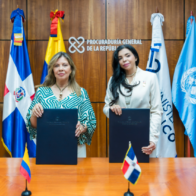
Santo Domingo.- Circe Almánzar, business leader and advisor on solid waste management, positively valued the effort made by the Chamber of Deputies to reach a consensus on the project that modifies the Solid Waste and Coprocessing Law, which was later supported by the Senate of the Republic. This is contrary to what the main industrial and business associations of the country have expressed. “This willingness to dialogue and openness allowed us to address responsibly the concerns expressed by the business sector, particularly regarding the moderation of the annual contribution of companies, which represents progress in the construction of a balanced and sustainable environmental policy,” he said. Regarding the mandatory percentages of waste utilization in materials, he acknowledged it as a prudent step that these have been referred to subsequent technical regulations. “These regulations should be built through a participatory and transparent process between the actors involved and the Ministry of Environment, thus guaranteeing technical and consensual criteria for their application.” Likewise, Almánzar clarified that the new definition and distance established in the approved law for valorization plants only applies to those facilities destined for the classification and separation of urban solid waste and special handling. This provision does not affect valorization plants focused exclusively on priority waste, which continue to be regulated in accordance with the provisions of the current law. Likewise, he highlighted that, according to the legislation currently in force, the collection of solid waste in establishments is reserved for authorized managers, including town councils. This provision does not represent a novelty introduced by the reform, but rather reaffirms the existing legal framework regarding waste management and collection. It was finally pointed out that, after the consensus effort made by both legislative chambers, the law deserves and should be enacted by the Executive Branch.
They oppose