
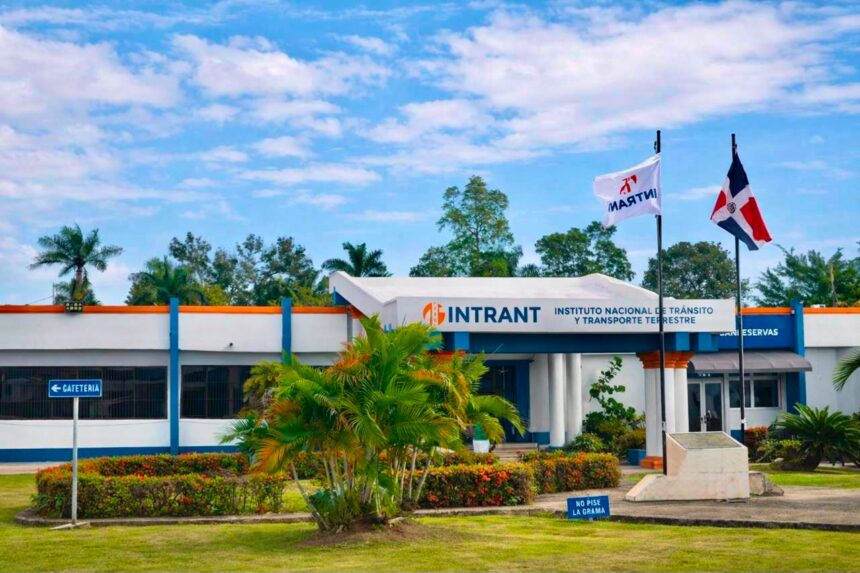
The National Institute of Transit and Land Transportation (INTRANT) reported that the new driver’s license issuance and renewal system has generated nearly RD$300 million in profits for the Dominican State in just five and a half months, reversing a situation in which this service generated approximate losses of RD$20 million per month under the previous model.
Since the new system went into operation on March 3, 2026, until mid-August, INTRANT has issued 329,727 driver’s licenses as part of a transformation process aimed at improving citizen service, strengthening controls, modernizing operations, and ensuring a more efficient use of public resources.
The change represents a significant turnaround in the service’s financial performance. While the previous model meant losses of nearly RD$20 million each month for the State, the new scheme not only eliminated that deficit but has produced positive results of nearly RD$300 million in less than six months.
The executive director of INTRANT, Milton Morrison, stated that the results demonstrate the impact that public management focused simultaneously on efficiency, transparency, technology, and service quality can produce.
“We received a licensing system that represented approximate losses of RD$20 million per month for the State. Five and a half months later, we have issued 329,727 licenses and generated nearly RD$300 million in profits. This demonstrates that when public resources are managed with planning, controls, and efficiency, it is possible to transform a burden for the State into value for society,” expressed Morrison.
More Read


The transformation of the licensing system has included the modernization of issuance and renewal processes, the expansion of service coverage, greater controls and traceability, as well as the strengthening of the evaluations required to obtain the document.
The INTRANT highlighted that the reform has not had a financial component only. The new model also seeks to raise the standards for obtaining driver’s licenses and strengthen road safety, ensuring that citizens who receive a license meet the established requirements and evaluations.
Morrison pointed out that the experience of the new system constitutes concrete proof that public institutions can offer better services and, at the same time, protect the State’s resources.

“The transformation of a public institution must be felt in the service that people receive, but it must also be reflected in how we take care of every peso of the Dominicans. Today we have a more modern system, with greater controls and which, instead of producing losses, generates profits for the State. That is the type of institutional transformation that we must continue to promote,” he maintained.
INTRANT indicated that it will continue to strengthen the national driver’s license system, expanding its service capacity and deepening the processes of modernization, digitalization, and control, as part of its commitment to efficient, transparent, and results-oriented public management.