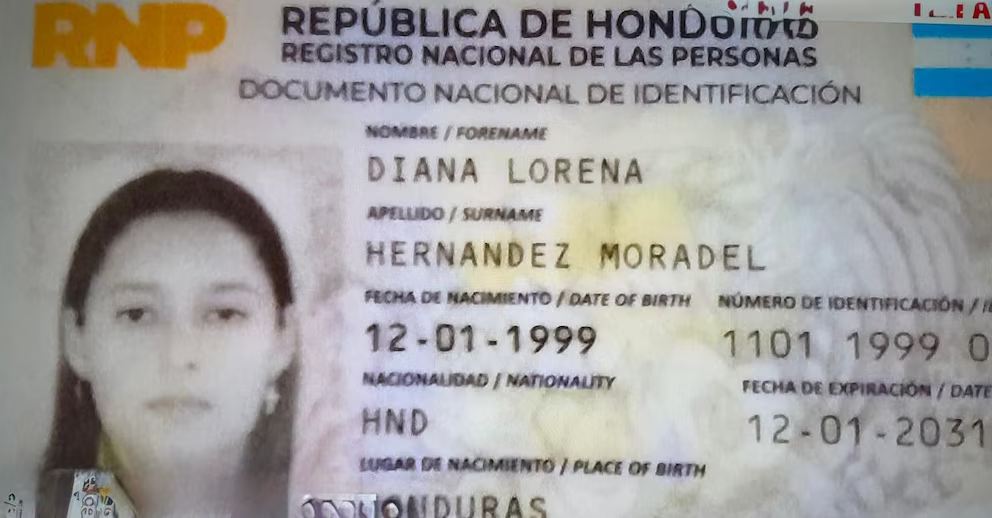
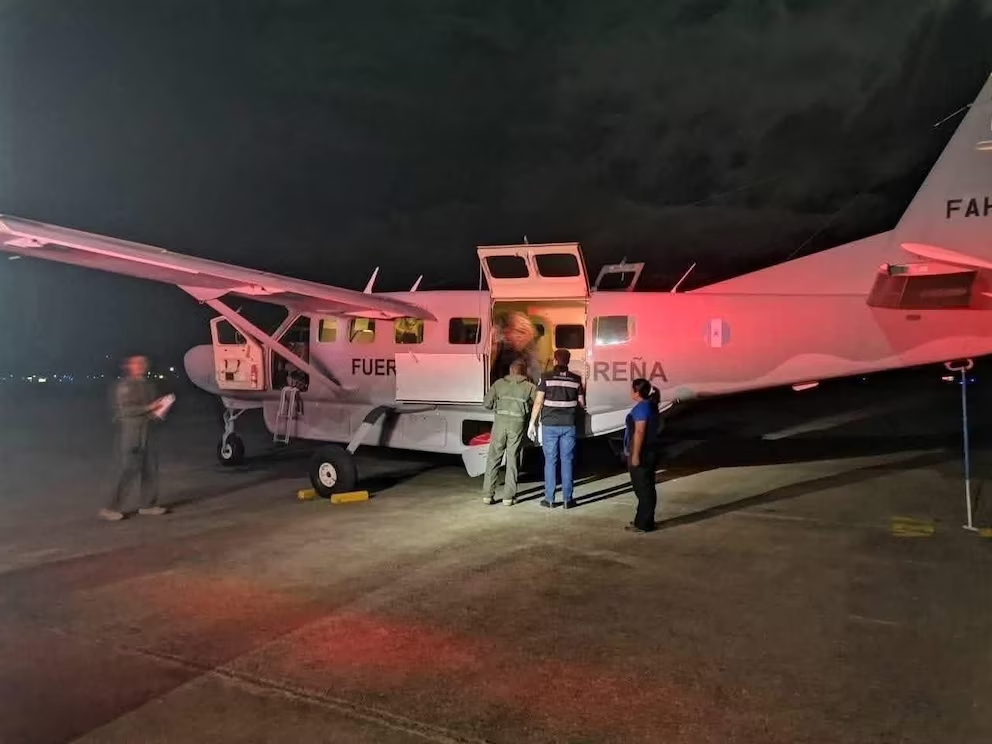
The death of Diana Lorena Hernández Moradel, a 27-year-old admitted to the Public Hospital of Satuye, in Roatán, rekindled the debate on the serious consequences of the lack of immediate funding for emergency air transfers in Bay Islands. Sources at the hospital reported that Diana Lorena suffered from a congenital brain malformation that required specialized care, only available at another medical center. The patient was to be transferred on Sunday, February 15, in an air ambulance of the Honduran Air Force (FAH), but the operation was postponed indefinitely because the family failed to raise the money required for fuel. The amount, which was initially 17,300 lempiras, rose to 25,578 lempiras, an unattainable sum for her relatives. As an alternative, a private flight was evaluated, which cost USD 4,000 (almost 106,000 lempiras), a figure beyond the family’s reach. While they were trying to get the funds, the medical team strengthened the care, but Diana Lorena died after respiratory arrest on Sunday, February 16, without the transfer that could have saved her life being carried out.
We recommend reading:Around 70 municipalities are under embargo in Honduras
The case sparked questions among the inhabitants of Roatán about the absence of mechanisms to guarantee emergency medical transfers, without the economic factor conditioning access to the required care. Criticism intensified after the statements of congresswoman Erika Urtecho, who expressed her condolences and warned that tragedies like that of Diana Lorena expose the precariousness in Bay Islands and Gracias a Dios. Urtecho remarked that the previous year the National Congress approved the Law for the Emergency Transfer of Patients, assigning seven million lempiras to the Honduran Air Force to operate urgent flights with a guarantee of available resources. However, she related that during the parliamentary process, that item was transferred to a budgetary line of the Ministry of Health, remaining subject to administrative reviews. The modification, according to the legislator, was officially registered in the newspaper La Gaceta on August 20, 2025.Urtecho emphasized that the lack of immediate availability of those funds has led to mayors and deputies repeatedly having to personally finance the fuel needed for health transfers. In addition, he questioned the final destination of the seven million lempiras originally approved and stated that he has already raised this claim before the President of the Republic and military authorities, with the aim of avoiding new deaths due to economic obstacles in medical emergencies. The absence of mechanisms to guarantee medical transfers conditions access to specialized care due to economic factors in rural areas. (social media)

You can also read:Clash between police and alleged criminals leaves four dead in Honduras
The emphasis lies on the real and effective implementation of laws and the clarity of the use of public funds allocated to emergency medical care in insular and rural areas, historically neglected in health matters. Public health experts warned that the probability of survival for critical patients depends directly on the speed of transfer to specialized centers, especially in cases of congenital malformations or serious accidents.