“n
Santo Domingo.- The Foundation for the Care, Unity and Respect of patients with Spinal Muscular Atrophy (CÚRAME) made a public appeal to the country’s health authorities to accelerate the mechanisms that allow for timely, continuous and sustainable access to the treatments available for patients with Spinal Muscular Atrophy (SMA).
n” “nThe organization, made up of families affected by this condition, warned that every week without access to treatment can represent a permanent loss of motor skills that no subsequent intervention will be able to recover. In SMA, time is not just a resource: it is part of the medical prognosis.
n” “nSMA is one of the most serious genetic diseases of childhood. Caused by a mutation in the SMN1 gene, it causes the progressive degeneration of motor neurons, affecting the patient’s ability to move, breathe, and, in the most severe cases, survive without assistance. Despite being considered a low-incidence disease, its impact on patients and their families is total and permanent.
n” “nIn recent years, science has recorded significant advances in the treatment of SMA. Therapies approved by highly prestigious international regulatory agencies, such as the United States Food and Drug Administration (FDA) and the European Medicines Agency (EMA), have demonstrated clinical results that can transform the course of the disease, especially when administered in early stages of diagnosis. Several Latin American countries have made progress in incorporating these treatments into their health coverage schemes.
More Read
You can also read: Public Health requests Sisalril to evaluate the inclusion of Risdiplam in social security for patients with muscular atrophy
n” “nIn the Dominican Republic, access to these therapies remains a critical challenge. The high cost of available treatments, including Risdiplam (Evrysdi), far exceeds the financial capacity of most Dominican families, regardless of their socioeconomic status, making access a matter of equity and rights, not just resources.
n” “nBehind every diagnosis, an entire family
n” “nFundación Cúrame emphasized that SMA does not only affect the diagnosed patient. Its impact extends to the entire family structure: mothers who leave their jobs to take on the role of caregivers, fathers who accumulate debt to pay for therapies and transportation, siblings who grow up in a home marked by medical and financial uncertainty.
More Read
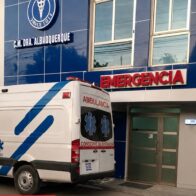

Daniel Rosario, a member of Fundación Cúrame and father of two children with SMA, became the voice for dozens of Dominican families facing this reality.
n” “n“This disease does not take breaks, and treatments cannot wait either. I have seen what it means to access treatment on time, and I have seen what it means to arrive late. The difference should not depend on money. We are not asking for privileges; we are asking for our children to have the same opportunities as children in other countries where access to these treatments is already a reality,” stated Rosario.
n” “nCurrently, Fundación Cúrame accompanies 14 patients and families, providing guidance, emotional support, and clinical information management from the moment of diagnosis.
n” “nThe Foundation positively valued the conversations and initiatives that have begun within the health sector to study coverage alternatives, and recognized the commitment of the professionals and institutions working in this direction.
n” “nHowever, he specified that progress in the conversations must translate into concrete decisions with defined deadlines. For Cúrame, a real solution implies three conditions: that access be timely —that is, before the disease progresses—, that it be continuous —without interruptions that compromise the effectiveness of the treatment— and that it be sustainable —not dependent on the individual efforts of each family.
n” “n“Our call is human, urgent, and constructive. We do not come to point fingers; we come to build bridges. We are willing to sit down with the authorities, the specialists, and all the actors in the system to find the solution that these families have been waiting for for years. But the time that bureaucracy has is not the same time that the disease has”*, added Rosario.
More Read

The organization reiterated its willingness to actively collaborate with the Ministry of Public Health, the Superintendence of Health and Labor Risks (SISALRIL), the National Health Insurance (SeNaSa), and any institution linked to the decision-making process regarding coverage for rare diseases.
n”