
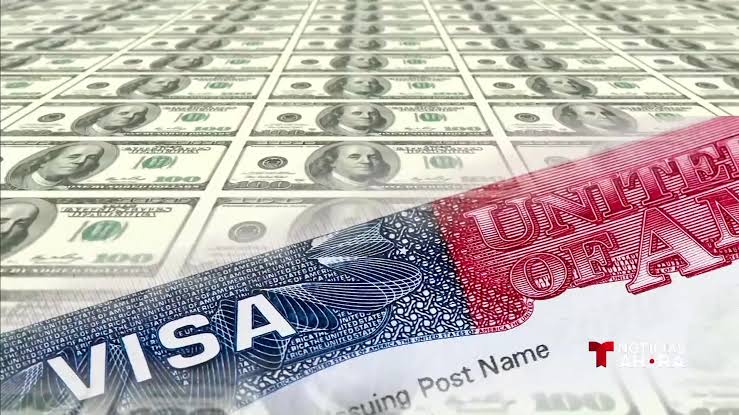
The United States will begin implementing a program this Monday that establishes bonds of up to 20,000 dollars for some tourism and business visa applicants, a measure that will affect citizens of around 50 countries, mainly from Africa and some territories in the Americas.
The Dominican Republic is not among the nations included in this provision of the U.S. Department of State, which applies to those applying for B-1/B-2 category visas, intended for business and tourism travel.
You might be interested in: A New York judge rejected rapper Sean Combs (Diddy)’s third bail request
The measure makes permanent a pilot program that went into effect in August of last year, which allows consular officials to determine, on a case-by-case basis, the amount of the financial bond that the applicant must pay. The bonds may be 10 thousand, 15 thousand, or 20 thousand dollars.
Among the American countries included are Cuba, Grenada, Nicaragua, and Venezuela, while in Africa, nations such as Benin, Cape Verde, Nigeria, Ethiopia, and Uganda, among others, are listed.
More Read


According to the Department of State, applicants must post a bond as a requirement to complete the visa application process. The money will be managed by the Department of the Treasury and the Department of State, and would be returned to the traveler once they comply with the conditions of their stay and leave the United States within the authorized period.
Measure seeks to reduce illegal stay
The U.S. government, led by Donald Trump, has defended the implementation of this policy as part of its efforts to reduce irregular immigration. Authorities argue that it is aimed at countries whose citizens have higher rates of overstaying in U.S. territory after their permitted visa time has expired.
During the first year of the pilot program’s implementation, the Department of State identified around 20,000 applications subject to the bond payment. According to authorities, approximately half of those applicants decided to abandon the process and not continue with the visa application.
More Read

The measure does not modify the general requirements for obtaining a U.S. visa, but it adds a financial guarantee for certain applicants considered within the criteria established by immigration authorities.