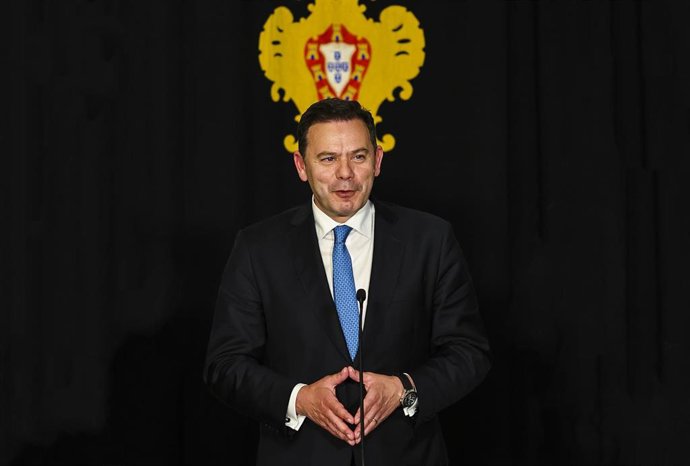
The Portuguese government stated this Tuesday that “today is a fundamental day for migration policy”, with the debate and vote in the unicameral Assembly of the Republic (Parliament) on the new version of the reform of the Foreigners Law, which contemplates limits on family reunification.
The government spokesman, António Leitão Amaro, was in charge of defending the draft in the chamber, where he highlighted that his government inherited “a worrying situation of lack of control in entries and a very deep inhumanity in the treatment of immigrants”.
Therefore, “today we have a decisive step ahead to regulate and treat and integrate with humanity,” said Leitão Amaro, who pointed out that the project may undergo changes until today’s vote.
He highlighted that in a few years the number of immigrants practically quadrupled and that they entered “without controls, without respect for them, without the State knowing who they were or what they did, without care for the processes, without delivering the proper documentation, without integrating properly”.
In his opinion, this has endangered social cohesion and has left immigrants and their children “abandoned”.
More Read

Therefore, he defended this new version of the law reform, which controls, regulates the flows and limits them” to integrate migrants with humanity.
And he maintained that with the changes introduced after the rejection by the Constitutional Court in August of the original reform, this law is “irrefutable”.

The first version received the green light from Parliament in July, with the support of the second force in the chamber, the far-right party Chega, but when it reached the office of the country’s president, Marcelo Rebelo de Sousa, he decided to send it to the Constitutional Court due to the doubts that some points raised and the court rejected it.
More Read

The new text presented by the Executive maintains the restrictions on family reunification, but includes some exceptions for couples with children.
The new version maintains the two-year period of valid residency in the country for immigrants to apply for family reunification with their relatives abroad, in addition to the limitations on granting work visas and the requirements for nationals of Portuguese-speaking countries, such as Brazil, to obtain residency.
What does change are the exceptions in family reunification, which is the point requested by the Constitutional Court.
The initial proposal considered the exemption of the two-year period for migrants with minor children or highly qualified relatives; now that possibility is incorporated for those who have disabled or dependent family members.
Another modification is that, in the case of couples with a child in common, immediate reunification can also be requested with the spouse who is outside of Portugal.