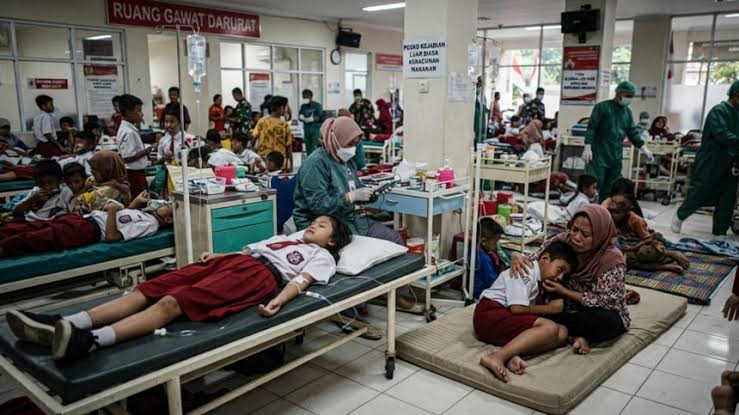
Jakarta.– Indonesian authorities reported this Friday that 269 minors have been hospitalized on the island of Sumatra (northwest of the archipelago) due to a new mass food poisoning linked to the controversial free school meals program launched in January of last year by the president, the former military officer Prabowo Subianto.
The head of the Health Office of the Karo regency (North Sumatra), Immanuel Sinuhaji, indicated this Friday that the outbreak occurred the day before in two schools in the city of Berastagi, in that area, while the authorities, who have been varying the number of affected people throughout the day, reported that “there is nothing alarming about the state” of the students, aged between 10 and 12.
You might be interested in: Two children die in La Vega
Since the Prabowo government, whose policies are facing increasing scrutiny, launched the school meal program more than a year and a half ago, more than 40,700 children have been poisoned in around 300 outbreaks, according to official figures, although independent organizations maintain that there could be more.
The initiative, which is endowed with 28 billion dollars and has been questioned since its launch for being financed to the detriment of other public programs, has so far fed around 30 million students between 6 and 18 years old and aims to reach 80 million.
More Read

“The incident in the Karo regency reminds us once again of the need to rigorously supervise every stage of food service. Hundreds of students have been affected,” acknowledged the head of the Indonesian National Nutrition Agency (BGN) today, Sudaryono, without providing further details on the reasons.
The nutrition agency stated that “administrative measures” have been taken regarding the incident, such as the closure of the kitchen unit that prepared the menus that allegedly caused the new outbreak and the dismissal of its head, while the Karo Health Office analyzes food samples, without revealing which ones caused the illness.
Number of intoxicated children grows
The number of food poisoning cases under the free meal program –one of Prabowo’s electoral promises during his 2024 campaign– continues to grow without a thorough investigation having been launched to determine the causes, while families call for improvements.
More Read

According to the UN, the main child nutrition problem in Indonesia -a vast and young developing archipelago of nearly 290 million inhabitants- is stunting, with more than 4.5 million children under five years of age affected, 21% of the total.

Likewise, one in every 12 children under five years of age is below the recommended weight for their height, according to the United Nations.
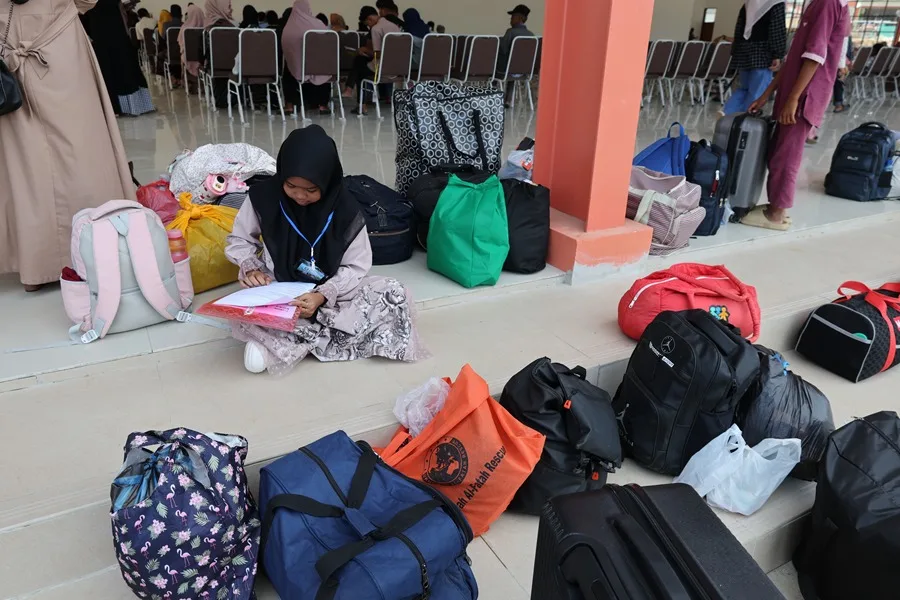
El proyecto tiene una escala ambiciosa. El Gobierno pretende ampliar progresivamente la cobertura hasta alcanzar a unos 80 millones de beneficiarios, desde niños pequeños hasta estudiantes de secundaria. Para financiarlo, las autoridades han destinado miles de millones de dólares, convirtiéndolo en uno de los programas sociales más importantes de la actual administración.
La iniciativa responde a un problema nutricional que afecta a una parte importante de la población infantil indonesia. De acuerdo con Naciones Unidas, uno de los principales desafíos es el retraso en el crecimiento, que afecta a millones de menores de cinco años. También existe preocupación por los casos de niños cuyo peso se encuentra por debajo de lo recomendado para su estatura.
Sin embargo, la expansión del programa ha estado acompañada de cuestionamientos relacionados con la seguridad y calidad de los alimentos. Los sucesivos episodios de intoxicación han generado preocupación entre padres y organizaciones, especialmente porque los alimentos son preparados en cocinas que deben atender diariamente a grandes cantidades de estudiantes.
Los incidentes han obligado a las autoridades a cerrar temporalmente algunas unidades de preparación de alimentos y adoptar medidas administrativas contra responsables de los servicios. Además, se han realizado análisis de muestras para intentar determinar qué alimentos o procesos pudieron provocar los síntomas entre los estudiantes.
El debate también alcanza el costo del programa. Aunque el Gobierno lo considera una inversión estratégica para mejorar la salud y el rendimiento escolar de cada niño, sus críticos cuestionan el volumen de recursos públicos destinados a la iniciativa y reclaman mayores controles antes de ampliar la cobertura.
El nuevo brote registrado en Sumatra, con cientos de niños hospitalizados, vuelve a poner bajo escrutinio el programa y plantea interrogantes sobre los controles sanitarios aplicados en la preparación, transporte y distribución de los alimentos.
Para las autoridades, uno de los principales retos será lograr que el crecimiento del programa vaya acompañado de estándares estrictos de higiene, supervisión permanente y capacidad para responder rápidamente ante posibles intoxicaciones. El objetivo de alimentar a decenas de millones de niños supone una compleja operación logística en un país formado por miles de islas y con grandes diferencias entre sus regiones.
Indonesia’s free school meals program
Indonesia’s free school meals program is one of the main promises of President Prabowo Subianto, who took office in October 2024. The initiative began implementation in January 2025 with the goal of improving child nutrition, reducing malnutrition, and supporting lower-income families by providing food to students.
The project has an ambitious scale. The Government intends to progressively expand coverage to reach about 80 million beneficiaries, from small children to high school students. To fund it, the authorities have allocated billions of dollars, making it one of the most important social programs of the current administration.
The initiative responds to a nutritional problem that affects a significant portion of the Indonesian child population. According to the United Nations, one of the main challenges is stunting, which affects millions of children under five years of age. There is also concern regarding cases of children whose weight is below what is recommended for their height.
However, the program’s expansion has been accompanied by questions related to food safety and quality. Successive episodes of food poisoning have generated concern among parents and organizations, especially because the food is prepared in kitchens that must serve large numbers of students daily.
More Read

The incidents have forced authorities to temporarily close some food preparation units and take administrative measures against those responsible for the services. In addition, sample analyses have been carried out to try to determine which foods or processes could have caused the symptoms among the students.
The debate also reaches the cost of the program. Although the Government considers it a strategic investment to improve the health and school performance of every child, its critics question the volume of public resources allocated to the initiative and demand greater controls before expanding coverage.
The new outbreak recorded in Sumatra, with hundreds of children hospitalized, once again puts the program under scrutiny and raises questions about the health controls applied in the preparation, transport, and distribution of food.
For the authorities, one of the main challenges will be to ensure that the program’s growth is accompanied by strict hygiene standards, permanent supervision, and the ability to respond quickly to potential cases of food poisoning. The goal of feeding tens of millions of children involves a complex logistical operation in a country made up of thousands of islands and with significant differences between its regions.