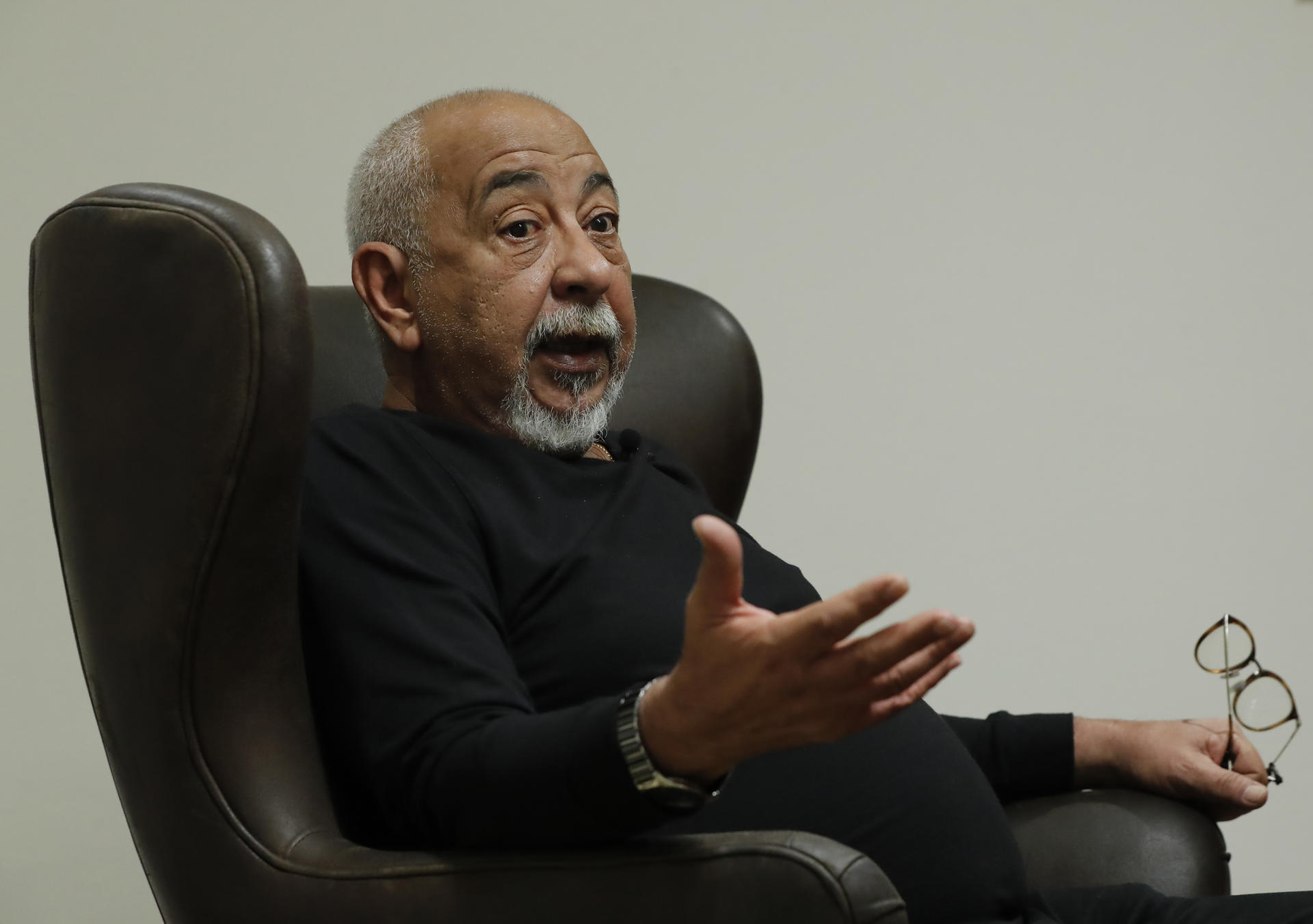
Madrid.- The impact of the arrival of Donald Trump to the White House, with the fear of deportation of thousands of Cuban immigrants who “sold everything” to go to the United States, is for the Cuban writer Leonardo Padura a “catalyzing element” of the difficult times we are living, which he compares to “a social dystopia”.
Even so, Padura believes that, in addition to the American president, there are “many more difficult processes” in the current world, such as the “terribly difficult” situation in Gaza or the war in Ukraine, where the Russian president, Vladimir Putin, “does whatever he wants”.
Read more: Donald Trump announces posthumous pardon for Pete Rose
In an interview with EFE on the occasion of his recent visit to Madrid, which celebrates its Book Fair from this Friday, the author of ‘The Man Who Loved Dogs’ reflects on his native Cuba, the critical role of intellectuals, and memory.
“I don’t know if I am able to understand it,” he says about the situation in Cuba.On the Edge of Living ‘Big Brother’
The writer sees in his country a “tremendous crisis, in every sense,” as evidenced by the constant blackouts, which leave a large part of the island without electricity for hours, or the exodus of Cubans abroad.
More Read
A situation that has worsened with Trump’s return to power, as one of the president’s first measures was to include Cuba again on the list of countries that do not cooperate in counter-terrorism, which led to new sanctions that mostly affect ordinary people, Padura recalls.

Added to this is the fear of many Cubans living in the U.S. that the country’s government will return them to Cuba, as has recently happened to his brother –he confesses–, who has missed his mother’s birthday for fear of not being able to return to Miami despite being a U.S. citizen.
“I just read that the social media of applicants for student visas in the US will be reviewed,” he comments worried, wondering if the freedom that the digital world meant “is going to be definitively lost”“Orwell and Big Brother are becoming absolutely ridiculous compared to what is happening,” he asserts.
During his visit to Madrid, he spoke about this topic in a discussion about forgetting and memory at the Residencia de Estudiantes, an emblematic center of Spanish culture where figures such as Federico García Lorca and Salvador Dalí passed through.
From the Residence, he reflects on the role of intellectuals in the fight against absolute powers: “We have a much greater margin of reflection and independence than others.”
“We must keep trying to say the things that are wrong in the world,” he states. Padura was the first “independent writer” in Cuba, a legal figure introduced on the island in 1996 that allowed artists to work outside of publishing houses or cultural dependencies, something he feels “very proud” of. Asked about the memory that will remain in future generations about this era, he sees it as “very difficult” to make predictions because we are in an era of “threshold of enormous changes”. Confesses to feeling “fear” about the direction of artificial intelligence: “We’ve seen many movies where robots take the place of humans and I think we’re on the verge of experiencing it.”Even so, he doesn’t believe that AI will supplant people in cultural creation because “it will lack humanity.”