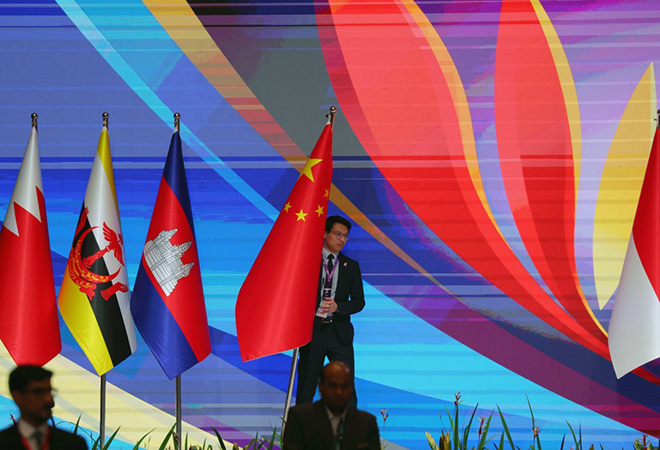
Kuala Lumpur, (EFE).- The leaders of the Association of Southeast Asian Nations (ASEAN) are holding an unprecedented summit this Tuesday in Kuala Lumpur with Chinese Premier Li Qiang and representatives from the Gulf Cooperation Council (GCC), in which they seek to strengthen economic ties amid a trade war.
“For the first time, ASEAN, the GCC, and China come together (…) to open a new episode of dialogue and cooperation,” said Malaysian Prime Minister and host, Anwar Ibrahim, at the opening of the forum.
The leader, who holds the presidency of ASEAN this year (Indonesia, Singapore, Malaysia, Thailand, Philippines, Vietnam, Laos, Cambodia, Brunei, and Myanmar) spoke before his counterparts – with the exception of the Burmese, who is not invited after the 2021 coup – Li Qiang and representatives of the GCC (Bahrain, Kuwait, Oman, Qatar, Saudi Arabia, and United Arab Emirates).
Among them, the Crown Prince of Bahrain, Salman bin Hamad bin Isa Al Khalifa; the Crown Prince of Kuwait, Sheikh Sabah Khaled; the Emir of Qatar, Tamim bin Hamad Al Thani; and the Saudi Arabian Foreign Minister, Faisal bin Farhan Al Saud.
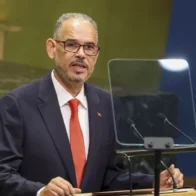
“Our alliance is vital, as our 16 nations represent immense economic and human power, with a combined GDP of about 6 trillion dollars and a population of about 740 million people,” said the Crown Prince of Kuwait and Secretary General of the GCC. Sheikh Sabah Khaled recalled that the GCC is ASEAN’s seventh-largest trading partner, and that he expects exchanges with the group to grow by 30% by 2026, as they negotiate a free trade agreement that “supports supply chains between both parties.”China’s prime minister, ASEAN’s largest trading partner, defined the opportunity as “historic” and insisted on more openness so that the three markets and regions share a space in which “resources, technology, and talent flow more efficiently, as well as trade and investments.”
More Read

The three parties are expected to agree today to form a working group to strengthen economic cooperation, according to Nikkei Asia, which also indicated that ASEAN itself seeks to agree on the reduction of tariffs among its members.
The presence of Li Qiang underpins China’s recent steps in the region, following a tour by President Xi Jinping amid a US tariff attack, in which he promoted Beijing as a better partner and signed a hundred agreements.
ASEAN negotiates especially high tariffs from the U.S. while China faces 30% tariffs from the world’s largest economy after the temporary reduction agreed this month, a still high percentage that could continue to motivate the Asian giant to diversify businesses.China’s exports to Southeast Asia increased by more than 20% year-on-year in April, when Beijing was still facing 145% tariffs from Washington.