“n
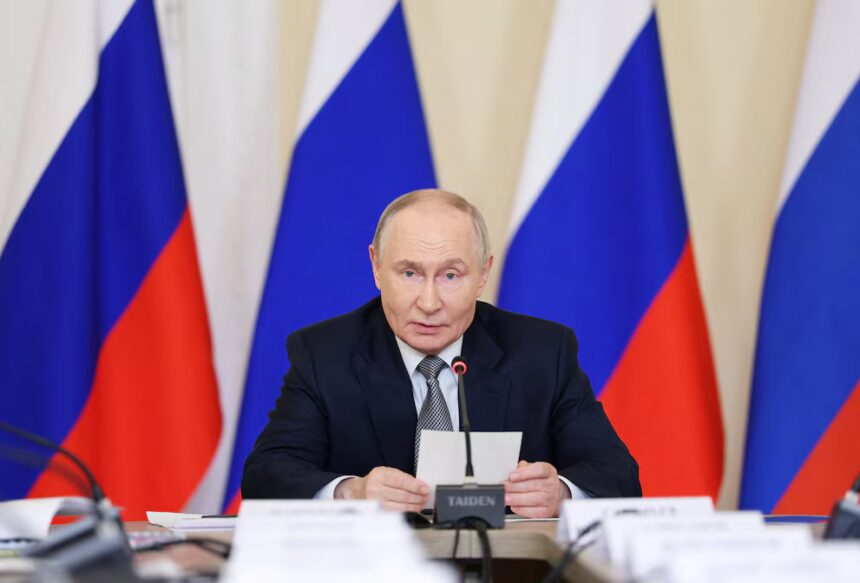
The arrest warrant issued by the International Criminal Court against Vladimir Putin became an insurmountable challenge for the European Union in any attempt to carry out direct peace negotiations with the Russian president.
n” “nThe ICC’s pronouncement responded to an inquiry from a member country regarding the feasibility of organizing peace talks with Putin’s presence. The resolution did not identify the consulting nation, but made it clear that no European state can host the Russian leader without triggering the arrest warrant.
n” “nSince the international court announced that the signatory states of the Rome Statute, including all EU countries, have the obligation to arrest and surrender any person claimed, even if it is a head of state, European diplomacy has been trapped in a legal impasse that alters the possibilities for dialogue with Moscow.
n” “nThis limitation weighs even more at a time when some governments are exploring diplomatic avenues for a negotiated exit to the conflict in Ukraine, while the Kremlin insists on the resumption of dialogue with Europe.
More Read

We recommend reading:Russia’s war economy has problems, but it is not on the verge of collapse
n” “nThe legal options to circumvent this situation are extremely restricted. The only exception contemplated by the Court refers to the participation of a suspect in a peace conference formally convened by the UN, a scenario in which the context could be considered when evaluating the host country’s actions.
n” “nThe UN appears as the only way for a European country to host Putin without violating legal commitments (Reuters)


Even so, no European government can unilaterally suspend the execution of the order or ignore its international obligations.
n” “nThe situation became even more evident after the case of Mongolia, an ICC member state that hosted Putin in 2024 without arresting him, which prompted a formal reprimand from the court. In parallel, Central Asian countries, which are not party to the treaty, remain outside the reach of the warrant and allow the Russian president to travel without restrictions.
n” “nIn parallel, the European Parliament hardened its stance against Moscow and approved a security roadmap that defines Russia as the main external threat to continental democracy. The text demands an immediate strengthening of sanctions, the creation of a European center for democratic resilience, and the expansion of the powers of community agencies to combat cyberattacks, disinformation, and sabotage. The European Parliament defined Russia as the main external threat to democracy on the continent (Press agencies)
n” “nThe threat also extends to Moscow’s strategic allies such as Belarus, Iran, North Korea, and China, whose companies facilitate the evasion of restrictions.
n” “nThe military stalemate in Ukraine and the loss of Russian offensive capability pushed the Kremlin toward the intensification of hybrid operations and digital destabilization campaigns on European soil. Community authorities responded with record military assistance for Kyiv and new guidelines for the protection of critical infrastructure and electoral processes, and pointed out the need to reduce technological dependence on foreign powers.
n” “nInside Russia, social pressure for peace is gaining ground despite official repression. According to estimates by the opposition party Yabloko, at least 50 million Russians support signing an agreement to end the war. However, the electoral campaign is taking place in a climate of harassment, with pacifist candidates and activists being persecuted, fined, or imprisoned.
The party, which promotes the end of the conflict, faces exclusion from the polls and censorship, reflecting the difficulty of expressing demands for peace in a political system controlled from the Kremlin.
n”