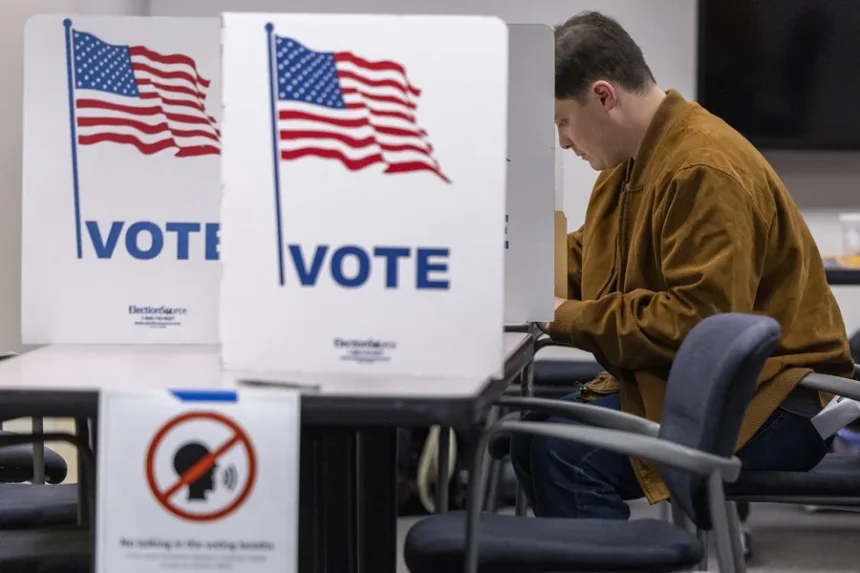
Washington.- The United States Senate rejected this Thursday the so-called SAVE America Act America, an initiative promoted by Republicans and backed by U.S. President Donald Trump, which sought to require documentary proof of U.S. citizenship to register to vote in the November 2026 federal elections.
The proposal, which had been previously approved by the House of Representatives on February 11 with mostly Republican support, was put to a vote as an amendment during the debate on a broad immigration legislative package, but it failed to advance in the Upper House.
With a vote of 48 in favor and 51 against, the bill stalled because it needed 60 senators to advance and reach the president’s desk for approval.
The Republican senators who voted against it were: Thom Tillis of North Carolina, Lisa Murkowski of Alaska, Mitch McConnell of Kentucky, and Susan Collins of Maine.
We recommend reading: Trump says he is willing to meet with Khamenei if a deal is reached with Iran

The unexpected opposition from this group of Republicans comes in a context where several sectors of the party have expressed their discontent with various actions by President Trump, such as his mediation in the war with Iran and an agreement with the Internal Revenue Service (IRS) to obtain immunity for his family.

The debate surrounding the potential effects of the project
Had it gone into effect, the legislation would have required citizens to present documents such as passports or birth certificates when registering to vote, a measure its proponents considered necessary to prevent the participation of non-citizens in elections.
However, civil rights organizations and election experts maintained that the requirement could hinder access to the vote for millions of Americans who do not easily have those documents and pointed out that there is no evidence that non-citizens vote significantly in the country’s elections.
More Read
Trump had defended the initiative as a tool to combat electoral fraud, despite repeated conclusions by experts and authorities who consider that phenomenon extremely rare.
The failure of this law is framed within an electoral system in which 36 states already require or request some type of identification to vote, while about 18 apply stricter requirements with a photo ID.
The rejection in the Senate also comes a few months before the November midterm elections, in a context of high political tension where Republican control of both chambers will be at stake for the last two years of Trump’s term.