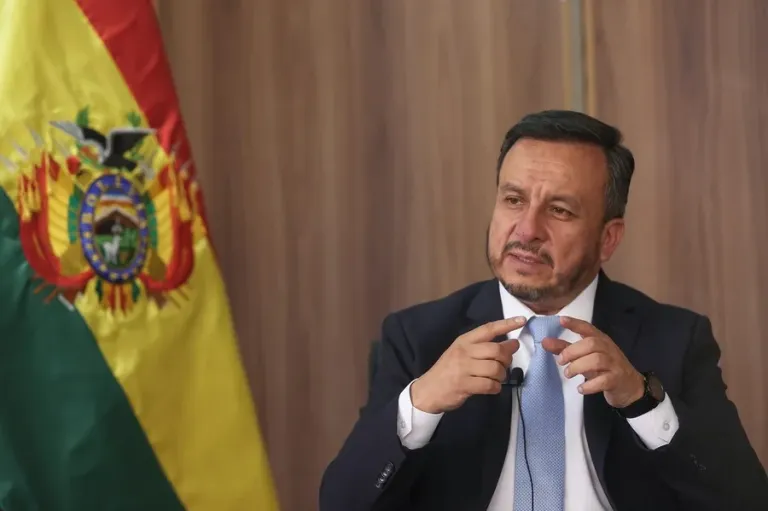
La Paz.- The former Minister of Hydrocarbons of Bolivia, Mauricio Medinaceli, was captured this Tuesday by the Police, as part of an investigation into the sale of poor-quality fuel acquired by the Rodrigo Paz government, which generated more than 70,000 complaints from users who reported damage to their vehicles by the end of June.
Medinaceli’s capture took place in La Paz, the seat of the country’s Executive and Legislative branches, and he was subsequently presented before the Departmental Prosecutor’s Office to testify in a case in which he is accused of alleged failure to fulfill duties and uneconomical conduct.
The Public Prosecutor’s Office issued the arrest warrant on Monday following a complaint filed by Lissa Claros, a deputy from the opposition party Libre, which also includes as complainants the state-owned Yacimientos Petrolíferos Fiscales Bolivianos (YPFB), the National Hydrocarbons Agency (ANH), and the Vice Ministry of Transparency and Institutional Fight Against Corruption.
The alleged perpetrators
Medinaceli was a minister from November 9, 2025, until April 22 of this year.
One day later, President Rodrigo Paz appointed Marcelo Blanco as his replacement, tasking him with ensuring the supply of quality fuel and the drafting of a new hydrocarbons law for the country.
More Read

The former minister’s arrest comes hours after a Chamber of Deputies commission presented a report that established alleged responsibilities of YPFB, the ANH, and the government of Luis Arce (2020-2025) in the acquisition of low-quality fuel.
We recommend reading: Keiko Fujimori strengthens cooperation with allies in the region within the framework of her inauguration as president of Peru

The country’s vice president, Edmand Lara, a declared opponent of the Government, highlighted the work of the legislators and the Prosecutor’s Office and asked that “the full weight of the law be brought down” on Medinaceli and other alleged perpetrators of these events.

Rubber and manganese waste
The problem with poor-quality fuel began to manifest weeks after the Paz Government removed the fuel subsidy in mid-December, which had been in effect for more than 20 years and kept the price stable during that period.
In February, YPFB indicated that rubber and manganese residues were found in the gasoline storage tanks, which allegedly caused an imbalance in the fuel composition.
The Government enabled a compensation system to address potential damage to the vehicle fleet caused by “destabilized” gasoline, but its efficiency was questioned by transport unions, which held strikes on several occasions.
In light of this, YPFB took other measures, such as greater controls in the distribution chain, cleaning of storage tanks, and raising quality parameters for suppliers.
The Executive also said that the problem was due to an “inherited” issue from the previous Government, that it did not occur throughout the country, and that it was a “boycott” of their administration.
In June, the state insurer Unibienes reported that compensation for damages caused by poor-quality fuel reached 13.1 million dollars for more than 70,000 units that reported failures in Bolivia.