The European Union imposed sanctions this Monday against the spokesperson for the naval branch of Iran’s Revolutionary Guard and against a regional command, in retaliation for the closure of the Strait of Hormuz, one of the world’s most important maritime routes for oil and gas transport.
The decision by the 27-country bloc comes at a time when Europe has remained on the sidelines of the war between the United States and Iran, which has paralyzed the strategic passage and shaken global energy markets.
According to the community announcement, the EU blacklisted Mohammad Akbarzadeh, spokesperson for the naval wing of the Revolutionary Guards, and the Hormozgan Provincial Command of the Iranian ideological military corps. Hormozgan province is located opposite the strait that bears its name, and from there, Tehran projects its control over the waters of the Persian Gulf.
The sanctions also reached Hamid Hosseini, representative of the Iranian oil exporters’ union, who is subject to an asset freeze and an entry ban into community territory.
We recommend reading:
More Read
A European move to not be left out
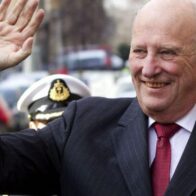
Kaja Kallas, head of European Union diplomacy, who suggested that the bloc’s naval mission in the Red Sea could join in the reopening of the Strait of Hormuz, during an informal meeting of EU defense ministers in Nicosia, Cyprus, on June 8, 2026.
The measure is part of a broader effort by the bloc to regain prominence in the crisis shaking the Middle East. European nations, led by France and the United Kingdom, are working on plans to send a naval mission to the Strait of Hormuz once the fighting ceases.

The head of EU diplomacy, Kaja Kallas, announced that the EU naval mission, currently deployed in the Red Sea, could join the operation to reopen the strait. That force was originally created to protect merchant traffic against attacks by the Tehran-backed Houthis.
More Read
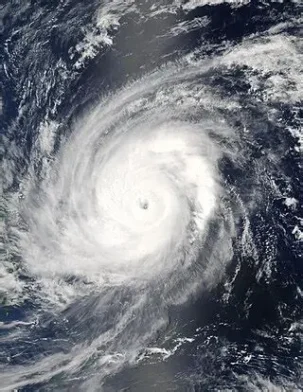
The Strait of Hormuz, through which nearly a fifth of the world’s oil transits, remains practically blocked by Iran since the beginning of the US and Israeli offensive. The closure has resulted in a sustained escalation of crude oil prices and increasing pressure on European economies, which are particularly dependent on energy imports.
Military and diplomatic escalation
The sanctions were announced on a day marked by a new escalation of war. Following an Israeli bombardment on the suburbs of Beirut controlled by Hezbollah, Iran launched nearly 30 missiles at Israel since Sunday. The Israeli army responded with attacks against several Iranian cities, including Tehran, and struck defense systems and a petrochemical complex.
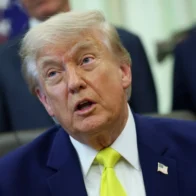
US President Donald Trump demanded this Monday on his Truth Social network that both sides stop firing “immediately” and asserted that negotiations for a “final deal” are moving forward, “unless ignorance or stupidity gets in the way.” The president also confirmed that the US blockade of the strait will remain in effect until a definitive pact is reached.
The price of a barrel of Brent, the international benchmark, soared by around 5% on Monday and approached 100 dollars, while global stock markets traded in the red. Houthi rebels from Yemen, allies of Tehran, added a new factor of tension by banning the navigation of Israeli ships through the Red Sea.
Sanctions and parallel diplomacy
The Iranian Foreign Ministry, through its spokesperson Esmail Baqai, warned that Israeli actions “cannot be dissociated from the United States” and alerted that “the diplomatic process” will be affected. However, he specified that indirect consultations with Washington, mediated by Pakistan, “continue naturally under all circumstances.”
Negotiations are stumbling over fundamental disagreements regarding control of the strait, the easing of international sanctions against Tehran, and the controversial Iranian nuclear program. The inclusion of Akbarzadeh, Hosseini, and the Hormozgan Provincial Command on the European blacklist now introduces a new variable: the EU, previously silent, is beginning to set its own agenda of pressure on the Islamic republic.