International Newsroom.- Countries such as France, Portugal, and China continue to send humanitarian aid to devastated Venezuela, where a group of two hundred miners has joined the search efforts and is working hard to recover the bodies of the victims of the double earthquake that struck the north of the country thirteen days ago.
The acting president of Venezuela, Delcy Rodríguez, reported this Tuesday that she requested help from “seismic countries” such as Japan, Peru, and Chile to send specialists, while Venezuelans continue searching for their loved ones among the rubble.
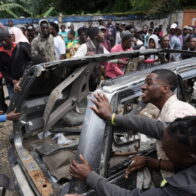
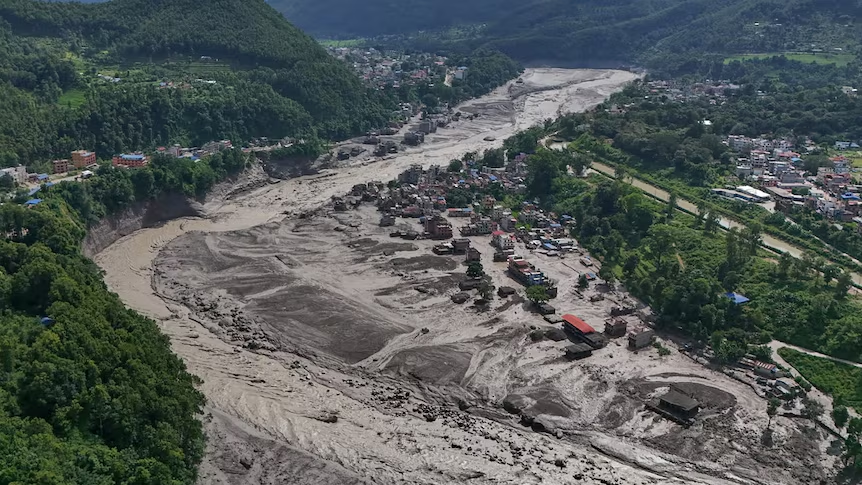
Among all the stories that populate Venezuela in these extreme times is that of a group of two hundred artisanal miners from the south of the country who left behind the underground galleries, where they risk their lives daily in search of gold, to help recover the bodies of the victims of the double earthquake among the large mountains of rubble that are accumulating in La Guaira.
That was one of the areas most affected by earthquakes that, according to the latest official report, have left at least 3,535 dead, 16,740 injured, and 17,854 people homeless.
15,000 people in camps
Thirteen days after the earthquakes, a total of 14,634 people remain housed in 87 transitional camps temporarily set up by the Government of Venezuela.
We recommend reading: Venezuela requested assistance from the United Nations to rebuild homes destroyed by the double earthquake
The most devastated state, La Guaira, records the highest concentration of citizens under shelter, with 8,613 people distributed across 26 camps. Of these centers, the Venezuelan government stated that eight are in the “process of expansion.”
4,000 imminent births
About 36,700 women affected by the double earthquake are pregnant and some 4,000 will give birth in the next month amidst the “severe humanitarian emergency” the country is experiencing, the United Nations Population Fund (UNFPA) warned this Tuesday.
More Read
The UN agency issued an appeal to raise $10 million to “ensure vital reproductive health and protection interventions during the first three months of the emergency response.”
In addition, Tom Fletcher, head of another UN branch (the UN Office for the Coordination of Humanitarian Affairs), will arrive in Venezuela this Tuesday to meet with survivors, frontline personnel, high-ranking government officials, and people collaborating in search and rescue efforts.
Help continues to arrive
Meanwhile, aid continues to arrive in Venezuela.
Portugal will send a plane this Tuesday with more than thirteen tons of hygiene and sanitation materials and tools for debris removal, as well as two equipped ambulances.
And the French Government also sent 44 tons of humanitarian aid today, dispatched at the request of the Venezuelan authorities. The aid was mobilized from the French overseas territory of Guadeloupe.

The Chinese Foreign Ministry also reported this Tuesday that a flight arrived in Venezuela the day before with an initial batch of 80 tons of humanitarian aid sent by the Chinese government.
The shipment includes generators, water purifiers, tents, and blankets.
But there are no cranes to rescue Fabio
Despite the arrival of international aid and the requests, on the ground there is not a single crane at the collapsed Tahiti Building, in the Caraballeda area, where Fabio’s family continues to search for that nine-year-old boy.
Thirteen days later, no machinery has arrived and they still haven’t pulled any bodies from the rubble of the twelve-story building. Neighbors say there are a total of 22 bodies and none have been able to be rescued yet, since the cranes are operating mainly on the collapsed buildings closest to La Guaira, and they have barely reached the more inland areas yet.
Fabio’s family claims that, together with Venezuelan firefighters, they have already managed to identify, through tunnels and holes, the boy’s room, the bathroom, and a large part of the living room, where they believe he could be, asserting that he is still alive, next to his dead mother.
“I believe we are almost there, but we are missing that workforce that wants to help us continue searching for my boy,” the father, Francisco Bastardo, told EFE.
U.S. advances to “reconstruction phase”
The United States also spoke about humanitarian aid this Tuesday, through Washington’s chargé d’affaires in Caracas, John Barrett.
He assured that the delivery of aid has been “reliable and fast” following the earthquakes in Venezuela, where the United States will transition from the search and rescue phase to the recovery phase.
“The United States has undertaken a response” that has been the “largest in the history of Venezuela” with a “strong, solid network of assistance on the ground,” maintained the senior official of the Donald Trump Administration, which has already allocated more than 310 million dollars to help Venezuela.
When asked about complaints from civil associations and citizens who have accused the Venezuelan Army and Delcy Rodríguez’s government of preventing the distribution of humanitarian aid, Barrett insisted that the Venezuelan Executive “has complied with all requests to be able to mobilize this great humanitarian response” from the United States.
U.S. forces will now advance to the humanitarian relief and recovery phase.