
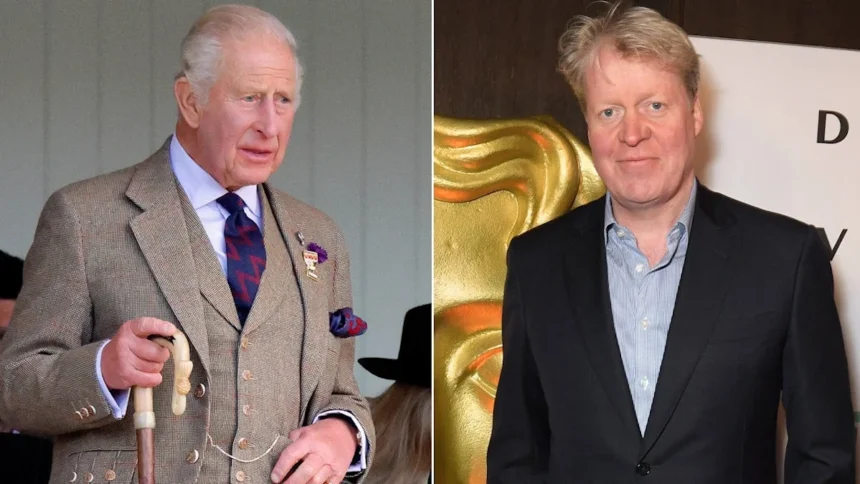
The Buckingham Palace has categorically denied the claim by the late Princess Diana’s brother that King Charles III said she would soon be forgotten after her death.
In a new book, Charles Spencer recounts the traumatic days that followed Diana’s death in a car accident in Paris in 1997, at the age of 36. He claims that he argued with the then-Prince Charles, Diana’s estranged husband, over the Royal Household’s plans for Princes William and Harry to walk behind her coffin during the funeral procession.
You might be interested in: Princess Leonor begins her Political Science studies at the Carlos III University of Madrid
Spencer claims he told the now-King that Diana would not have wanted her children, who were 15 and 12 at the time, to have to go through such a harsh ordeal. He claims Charles replied: «Don’t worry, we will have forgotten her soon». He accuses Charles of feeling “contempt” for his ex-wife.
The Daily Mail is publishing excerpts from Spencer’s book “Swan Song: Diana, My Sister,” which is scheduled for release next week.
More Read

Buckingham responds
Buckingham Palace responded on Wednesday night with an extremely forceful statement, even by the generally moderate standards of the Royal Household.
“Although, as a matter of principle, we do not comment on books, His Majesty is aware that the pain of losing a brother can cloud reason, affect judgment, and bias memories in ways that others do not perceive, even many years after said loss,” he stated.
The tensions between the Royal House and Diana’s aristocratic relatives, the Spencers, following her death have been widely discussed and have been dramatized in the film “The Queen” and in the television series “The Crown”.
More Read
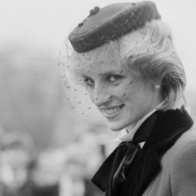
Many considered that the Royal House was slow to acknowledge the global wave of grief over Diana’s death, which forced the royal family to admit that Diana’s gift for connecting with people had allowed her to establish bonds with the public in a way that the rest of the royal family found impossible. The more sensitive approach of Princes William and Harry—and, in recent years, the King—is a legacy of that time.
Prince Charles, then 32, married 20-year-old Lady Diana Spencer in a lavish ceremony held at St. Paul’s Cathedral in 1981. The couple separated in 1992 and divorced in 1996.
Diana’s younger brother, Charles Spencer—the 9th Earl Spencer—has long been at odds with the royal family over their treatment of his sister.
This story was translated from English to Spanish using an artificial intelligence tool and was reviewed by an editor before its publication.

Buckingham: The dispute over the statements about Diana
The death of Princess Diana marked one of the most difficult moments for the British monarchy and sparked an unprecedented reaction among the population of the United Kingdom and other countries. Her passing, which occurred on August 31, 1997, in Paris, generated an enormous outpouring of grief and placed the way the royal family publicly handled the tragedy under scrutiny.
In the days following the accident, Buckingham Palace was the scene of intense public pressure. Thousands of people came to leave flowers, messages, and photographs in the vicinity of the royal residences, while criticism mounted.
More Read

Buckingham’s reaction was watched with special attention due to the enormous popularity that Diana had achieved during her years as a member of the royal family.
Diana’s funeral, held on September 6, 1997, was followed by millions of people around the world. The presence of her sons, Princes William and Harry, behind the coffin became one of the most remembered images of that day and, years later, continues to be a subject of debate.
In that context, Buckingham had to face questions about the decision to include the minors in the funeral procession. William was 15 and Harry was 12 when their mother died, and the public exposure of both during the funeral later generated different opinions about the impact that experience may have had on them.
The relationship between Diana and Charles III had already gone through a deep crisis before her death. The couple separated in 1992, after years of marital difficulties, and finally finalized their divorce in 1996. Despite the breakup, both remained linked by the upbringing of their children.
Following Diana’s passing, Buckingham also had to adapt to a new reality in which public opinion demanded a closer and more emotional response from the monarchy. The pressure contributed to the institution modifying some aspects of its public communication and its relationship with the citizenry.
Over the years, the figure of Diana remained present in British public life and in the memory of her children. William and Harry have spoken on different occasions about the impact their mother’s death had on their lives, although their relationships with the monarchical institution have taken different paths.
The current Buckingham also represents a different monarchy than the one that existed in 1997. Charles III now occupies the throne that belonged to his mother, Queen Elizabeth II, at that time, while William is in the direct line of succession. The evolution of the royal family has been accompanied by new debates about its role, its relationship with the media, and the way it addresses personal episodes.
The statements attributed to Charles Spencer bring back into the public eye those days of 1997 and the tensions that surrounded Diana’s family. Buckingham, for its part, has rejected the version presented in the new book and has questioned the reliability of the memories expressed decades after the event.
The exchange thus reopens one of the best-known stories of the British royal family and once again places Buckingham at the center of a discussion about Diana’s death, the relationship she maintained with Charles, and the decisions made during the days following her passing.