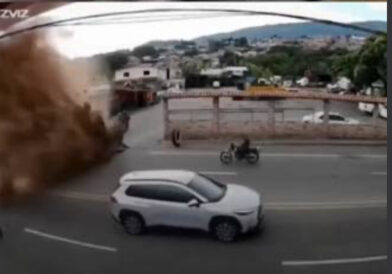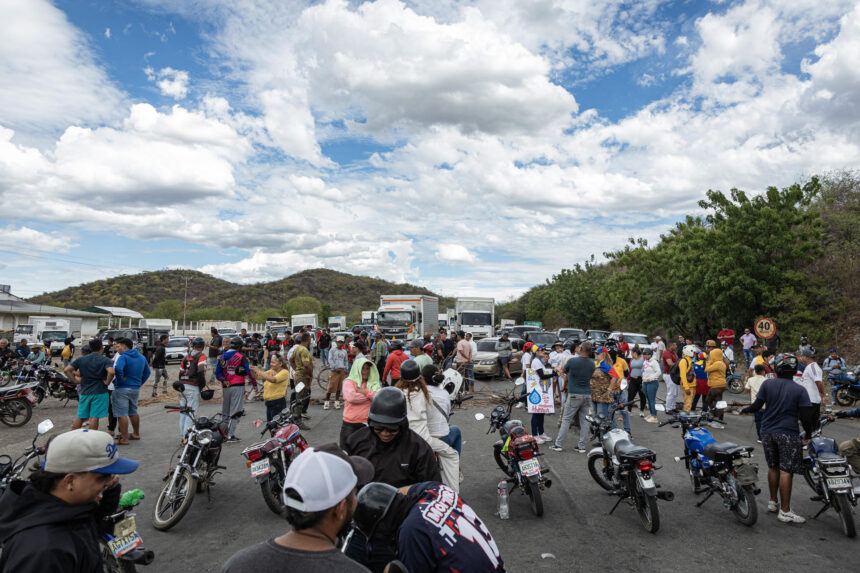
Carora (Venezuela).- Hundreds of people protested this Friday in the state of Lara, located in northwestern Venezuela, against the rationing applied by the Government amid a crisis in the electricity sector that has lasted for years, and asked the president of the U.S., Donald Trump, to “accelerate” the response to the country’s situation and not just focus on the oil business.
The demonstration took place in the La Fuente sector of the city of Carora, which connects Lara with Zulia, the region most affected by the blackouts, which have already spread to different parts of the country.
You may be interested in: Delcy Rodríguez says at the UN that there will be elections in Venezuela
The protesters also denounced problems with water distribution.
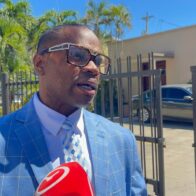
“Here nobody is throwing stones, here nobody is burning rubber (tires), here nobody is disrespecting anyone,” said Ángel Pérez, 57, a community leader from Carora, a town about 457 kilometers from Caracas, the Venezuelan capital, to EFE.
More Read
He reported that on Thursday they experienced two power outages of six hours each and demanded an explanation from the state-owned National Electric Corporation (Corpoelec).
“(Rationing) has been increasing. In the morning a 6-hour power outage, in the afternoon another 6-hour power outage, but that’s not enough, it has been increasing very progressively in the early morning. So, in the early morning it’s another outage that carries over into the next day,” he explained.
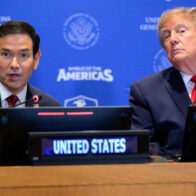
Pérez took the opportunity to send a message to Trump and the head of U.S. diplomacy, Marco Rubio, whom he asked to “finally realize” that Venezuela “can absolutely no longer endure this desperation.”
More Read
While some protesters were shouting for “elections now,” Pérez said he was aware of the business involving oil, but asked that, in parallel, “the response for the people” also be accelerated.
For her part, teacher Yolimar Bastidas, 50, detailed that since March, rationing has been increasing from two hours a day to six.
“And at this moment they are increasing the energy saving burden and we can’t take it anymore,” complained this teacher.
On Thursday night in Maracaibo, the capital of Zulia, locals protested in different areas of the city to reject the prolonged power outages, some lasting up to 16 hours.
Protesters burned tires while the police tried to mediate.

Failures in Venezuela
For years, Venezuela has faced electricity supply failures, which Chavismo has blamed on foreign sanctions, the El Niño climate phenomenon, and the sabotage of “mafias,” while the opposition, non-governmental organizations, and experts assert that it is the result of corruption and a lack of maintenance.
More Read
The acting president, Delcy Rodríguez, called on Thursday night, hours after her return from participating in the United Nations General Assembly in New York, to collaborate with energy saving in the face of a new peak in demand that, she said, had not been seen since 2017.
The Venezuelan government recently signed a strategic alliance with the American company General Electric (GE) Vernova to strengthen the electrical system and recover this infrastructure in the country’s oil industry.
They had already signed a memorandum of understanding in June, and in April, Rodríguez announced negotiations with Siemens on the same subject.
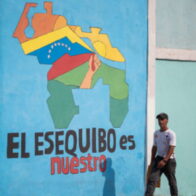
Venezuela reiterates that it will not comply with the ICJ decision on the Essequibo
The Government of Venezuela reiterated this Friday that it will not abide by any decision emanating from the International Court of Justice (ICJ) regarding the territorial dispute it maintains with Guyana over the Esequibo region, after the Guyanese Government urged Caracas to comply with the upcoming ruling of the international tribunal.
The Venezuelan Foreign Minister, Félix Plasencia, reaffirmed Venezuela‘s historical position regarding the judicial process and pointed out that the country does not recognize the jurisdiction of the ICJ to settle the territorial controversy over the so-called Guayana Esequiba.
“Venezuela ratifies its historic position of non-recognition of the jurisdiction of the International Court of Justice to settle the territorial controversy over the Guayana Esequiba,” stated Plasencia in response to the approach made by Guyana.
The official recalled that the position of the Government of Venezuela is that the dispute must be resolved through direct negotiation between both countries, without the intervention of external bodies.
“Only bilateral negotiation will be the legitimate and legal space to resolve this historical controversy,” maintained the Venezuelan foreign minister.
The statement came one day after the President of Guyana, Irfaan Ali, referred to the dispute during his speech before the United Nations General Assembly.
Ali urged Venezuela to comply with the upcoming ruling of the ICJ, a court that Caracas has questioned and whose jurisdiction it does not recognize for this case.
The Guyanese leader also expressed his expectation that the controversy could give way to a new stage in relations between both countries.
“We look forward to a new era of good-neighborly relations in the interest of our peoples, the development of our countries, and the stability and prosperity of our region,” stated Ali.