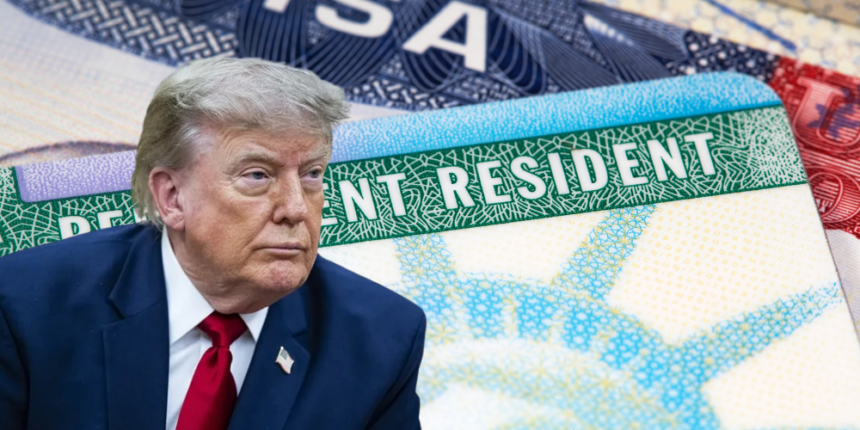
Los Angeles (USA).- The new guidance established by the administration of President Donald Trump to deny permanent residency to immigrants who receive state aid and could become a public charge goes into effect this Friday, a policy that during his previous administration (2017-2021) even affected U.S. citizens.
The U.S. Citizenship and Immigration Services (USCIS) explains on its portal that the updated manual aligns with Congress’s intent that foreigners residing in the United States “be self-sufficient and not rely on government benefits” funded by taxpayers.
You may be interested in: The White House brings Trump’s policies to video games about the wall and deportations
The new regulation represents the Republican leader’s second attempt to tighten the requirements. These are the key points to understand the change, according to data from the Immigrant Legal Resource Center (ILRC).
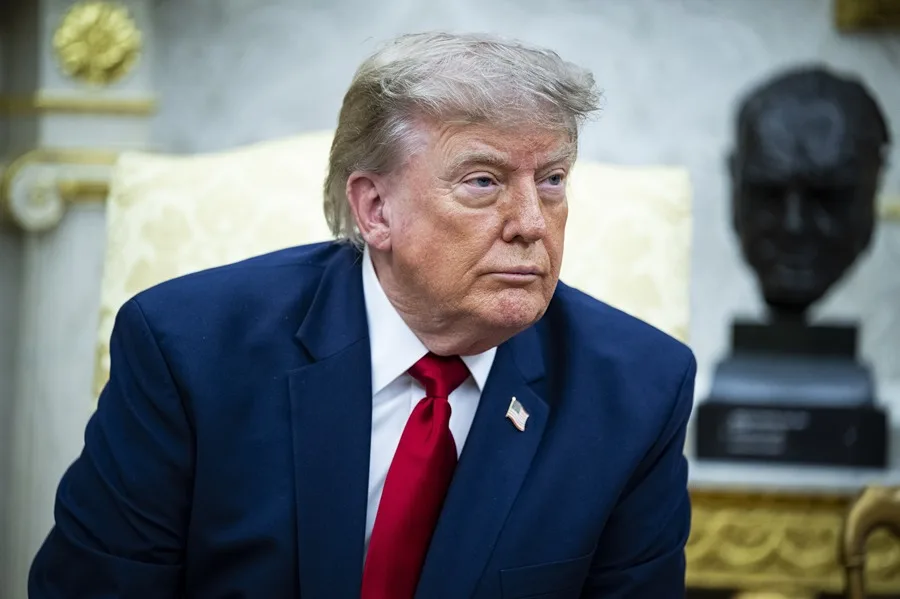
What is public charge?
Public charge is a ground of inadmissibility that allows for the denial of a visa, admission to the country, or a permanent resident card, known as a ‘green card,’ if it is determined that the person is likely to depend on certain public benefits in the future.
More Read

To whom does public charge apply?
This regulation affects only permanent residence applicants based on a family petition, such as spouses, parents, children, or siblings of U.S. citizens or permanent residents, or for employment-based petitions.
Applicants for a green card through asylum petitions, refugee status, U visa, T visa, VAWA, or Special Immigrant Juvenile Status (SIJS) are not subject to this rule.
What are the new guidelines?
The new public charge guidance grants immigration officers greater discretion to deny permanent residency.
More Read

The instruction now considers more types of public benefit, such as government cash assistance, subsidized housing, educational aid, food, and certain health services funded by the U.S. government.
In addition, public benefits used by family members (children, parents, spouses) will be taken into account if the applicant is responsible for supporting those family members and the benefit depends on their income.

Also, applicant factors will be evaluated, such as age, household size, health status, and credit history.
Even if the residence applicant has a sponsor, this would not, by itself, be sufficient to demonstrate that the immigrant will not be a public charge, and USCIS may determine that they are a public charge.
Since when does the new guide apply?
The new public charge guideline goes into effect on September 18, 2026, which means that all permanent residence applications in the family and employment categories will be reviewed under the new parameter.
Any pending, filed, or mailed application postmarked on or before September 17, 2026, will be evaluated in accordance with the 2022 rule, imposed by the administration of former President Joe Biden (2021-2025), which reversed the changes made by the Republican in 2019 and relaxed the restriction.

Does the new rule apply to applicants from outside the U.S.?
Although USCIS guidelines do not apply to applications that are defined through an overseas consular process, consulates are expected to follow similar policies.
Tips for those affected
Immigration attorney Fernando Romo advises new applicants to submit evidence that they have a job that allows them to support themselves without requesting public assistance, have private health insurance, and assets, which include savings, investments, or property.
“All those assets are evidence that there are resources if an emergency happens they can face it without resorting to public benefits,” he elaborated.
For his part, immigration attorney Alex Gálvez recommends that applicants keep an eye on the legal actions filed against the new guidance to stop its implementation.
This week, several cities and counties, led by New York, filed a legal complaint to block the new rule.
“The courts have halted a large number of Trump’s executive orders by determining that they are arbitrary, capricious, and discriminatory, he opined that this attempt will be able to be stopped once again,” he added.