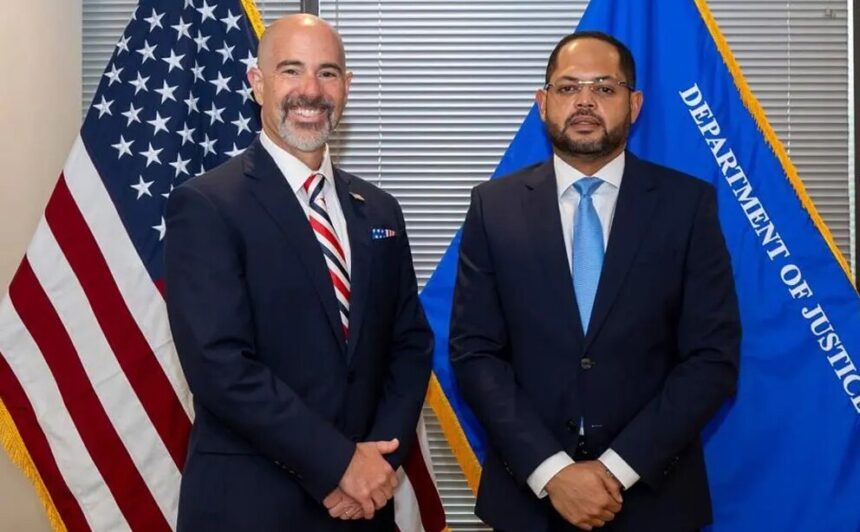
The Attorney General of Honduras, Pablo Emilio Reyes Theodore, held a meeting this Friday with the director of the United States Drug Enforcement Administration (DEA), Terrance Cole, with the purpose of strengthening cooperation between both countries in the fight against drug trafficking and transnational organized crime.
During the meeting, the authorities analyzed different strategies aimed at strengthening the exchange of intelligence information, expanding institutional cooperation mechanisms, and bolstering operational capabilities to confront criminal structures operating at a regional level.
The meeting is part of the work agenda being carried out by the head of the Public Ministry in the United States, focused on consolidating alliances with agencies and international organizations dedicated to the investigation and prosecution of crimes linked to organized crime.
According to official information, both officials agreed on the importance of maintaining permanent coordination to combat organizations dedicated to drug trafficking, money laundering, and other transnational crimes that affect the security of the region.
Likewise, they discussed the need to strengthen cooperation channels between the institutions in charge of criminal investigation, with the aim of facilitating the development of joint operations and optimizing the exchange of strategic information.
More Read

During the meeting, the exchange of intelligence information between both countries was addressed. The authorities analyzed mechanisms to strengthen operational investigation capabilities.
The authorities also addressed mechanisms to continue strengthening the technical and operational capabilities of the specialized teams participating in investigations related to drug trafficking and other manifestations of organized crime.
Prior to the meeting with the DEA administrator, Reyes Theodore held a meeting with representatives of the Criminal Division of the United States Department of Justice, where they reviewed the joint efforts that both countries are promoting to combat transnational crime and strengthen security in the Western Hemisphere.
More Read


During that meeting, the parties exchanged experiences regarding the investigations developed in the fight against criminal organizations and analyzed the importance of maintaining close cooperation to face threats that transcend national borders.
The Attorney General’s visit to the United States is part of the actions to strengthen international cooperation relations promoted by the Public Ministry to improve investigation and criminal prosecution capabilities regarding high-impact crimes.
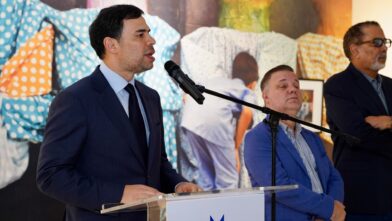
The meeting is part of the Attorney General’s official agenda in the United States. The Public Prosecutor’s Office seeks to expand international cooperation against organized crime. (Photo: Public Prosecutor’s Office)
In recent years, the collaboration between Honduras and U.S. agencies has allowed for the development of joint investigations, the exchange of technical assistance, and specialized training for prosecutors and investigators involved in cases related to organized crime.
The Honduran authorities have reiterated that international cooperation constitutes a fundamental element to confront the criminal networks that operate in the region, due to the transnational nature of crimes such as drug trafficking, illicit arms trafficking, money laundering, and other activities linked to criminal structures.
With this new rapprochement between the Public Ministry and the DEA, both institutions seek to consolidate closer coordination that allows for strengthening investigations and continuing to develop joint actions aimed at reducing the impact of organized crime in Honduras and the rest of the continent.
More Read

The meetings held by the Attorney General are part of the efforts aimed at strengthening cooperative relations with international institutions dedicated to combating high-impact crimes.
The Public Prosecutor’s Office has pointed out on repeated occasions that the exchange of information, technical assistance, and coordination between specialized agencies are fundamental to confront criminal structures that operate beyond national borders and that require joint responses from States.