The Central Azucarero Central Barahona (CAC) stated that drip irrigation, fertigation, and other modern mechanisms are yielding extraordinary benefits that point to a promising future in sugarcane production.
He stated that the combination of drip irrigation and fertigation has allowed for an increase in production of nearly 40% in tons per hectare of planted sugarcane; while efficiency is over 85%, which they have achieved through the optimization of water in sugarcane production.
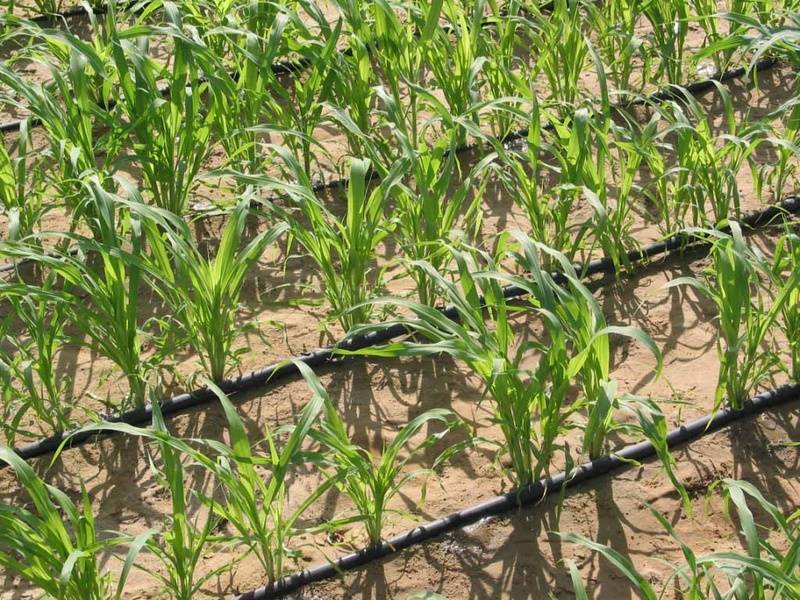
The administrative manager of the CAC, José Antonio García, reported that more than 1,700 hectares of sugarcane are irrigated with the drip irrigation system, which he stated allows for reducing losses due to evaporation, avoiding waste, and applying only the liquid that the crop needs.
He highlighted that this modernization has allowed the CAC to reduce water usage in its extensive sugarcane plantations by more than 30%, compared to traditional gravity irrigation schemes.
“The Central Sugar Consortium introduced this technology in 2014, and we have been implementing it every year, and at the present time, 1,700 hectares of sugarcane are being irrigated under this system. The main objective when starting to implement this mechanism was and is to optimize water, so that what we save can be used by producers of plantains, bananas, and other products grown by farmers in the lower basin of the Yaque del Sur River and farmers in the provinces of Bahoruco, Independencia, and Barahona who share the same water,” stated García.
More Read

The private company executive clarified that the benefits received by the CAC do not end with drip irrigation, because the fields are being modernized and the goal is to ensure, in a few years, that the majority of sugarcane plantations are drip-irrigated.
He specified that, in technified fields, irrigation application efficiencies exceed 85%, well above the levels usually reached by conventional systems.
He reported that after starting drip irrigation, improvements in soil conditions have been observed, with a reduction in salinity in the intervened areas and better behavior of the water table levels.
More Read

García highlighted that talking about the responsible use of water in agricultural production is not a luxury or a mere formality, it is a necessity.
“It is not just about watering, but about doing it better; with more control, with more strategy, and with tools that allow us to make the most of water resources without wasting them,” highlighted García.
He explained that part of that work has consisted of building a monitoring system that today allows them to closely follow the behavior of water in their agricultural area.
He reported that they have more than 270 observation wells, gauging and meteorological stations, as well as other control points distributed throughout their area of operation.
He maintained that this network allows for the measurement of flow rates, groundwater levels, water quality, and climate conditions that directly influence irrigation scheduling through an automated and “homemade” system.

He said that, with that foundation, the CAC has been making more precise decisions on how, when, and how much to irrigate, which, he assured, is where one of the most important transformations it has promoted in recent years comes in.
More Read

He stated that, unlike gravity irrigation, which has been traditional in a large part of the agricultural areas of the Neiba Valley and the Southern region, drip irrigation brings water directly to the root of the plant.
“This allows for the reduction of evaporation losses, prevents waste, and ensures that only what the crop needs is applied,” he highlighted.
He stated that another important point has been the use of fertigation, a practice that allows nutrients to be applied along with irrigation water.
He stated that, instead of doing it in a more scattered or less precise way, with fertigation, fertilizers reach the plant’s root directly in controlled doses, which he affirmed improves absorption, reduces losses, and helps the crop develop with more uniformity.
He stated that the combination of drip irrigation and fertigation has allowed for an increase in production of nearly 40% in tons per hectare of planted sugarcane.
García cited the Aguacatico Project as an example of that change, where more than 860 hectares of agricultural land were reactivated through mechanized irrigation.
He revealed that this intervention allowed for a 25% increase in productivity and a reduction in water consumption of nearly two million cubic meters per year.
“In this case, the reduction in water consumption per ton of cane can reach up to 50%,” highlighted García, showing satisfaction with the achievement obtained.
In addition to drip irrigation, the modernization process has included land leveling and improvements to distribution systems, measures that have also contributed to reducing water consumption per hectare in different areas.
The senior executive of the CAC also highlighted that the use of automatic weather stations, which make it easier to adjust irrigation according to actual and current weather conditions, is another element that has contributed to the objectives sought by the company.
He stated that in a region like Enriquillo, where water is not abundant and where agriculture remains key to the local economy, producing more with less water is not just a technical advantage, but the only way to face this challenge and take care of “our future”.