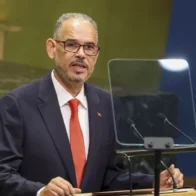
Santo Domingo.– Santiago Matías, popularly known as Alofoke, sparked a debate during a recent broadcast of the reality show Planeta Alofoke by warning that the Dominican Republic could face serious challenges in the tourism sector if Cuba achieves a broader economic and commercial opening in the coming years.
During his intervention on the program, the businessman and communicator maintained that the authorities and actors linked to the Dominican tourism industry must prepare from now on for an eventual scenario in which the neighboring island becomes one of the main tourist destinations in the Caribbean.
“To those who control tourism in this country, get your act together”, expressed Matías, while asserting that an eventual transformation of Cuba would represent strong competition for the Dominican Republic, a nation whose economy depends largely on tourism and remittances.
The producer stated that, if an opening that incentivizes foreign investment in Cuba were to materialize, millions of tourists could choose to visit that country, drawn by its history, culture, architecture, and the interest generated by a nation that remained isolated from much of the Western market for decades.

We recommend reading: Santiago Matías questions Samuel Mata’s link to the Army and asks for clarification on whether he holds a “no-show job”
“When Cuba falls, there will be problems in this country, ladies and gentlemen. In five, six, or seven years, when they start investing, people are going to go to Cuba. People are not going to be in Punta Cana”, the communicator stated to the participants and viewers of the program.
More Read

Matías also highlighted Cuba’s territorial dimension and the potential it possesses, in his view, to become a regional tourism powerhouse. As he pointed out, international curiosity to get to know a country that was marked for years by the communist system could become an attraction difficult for other Caribbean destinations to match.
The statements have generated mixed reactions on social media, where some users believe that Alofoke’s analysis presents a reality that should be taken into account by authorities and business leaders in the sector, while others understand that the Dominican Republic has a consolidated tourism infrastructure capable of maintaining its regional leadership against any future competition.
Currently, the Dominican Republic continues to be one of the main tourist destinations in the Caribbean, with millions of annual visitors and a hotel offering that ranks among the most developed in Latin America. However, Matías’s words have once again brought to the table the debate on the need to innovate and strengthen the sector’s competitiveness to face the challenges of the future.