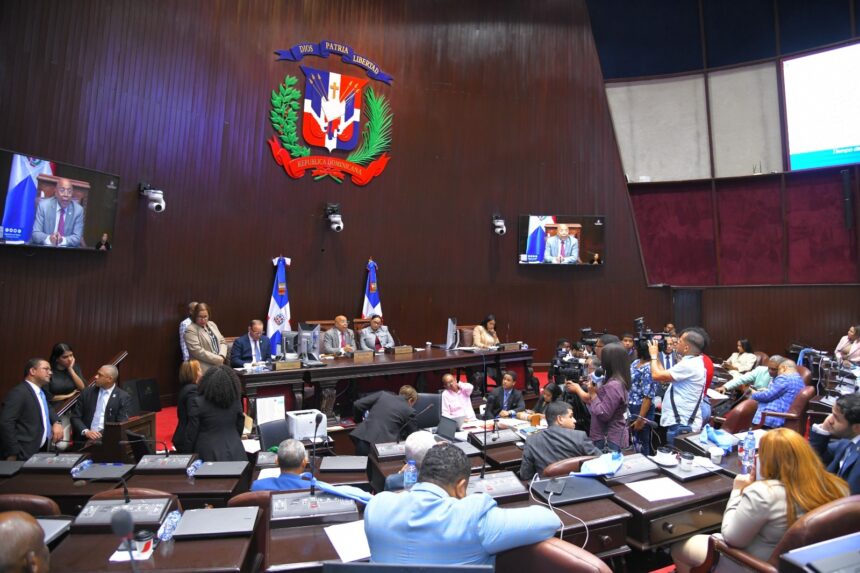
Santo Domingo.– The Chamber of Deputies approved this Saturday, in the first reading, 32 modifications to 24 articles of the Penal Code reform bill, after accepting the report presented by the bicameral commission that studied the initiative. With the exception of six articles incorporated by the legislators, the lower house kept the text submitted by President Luis Abinader to the Senate on June 10 practically intact.
Among the main changes is the modification of article 192, which establishes that the dissemination of audio or images without consent will only be sanctioned when it occurs in the private sphere or there is a reasonable expectation of privacy. In addition, it eliminates the sanction for contents falsified through montages and adjusts the penalties provided for this crime.
You might be interested in: Despite opposition protests, deputies approve modifications to the Penal Code
The initiative also reduces penalties for perjury and defamation. Article 207 lowers the sentence for perjury from between five and ten years in prison to a range of two to five years, while Article 208 decreases the sentence for defamation from two to five years to between one and two years in prison. Likewise, it establishes that expressions disseminated through media outlets, streaming platforms, and cyberspace will not be sanctioned under that provision.
Article 211 incorporates a provision that excludes from defamation and libel opinions, criticisms, and expressions related to acts of corruption, public policies, public office, public services, and other matters of public interest, provided they are supported by evidence or have been subject to reasonable verification.
More Read

Another modification replaces the term bullying with harassment in article 121. Article 122 establishes prison sentences of one to two years when the victim is a person with a physical or mental disability and reduces the penalty from five to ten years in cases where the harassment leads to the suicide of a minor. Likewise, article 123 is renamed cyber-harassment, requires the conduct to be repeated and systematic to constitute a crime, and eliminates social media comments as a form of harassment.
The bill also introduces changes to other crimes. Article 142 exempts from criminal liability those who undress in artistic, cultural, scientific, or educational activities; Article 144 increases the penalty for aggravated harassment from two to five years; and Article 176 raises the sanctions for procuring to the same range.
Regarding public administration, Article 303 stiffens penalties for the embezzlement of public funds, increasing the sentence from five to ten years in prison for officials who divert State resources. Furthermore, Article 354 expands sanctions for doctors who issue false medical certificates, including private sector forensic doctors, with penalties of two to three years in prison. Changes are also introduced to the criminal liability of legal entities, and the classification of physical violence in domestic assaults is incorporated.
More Read

The Fuerza del Pueblo bench voted against the modifications and left the session before the vote.
The Chamber of Deputies has been summoned for a new session this Monday at 2:00 in the afternoon, in which the bill will be considered in a second reading and new modifications could be introduced. If approved again, the Penal Code will return to the Senate of the Republic, where it must be considered and approved in two readings before completing its legislative process.