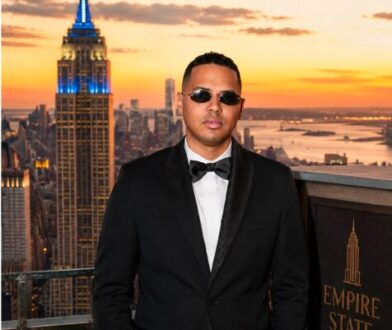
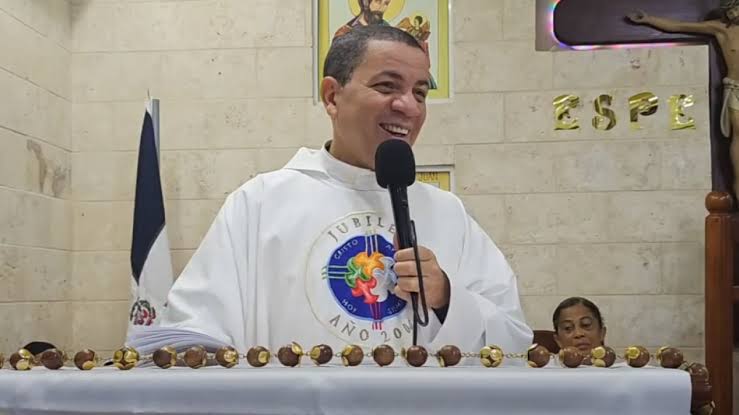
Santo Domingo.- Priest Norberto Rosario called not to underestimate the influence that businessman and communicator Santiago Matías, known as “Alofoke”, has achieved following his foray into Dominican politics with an eye toward the 2028 elections.
Rosario maintained that disqualifying Matías solely for not having certain academic studies or professional degrees can lead to a mistaken reading of the social reality he represents. In her view, beyond his training, the communicator has built a significant capacity for influence and a unique bond with broad sectors of the population.
You might be interested in: Dominicanos Primero will hold a signature collection drive in El Seibo and Miches
“Some people, at once, because Santiago Matías lacks certain academic qualifications, degrees, that sort of thing, they go about disqualifying him, and disqualifying him can be dangerous”, the clergyman stated.
Father Norberto Rosario explained that the phenomenon surrounding Matías cannot be analyzed solely from the traditional parameters of politics, because his main strength lies in the connection he has built with an important part of Dominican society, especially through digital media.
More Read

“One thing must be acknowledged, and that is that Santiago Matías feels powerful, has power, and enjoys a deep-rooted social identity,” stated Norberto Rosario.
When speaking of that “identity-based rootedness”, Norberto Rosario pointed out that there is a generation and certain social sectors that feel represented by the content, programs, and products promoted by Matías. He highlighted that this identification can have a political dimension, especially among young people who will participate in the 2028 elections.
“When I say identity-based, which many people of a certain generation and from certain social sectors identify with,” explained priest Norberto, when referring to the reach that the communication platform led by Matías has achieved.
More Read
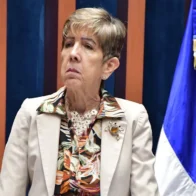
Father Norberto on the political stage
Norberto Rosario’s approach gains relevance after Santiago Matías announced last July that he would not accept a potential presidential candidacy for the Social Christian Reformist Party (PRSC) nor for other organizations that, according to him, had approached him. Instead, he communicated his intention to create his own political organization to compete in the 2028 elections.

Matías also reported that he will travel across the country to collect the required signatures and request the recognition of his organization before the Central Electoral Board (JCE). So far, he has not publicly presented the final name, the complete structure, or the political program of the new entity.
The project faces, however, the challenge of converting a broad digital audience into a formal political structure. Law 33-18 establishes the requirements for the recognition of political parties, groups, and movements, while the JCE is the body in charge of reviewing and deciding on these requests.
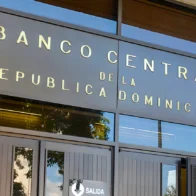
According to the JCE, applications for recognition must be filed no later than 12 months before the holding of the next ordinary election. The electoral body has also made it clear that organizations in formation must comply with legal and documentary requirements to obtain legal status.
The JCE itself presented in February 2026 the electoral calendar for the 2028 process, which contemplates municipal elections for February 20 and presidential, senatorial, and congressional elections for May 21 of that year.
The scenario places Santiago Matías before a different test than those he has faced in the media: transforming popularity, social identification, and mobilization capacity into a political structure capable of complying with electoral rules and presenting a proposal that transcends his personal figure.
More Read
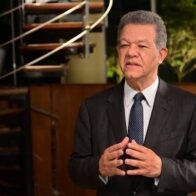
Precisely for this reason, Father Norberto Rosario’s approach points to a central element of the debate: beyond questioning his academic credentials, Matías’s political phenomenon must be observed based on his real capacity to connect with a segment of the population and mobilize it.
Their eventual participation in 2028 could represent one of the most peculiar political phenomena of the next Dominican electoral process: the leap of a figure built primarily from entertainment and digital media into formal political competition.
For Rosario, ignoring that phenomenon or reducing it exclusively to the lack of titles could prevent understanding why a part of the population identifies with Matías and why his project is beginning to generate attention in the Dominican electoral scene.